Association Between Triglyceride-Glucose Index, Blood Pressure Status, and Coronary Heart Disease Risk Among Chinese Adults With Disabilities: 10-Year Disability Health Survey Cohort Study
Hui Liu, Yao Li, Yiyan Wang, Tao Wang, Chenghua Jiang, Hengjing Wu, Jing Wu

TL;DR
This study finds that high triglyceride-glucose index and blood pressure increase heart disease risk in Chinese adults with disabilities, with stronger effects in those with physical or mild disabilities.
Contribution
The study is novel in examining combined effects of TyG index and blood pressure on CHD risk specifically in individuals with disabilities.
Findings
The TyG index and blood pressure status independently increase CHD risk in disabled individuals.
TyG mediates about 20-22% of the BP-CHD association, especially in those with physical disabilities.
Combined high TyG and hypertension show the highest CHD risk (HR 1.92), with even higher risk in those with intellectual or mental disabilities (HR 3.51).
Abstract
The triglyceride-glucose (TyG) index and blood pressure (BP) status are key indicators associated with coronary heart disease (CHD). However, limited research has focused on individuals with disabilities. This study explores the potential combined effects of the TyG index and BP status on CHD risk in groups with varying disability characteristics. This study analyzed data from the Shanghai Disability Health Survey, conducted between January 2012 and December 2022. Participants were then categorized into 3 BP status groups: nonelevated BP, elevated BP, and hypertension. Cox proportional hazards regression models were used to assess the associations between BP status, the TyG index, and CHD incidence. Additionally, the mediating, interaction, and combined effects of these factors on CHD risk were examined. A stratified analysis was performed based on participants’ disability…
Genes, proteins, chemicals, diseases, species, mutations and cell lines named across the full text — each resolved to its canonical identifier and authoritative record.
Click any figure to enlarge with its caption.
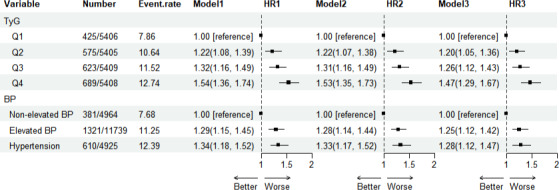 Figure 1
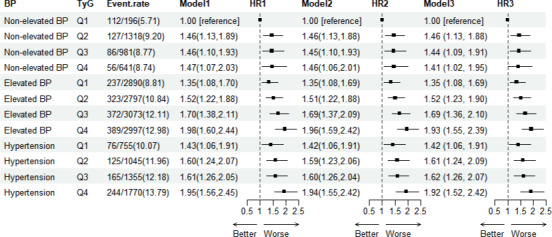 Figure 2
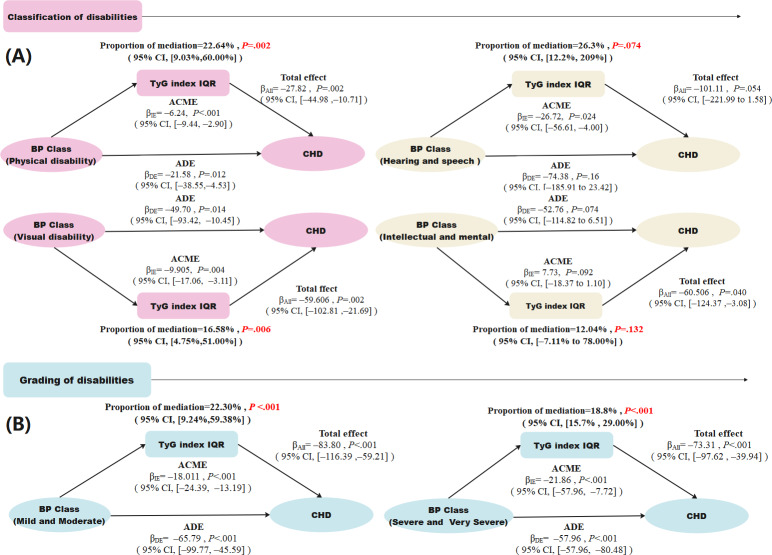 Figure 3
Peer Reviews
No public reviews on file for this paper yet. If you reviewed it on a platform where reviews are public (OpenReview, ICLR, NeurIPS, ICML), you can paste yours below so the community can read it here.
Videos
No videos yet. Explain this paper in a talk, walkthrough, or lecture? Add one.
Taxonomy
TopicsDown syndrome and intellectual disability research · Spinal Cord Injury Research · Cerebral Palsy and Movement Disorders