Phenotyping of Fontan‐Associated Renal Physiology and Disease
Gaston van Hassel, Jozine M. ter Maaten, Iris E. Beldhuis, Eryn T. Liem, Bastiaan Zwart, Stephan J. L. Bakker, Rolf M. F. Berger, Joost P. van Melle

TL;DR
This study explores kidney function and injury in Fontan patients, revealing progressive decline and altered blood flow patterns compared to healthy individuals.
Contribution
The study introduces a comprehensive phenotyping approach to identify and characterize Fontan-Associated Renal Disease (FARD).
Findings
Fontan patients show lower cystatin C-based eGFR and higher urine albumin excretion compared to controls.
Intrarenal venous and arterial compliance is reduced in Fontan patients, indicated by higher impedance and resistance indices.
Kidney function decline in Fontan patients correlates with age more strongly than in healthy individuals.
Abstract
Kidney dysfunction is prevalent but insufficiently understood in Fontan patients. We aimed to investigate Fontan‐Associated Renal Disease (FARD) through comprehensive phenotyping using biomarkers of renal function and injury, as well as ultrasound assessment of intrarenal hemodynamics. We prospectively collected data on serum creatinine and cystatin C levels, and 24‐h urine creatinine clearance and albumin excretion in 25 Fontan patients, comparing them to healthy age‐ and sex‐matched controls. Additionally, we measured intrarenal venous and arterial flow patterns using Doppler ultrasonography. Median age was 28 (Q1–Q3: 19–35) years, with 48% female. Compared to controls, Fontan patients had similar creatinine‐based eGFR (eGFRcr) (114 vs. 106 mL/min/1.73 m2; p = 0.2), lower cystatin C‐based eGFR (eGFRcys) (96 vs. 106 mL/min/1.73 m2; p = 0.045), and lower 24‐h urinary creatinine…
Genes, proteins, chemicals, diseases, species, mutations and cell lines named across the full text — each resolved to its canonical identifier and authoritative record.
Click any figure to enlarge with its caption.
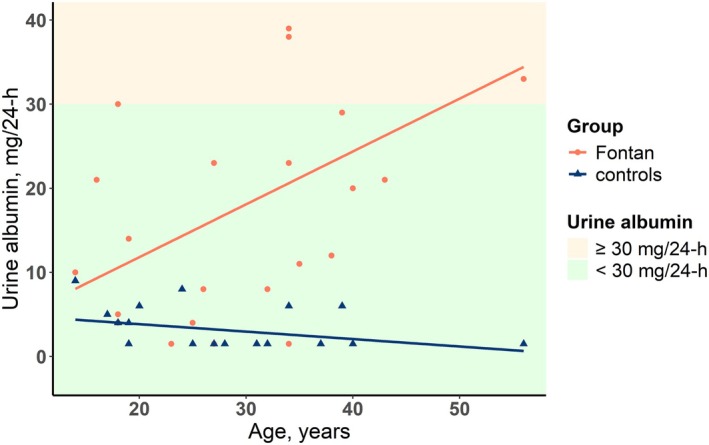 Figure 1
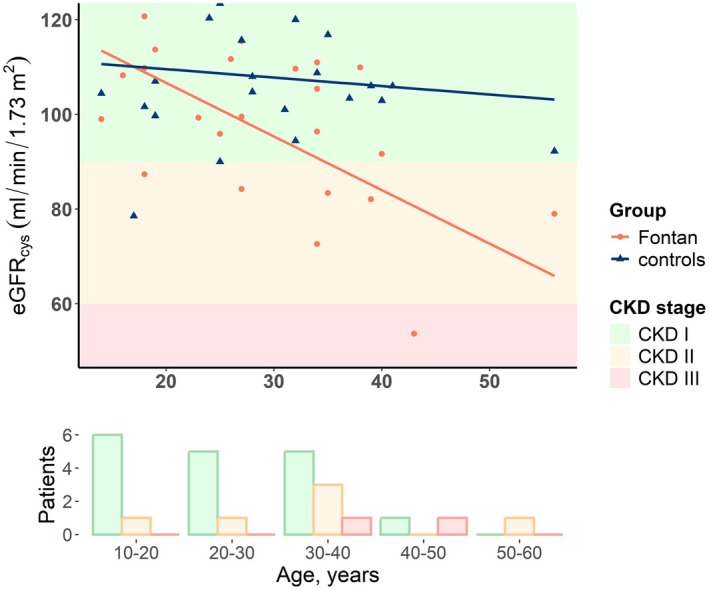 Figure 2
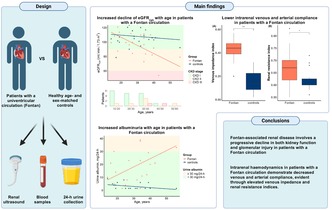 Figure 3
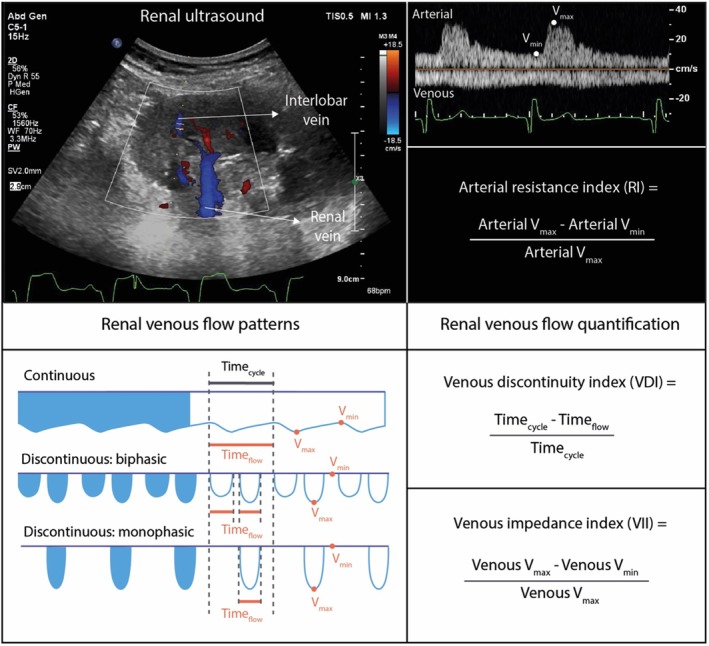 Figure 4
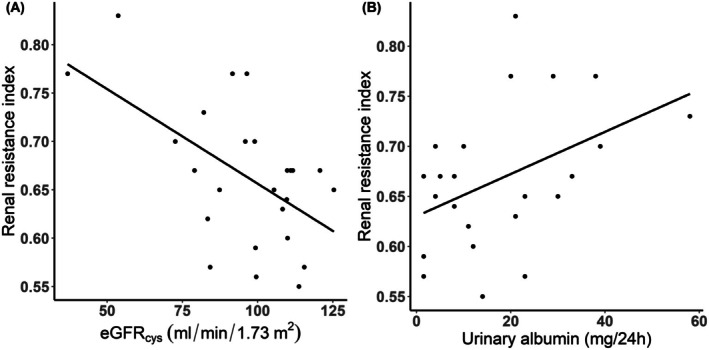 Figure 5
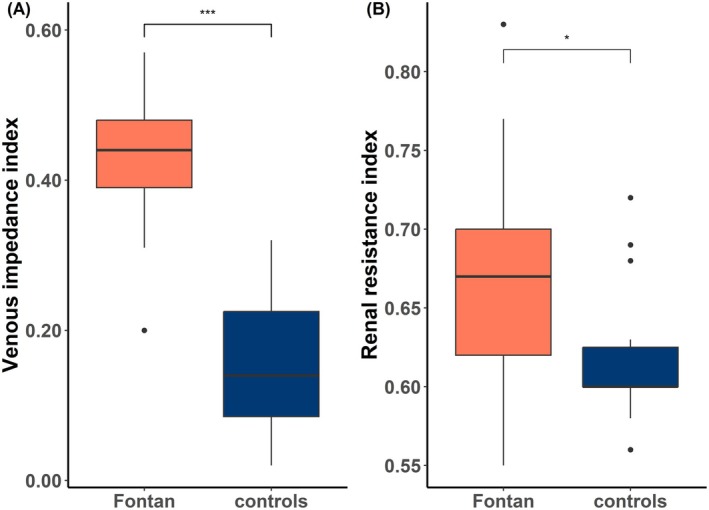 Figure 6
Peer Reviews
No public reviews on file for this paper yet. If you reviewed it on a platform where reviews are public (OpenReview, ICLR, NeurIPS, ICML), you can paste yours below so the community can read it here.
Videos
No videos yet. Explain this paper in a talk, walkthrough, or lecture? Add one.
Taxonomy
TopicsCongenital Heart Disease Studies · Renal and Vascular Pathologies · Cardiac tumors and thrombi