Bimanual Use of Articulating Laparoscopic Instruments (ArtiSential) in Pediatric Surgery: A Report of Three Cases
Yushi Kaisyakuji, Kahona Ono, Masateru Nakashima, Terumasa Matsuzaki, Katsuhiro Ogawa, Teijiro Hirashita, Tomonori Akagi, Shigeo Ninomiya, Yuichi Endo, Tomotaka Shibata, Hidefumi Shiroshita, Masafumi Inomata

TL;DR
This paper reports on using ArtiSential laparoscopic instruments in three pediatric surgeries, showing they can be a cost-effective alternative to robotic surgery.
Contribution
The novel use of bimanual ArtiSential instruments in pediatric minimally invasive surgery is introduced as a lower-cost alternative to robotic systems.
Findings
Bimanual ArtiSential use enabled safe and precise procedures in narrow pediatric operative fields.
All three procedures were completed without complications and with minimal blood loss.
The articulating instruments allowed stable triangulation and fine manipulation in restricted spaces.
Abstract
Articulating laparoscopic instruments such as ArtiSential have been developed to overcome the limited range of motion associated with conventional straight instruments, particularly in narrow operative fields. While robot-assisted surgery provides highly precise manipulation, its introduction in pediatric surgery remains limited due to high cost and restricted insurance coverage. We introduced bimanual use of ArtiSential in pediatric minimally invasive surgery as a potential alternative to robotic assistance and evaluated its feasibility and technical advantages. We performed laparoscopic procedures using bimanual use of ArtiSential instruments in 3 pediatric patients: 2 single-incision laparoscopic appendectomies for chronic appendicitis (10- and 15-year-old patients) and 1 laparoscopic resection of an esophageal bronchogenic cyst with Dor fundoplication (11-year-old patient). In all…
Genes, proteins, chemicals, diseases, species, mutations and cell lines named across the full text — each resolved to its canonical identifier and authoritative record.
Click any figure to enlarge with its caption.
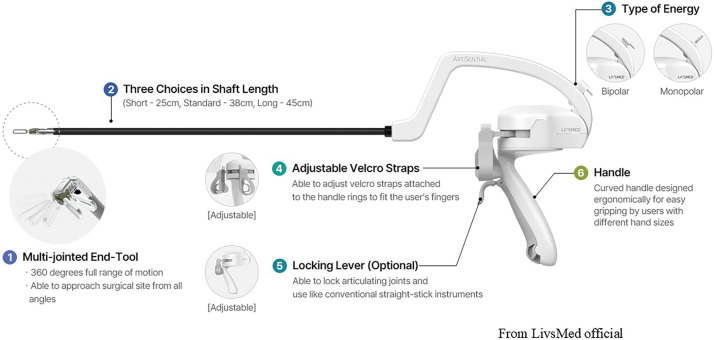 Figure 1
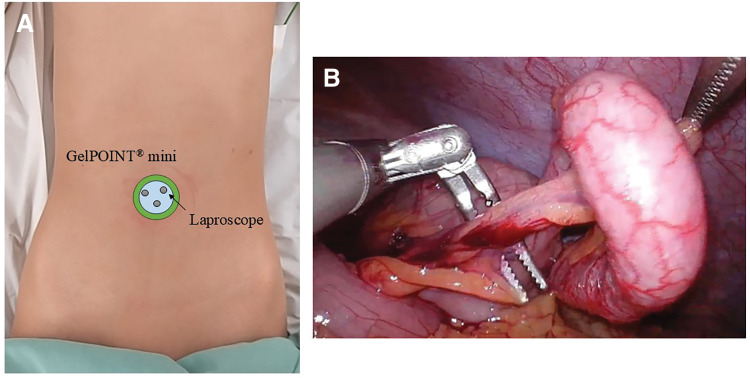 Figure 2
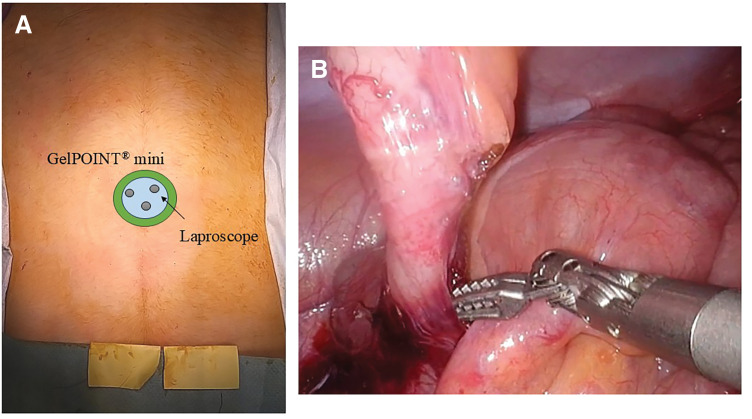 Figure 3
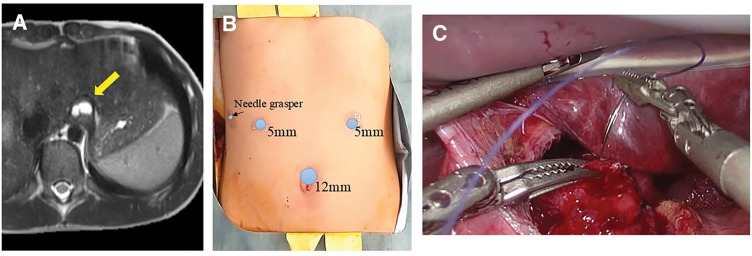 Figure 4
Peer Reviews
No public reviews on file for this paper yet. If you reviewed it on a platform where reviews are public (OpenReview, ICLR, NeurIPS, ICML), you can paste yours below so the community can read it here.
Videos
No videos yet. Explain this paper in a talk, walkthrough, or lecture? Add one.
Taxonomy
TopicsMinimally Invasive Surgical Techniques · Intestinal Malrotation and Obstruction Disorders · Gynecological conditions and treatments