Homogenisation of Vegetation in Irish Semi‐Natural Grasslands
Oliver Lynch Milner, Astrid Wingler, Fiona Cawkwell, Karen L. Bacon

TL;DR
Irish semi-natural grasslands have become more uniform in plant species over 15 years, raising concerns about biodiversity loss.
Contribution
The study provides evidence of increasing homogeneity in Irish semi-natural grasslands over time.
Findings
Resurveyed grassland sites showed minor shifts in species richness but increased homogeneity.
Almost half of the forb species decreased in frequency, and some rarer species were lost.
Habitat types became less distinct, suggesting a decline in long-term biodiversity.
Abstract
Grasslands represent an important source of vegetative diversity and provide a range of important ecosystem services. Semi‐natural grasslands in Europe face a variety of threats due to changing management practices and other anthropogenic pressures. This study investigates vegetative changes in 12 semi‐natural grassland sites in Ireland over an approximately 15‐year period. Sites for three habitat types (GS1—dry calcareous & neutral grassland, GS3—dry‐humid acid grassland and GS4—wet grassland) were selected from the 2007–2012 Irish Semi‐natural Grassland Survey and resurveyed in 2023. The resurveyed sites showed a minor shift in vegetative composition in terms of species richness, but non‐metric multidimensional scaling suggests that the grasslands are increasingly homogenous with habitat types having become less distinct. While both species losses and gains were observed, almost half…
Click any figure to enlarge with its caption.
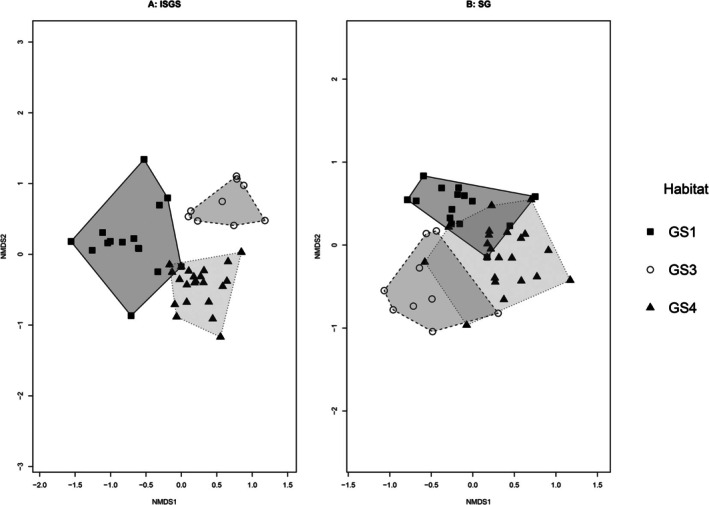 Figure 1
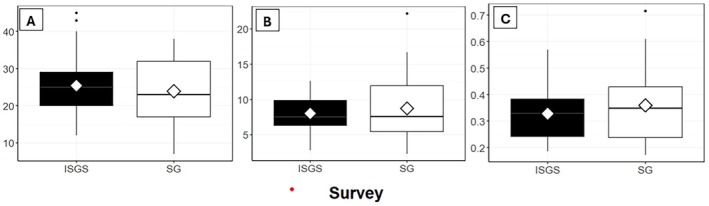 Figure 2
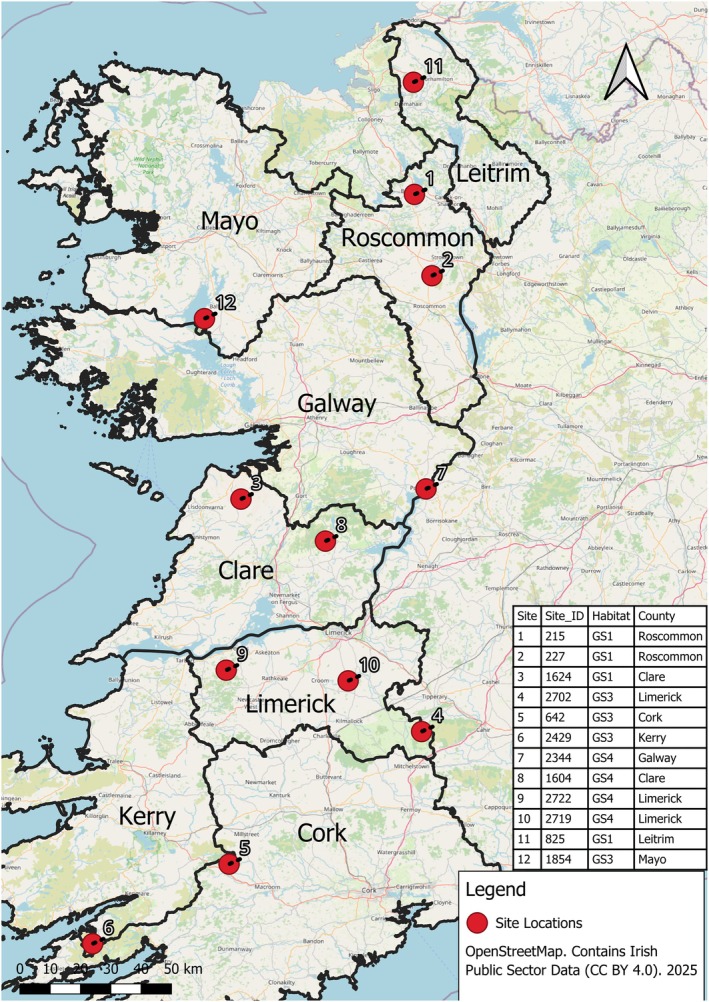 Figure 3
 Figure 4
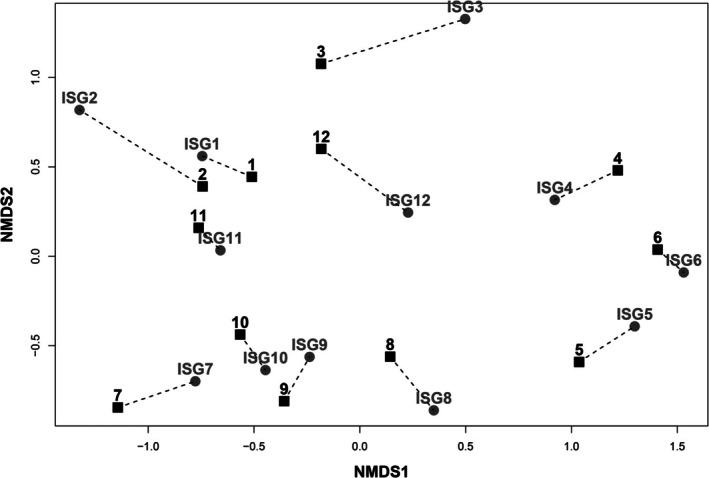 Figure 5
Peer Reviews
No public reviews on file for this paper yet. If you reviewed it on a platform where reviews are public (OpenReview, ICLR, NeurIPS, ICML), you can paste yours below so the community can read it here.
Videos
No videos yet. Explain this paper in a talk, walkthrough, or lecture? Add one.
Taxonomy
TopicsEcology and Vegetation Dynamics Studies · Peatlands and Wetlands Ecology · Pasture and Agricultural Systems