Carya luodianensis (Juglandaceae), a New Species From Guizhou Province, Southern China, Revealed by Morphological and Plastid Evidence
Yan‐Bing Yang, Chong‐Yi Yang, Wei‐Hao Yao, Bing Yang, Lang Huang, Ming‐Tai An, Guo‐Bing Jiang, Hong Luo, He Li

TL;DR
A new species of Carya, Carya luodianensis, is identified in China using both physical traits and genetic analysis.
Contribution
The discovery and description of a new Carya species supported by morphological and plastid genomic data.
Findings
Carya luodianensis is distinct from C. kweichowensis based on morphology and phylogenetic analysis.
The plastome of C. luodianensis shows unique structural features like IR expansion and gene translocation.
Comparative analyses highlight evolutionary divergence within the Carya genus.
Abstract
Carya luodianensis Y.B. Yang & M.T. An (Juglandaceae), a new species from Luodian County, Guizhou Province, China, is described and illustrated based on morphological and molecular data. Morphologically, this species resembles C. kweichowensis but can be easily distinguished by its rusty brown buds, 5–7 leaflets, a greater number of lateral veins (12–21 pairs), pubescent anthers, and nut shell bearing four faint longitudinal ridges. Molecular phylogenetic analysis based on complete chloroplast genome sequences indicates that C. luodianensis is sister to C. kweichowensis. The plastome of C. luodianensis, with a total length of 175,255 bp, exhibits a typical quadripartite structure and consists of 78 protein‐coding genes (PCGs), 30 transfer RNA (tRNA) genes, and four ribosomal RNA (rRNA) genes. Notably, a marked expansion of the inverted repeat (IR) region (40,956 bp) and contraction of…
Genes, proteins, chemicals, diseases, species, mutations and cell lines named across the full text — each resolved to its canonical identifier and authoritative record.
Click any figure to enlarge with its caption.
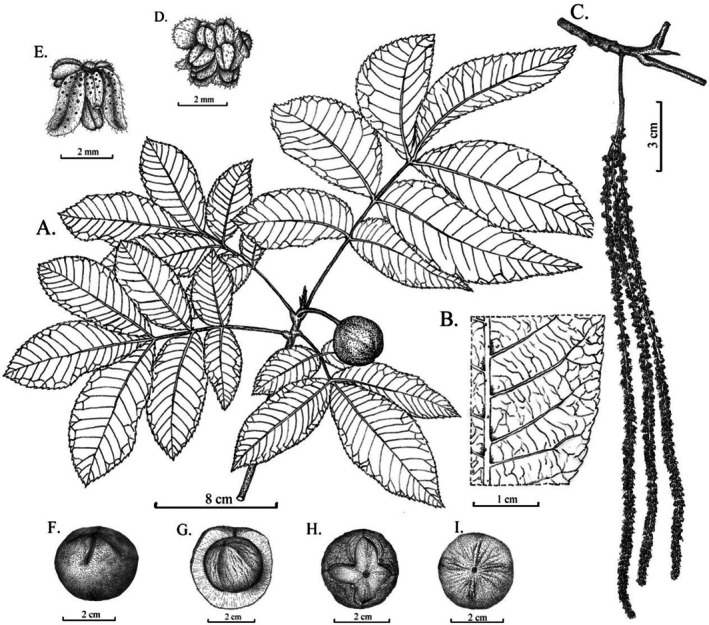 Figure 1
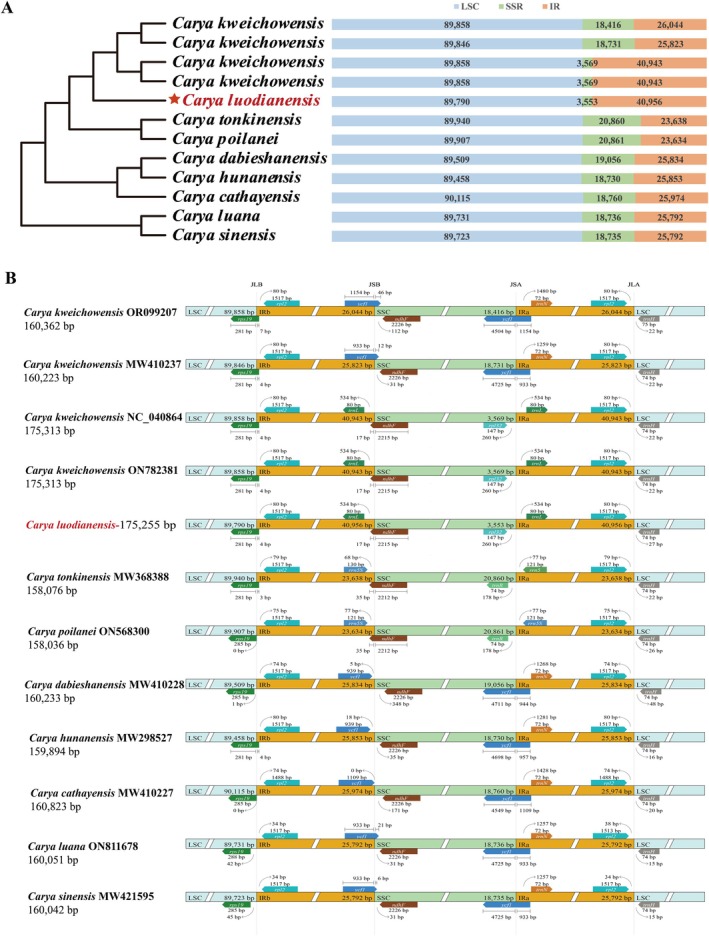 Figure 2
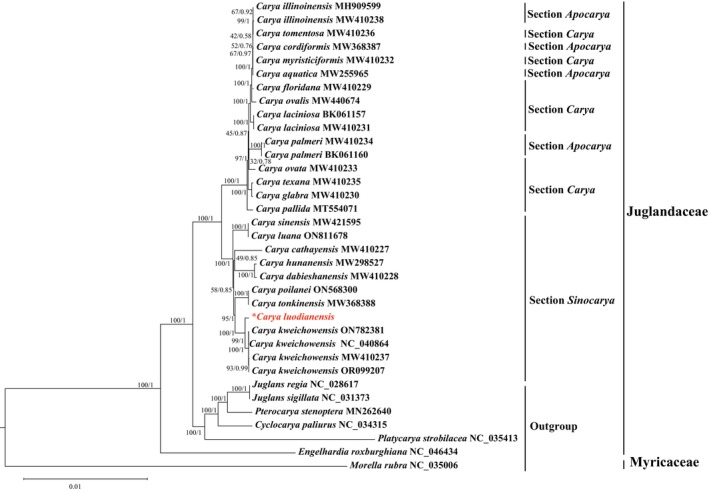 Figure 3
 Figure 4
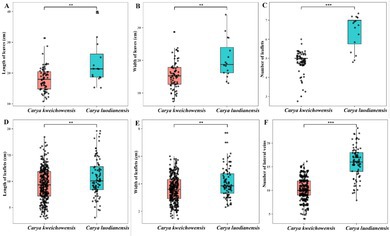 Figure 5
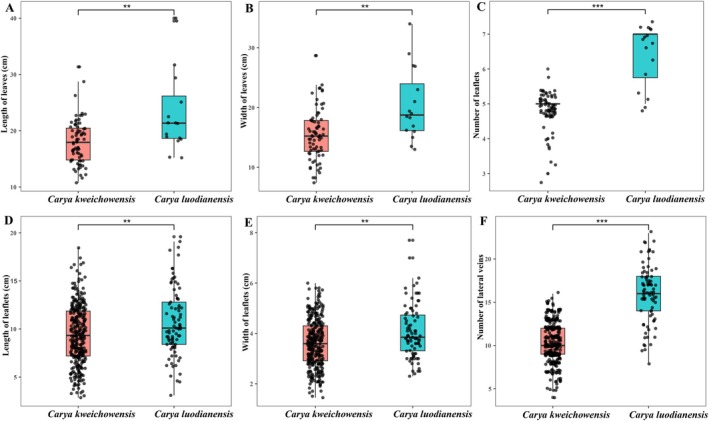 Figure 6
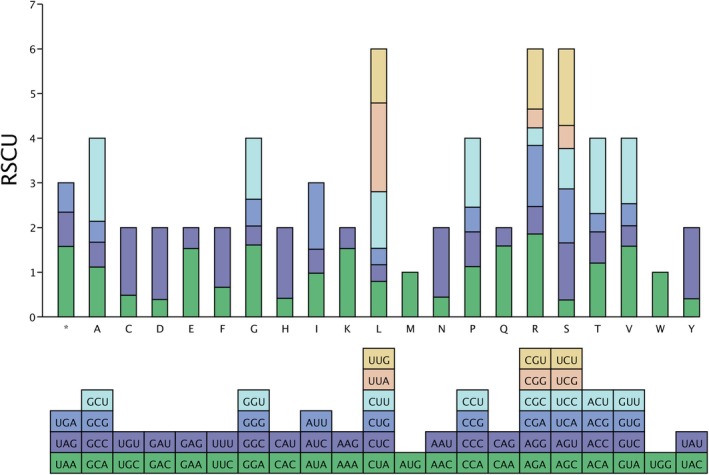 Figure 7
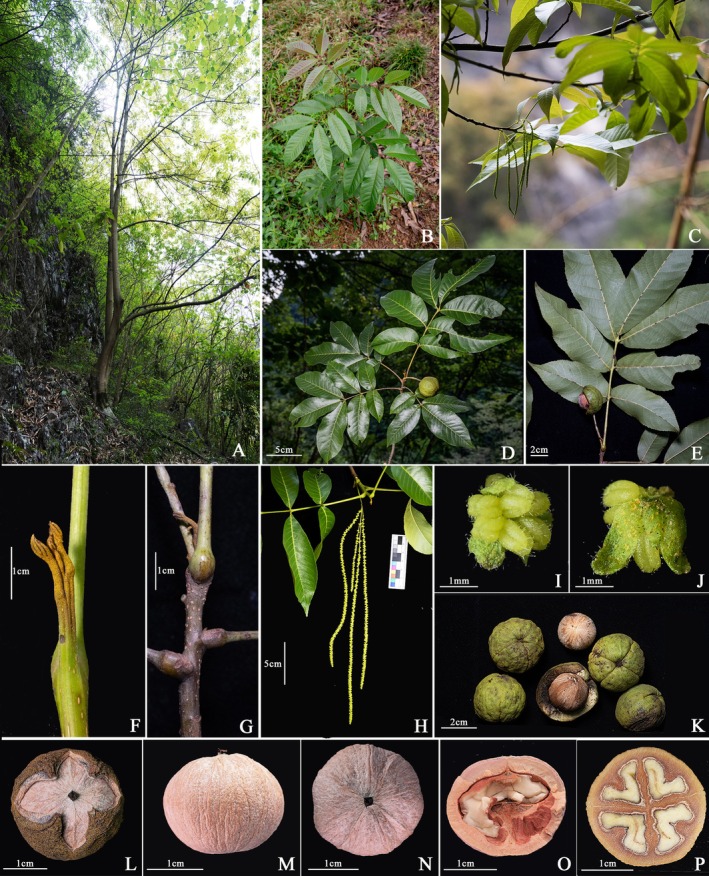 Figure 8
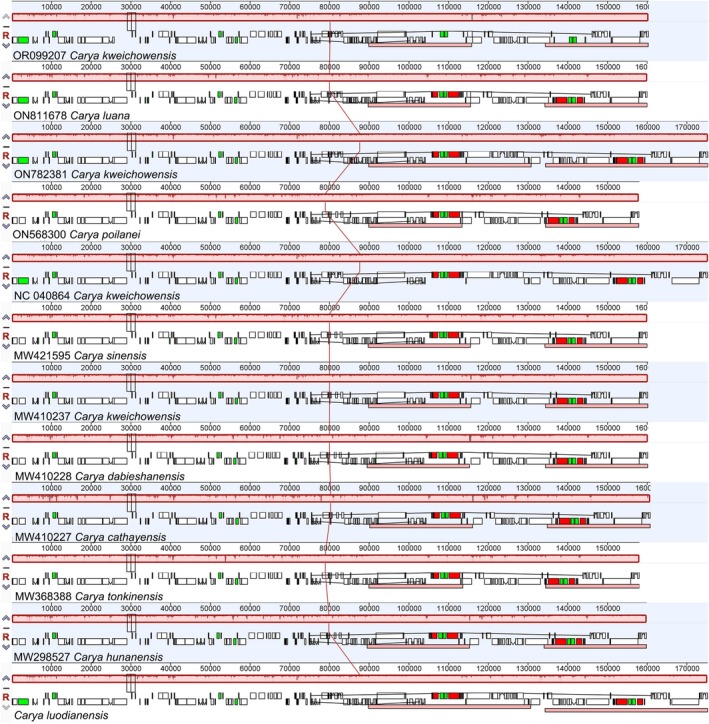 Figure 9
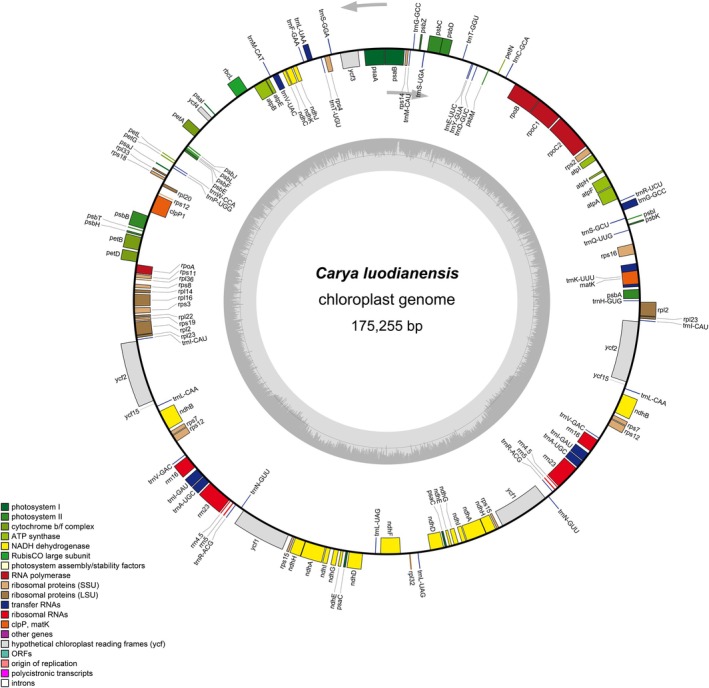 Figure 10
Peer Reviews
No public reviews on file for this paper yet. If you reviewed it on a platform where reviews are public (OpenReview, ICLR, NeurIPS, ICML), you can paste yours below so the community can read it here.
Videos
No videos yet. Explain this paper in a talk, walkthrough, or lecture? Add one.
Taxonomy
TopicsPlant Diversity and Evolution · Genomics and Phylogenetic Studies · Plant Ecology and Taxonomy Studies