Developing sustainable Emergency Urology Simulation Training in sub‐Saharan Africa
William James Gladstone Finch, Tilaneh Leyeh Demilow, Ramzi Yesuf, Chales Mabedi, Linda Kayange, Vincent Medeyi, Getaneh Tesfaye Teferi, Fitsum Gebreegziabher Gebrehiwot, Folk‐Man Wong, Matthew Trail, Stephen R. Payne, Chandra Shekhar Biyani

TL;DR
A simulation-based training program for emergency urology was developed and successfully implemented in sub-Saharan Africa to improve surgical skills and knowledge in resource-limited settings.
Contribution
The paper introduces a sustainable and cost-effective simulation-based training model for emergency urology in low-resource settings.
Findings
Participants showed significant knowledge improvement after the training, with gains of 15%–32%.
100% of participants recommended integrating the training into national curricula.
The use of animal tissue and donated instruments made the program cost-effective and sustainable.
Abstract
Simulation‐based education (SBE) is widely adopted in high‐income countries to enhance surgical training, but opportunities remain limited in low‐ and middle‐income countries (LMICs). Emergency Urology Simulation Training (EUST) was developed to address knowledge and skill gaps in managing urological emergencies in sub‐Saharan Africa. EUST courses were delivered in Ethiopia, Uganda and Malawi using a single‐day format combining pre‐course online learning, didactic teaching with hands‐on simulation. Locally, sourced animal tissue models were employed to replicate ureteric, bladder, renal, scrotal and penile injury repairs. Pre‐ and post‐course assessments included multiple‐choice questions (MCQs) and confidence surveys. Post‐course composite scores were compared across sites using the Kruskal–Wallis test. Faculty feedback evaluated preparedness and sustainability. A total of 46…
Genes, proteins, chemicals, diseases, species, mutations and cell lines named across the full text — each resolved to its canonical identifier and authoritative record.
Click any figure to enlarge with its caption.
 Figure 1
 Figure 2
 Figure 3
 Figure 4
 Figure 5
 Figure 6
 Figure 7
 Figure 8
 Figure 9
 Figure 10
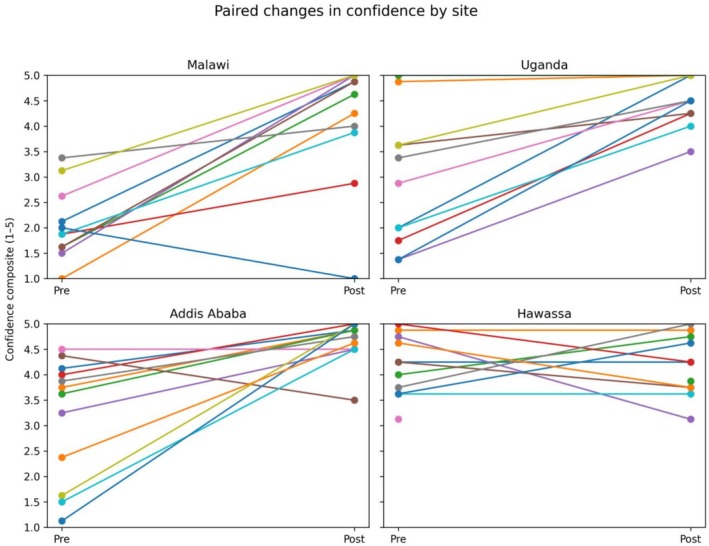 Figure 11
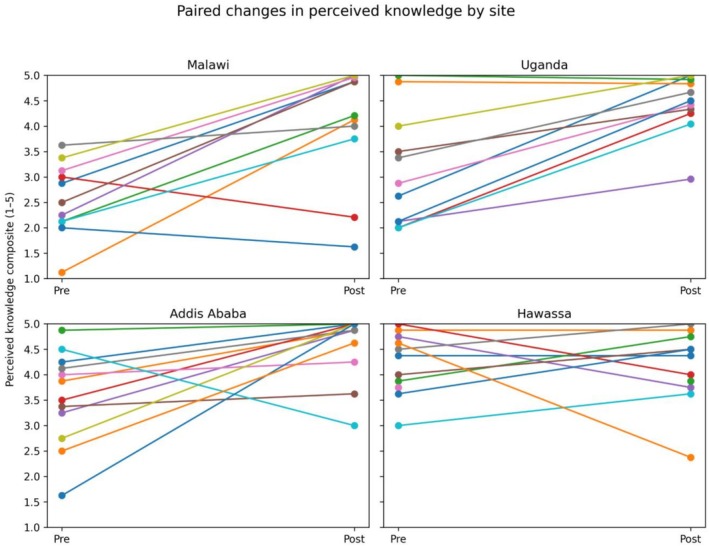 Figure 12
 Figure 13
 Figure 14
 Figure 15
 Figure 16
 Figure 17
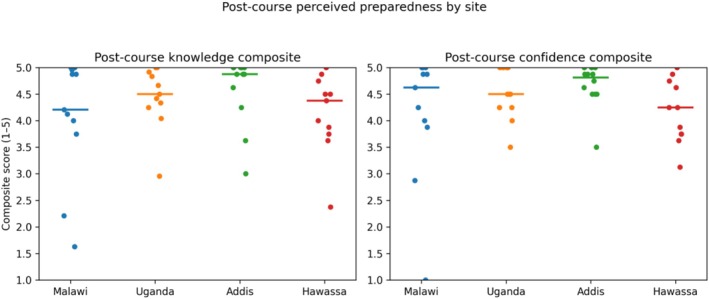 Figure 18
 Figure 19
 Figure 20
 Figure 21
 Figure 22
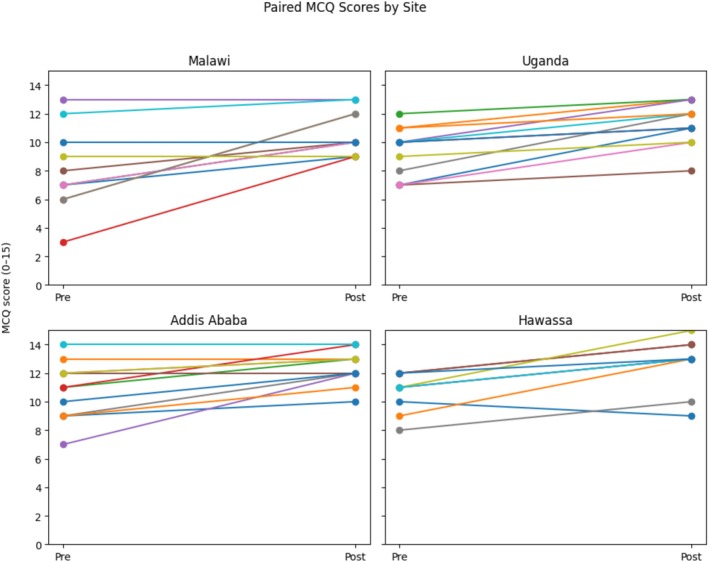 Figure 23
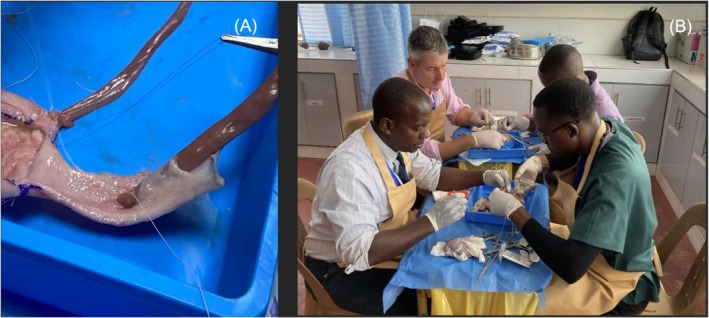 Figure 24
 Figure 25
Peer Reviews
No public reviews on file for this paper yet. If you reviewed it on a platform where reviews are public (OpenReview, ICLR, NeurIPS, ICML), you can paste yours below so the community can read it here.
Videos
No videos yet. Explain this paper in a talk, walkthrough, or lecture? Add one.
Taxonomy
TopicsGlobal Health and Surgery · Surgical Simulation and Training · Simulation-Based Education in Healthcare