Hypercalcemia and Flower Cells on Peripheral Smear Revealing Human T-lymphotropic Virus Type 1 (HTLV-1)-Associated Adult T-cell Leukemia/Lymphoma
Jeremy M Williams, Barrie Clark, Jorge Verdecia, Julia An

TL;DR
A rare case of adult T-cell leukemia/lymphoma is presented, marked by severe hypercalcemia and unique 'flower cells' in blood smears.
Contribution
This case highlights ATLL diagnosis without typical HTLV-1 risk factors, emphasizing the importance of recognizing flower cells and hypercalcemia.
Findings
Severe hypercalcemia was observed in a patient with ATLL.
Flower cells were identified on peripheral blood smear, suggesting acute-type ATLL.
The patient lacked known HTLV-1 risk factors, indicating possible underdiagnosis in non-endemic areas.
Abstract
Adult T-cell leukemia/lymphoma (ATLL) is a rare, aggressive peripheral T-cell malignancy caused by human T-lymphotropic virus type 1 (HTLV-1), most commonly affecting individuals from endemic regions. Diagnosis is challenging and often delayed due to low clinical suspicion and overlapping features with other hematologic and systemic disorders. A characteristic finding on peripheral blood smear is the presence of “flower cells,” atypical lymphocytes with deeply lobulated, petal-like, or cloverleaf nuclei and condensed chromatin, which is considered highly suggestive of acute-type disease. This case describes a 59-year-old female diagnosed with ATLL presenting with severe hypercalcemia and characteristic flower cells on peripheral smear, despite lacking recognized epidemiologic risk factors for HTLV-1 infection.
Genes, proteins, chemicals, diseases, species, mutations and cell lines named across the full text — each resolved to its canonical identifier and authoritative record.
Click any figure to enlarge with its caption.
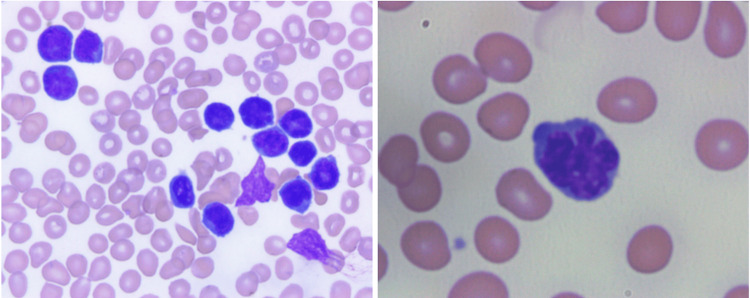 Figure 1
Peer Reviews
No public reviews on file for this paper yet. If you reviewed it on a platform where reviews are public (OpenReview, ICLR, NeurIPS, ICML), you can paste yours below so the community can read it here.
Videos
No videos yet. Explain this paper in a talk, walkthrough, or lecture? Add one.
Taxonomy
TopicsT-cell and Retrovirus Studies · Vector-Borne Animal Diseases · Leptospirosis research and findings