Endovascular treatment of a pancreatic pseudoaneurysm associated with massive pancreatic arteriovenous malformation using flow modification technique
Kohei Hamamoto, Ryoma Kobayashi, Emiko Chiba, Naoki Kunitomo, Soichiro Kojima, Hiroyuki Fujii, Mitsuru Matsuki, Kazuma Rifu, Homare Ito, Mineyuki Tojo, Harushi Mori

TL;DR
A rare case of a pancreatic pseudoaneurysm linked to a large vascular malformation was successfully treated using a specialized endovascular technique.
Contribution
Demonstrates the effectiveness of combining flow modification and NBCA embolisation for treating a rare pancreatic vascular condition.
Findings
Endovascular therapy successfully managed a pseudoaneurysm associated with a massive PAVM.
Flow modification using coil embolisation enabled identification and treatment of the culprit artery.
NBCA embolisation proved effective in sealing the pseudoaneurysm after haemodynamic adjustments.
Abstract
Pancreatic arteriovenous malformation (PAVM) is a rare vascular anomaly of the gastrointestinal tract, and the coexistence of a pseudoaneurysm is exceptionally uncommon. This report details a case of pseudoaneurysm associated with a massive PAVM that was successfully managed with endovascular therapy. A 67-year-old female patient with a massive PAVM presented with acute back pain. Contrast-enhanced computed tomography revealed a pseudoaneurysm in the pancreatic head accompanied by a surrounding haematoma. Transcatheter arterial embolisation (TAE) was selected as the minimally invasive treatment and the pseudoaneurysm was visualised on angiography. However, identifying the culprit artery was challenging due to the extensive vascular network of the PAVM. Following modification of the local haemodynamics using coil embolisation, the culprit artery became detectable, allowing successful…
Genes, proteins, chemicals, diseases, species, mutations and cell lines named across the full text — each resolved to its canonical identifier and authoritative record.
Click any figure to enlarge with its caption.
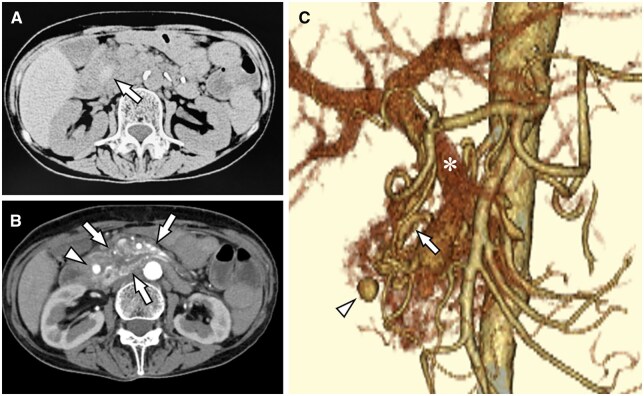 Figure 1
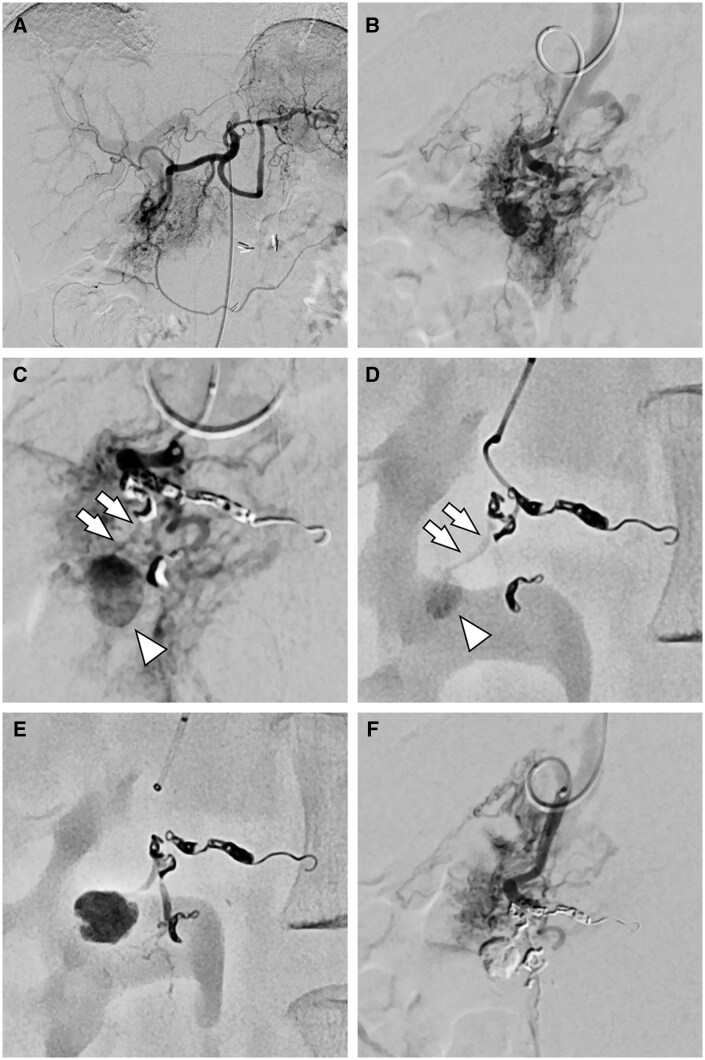 Figure 2
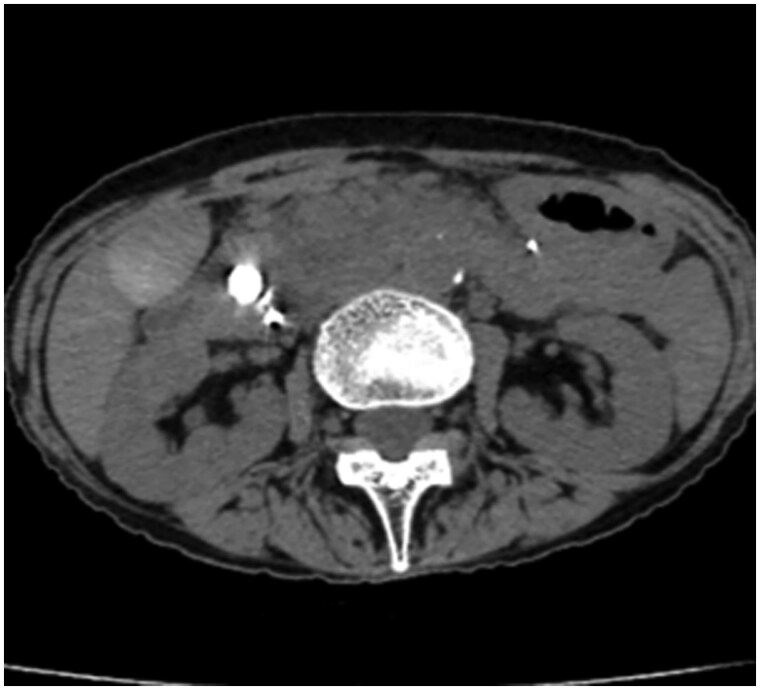 Figure 3
Peer Reviews
No public reviews on file for this paper yet. If you reviewed it on a platform where reviews are public (OpenReview, ICLR, NeurIPS, ICML), you can paste yours below so the community can read it here.
Videos
No videos yet. Explain this paper in a talk, walkthrough, or lecture? Add one.
Taxonomy
TopicsAbdominal vascular conditions and treatments · Vascular Anomalies and Treatments · Pancreatitis Pathology and Treatment