Profile of gonadotropin secretion in male and female rats determined in the tail‐tip blood by ultrasensitive ELISA
Roberta Araujo‐Lopes, Andre F. Gomes, Matheus Viana, Mariana De S. Santos, Ana C. Campideli‐Santana, Soraia Macari, Adelina M. Reis, Raphael E. Szawka

TL;DR
The study uses a non-invasive blood sampling method to track hormone levels in male and female rats, revealing how gonad removal and hormone treatments affect LH and FSH secretion.
Contribution
The study introduces a less invasive, longitudinal method for measuring gonadotropin secretion in rats using tail-tip blood and ultrasensitive ELISA.
Findings
Orchiectomy increases LH and FSH in males, which is partially reversed by testosterone treatment.
Estradiol treatment in ovariectomized females reduces LH and FSH secretion towards gonad-intact levels.
Tail-tip blood sampling with ultrasensitive ELISA provides detailed insights into gonadotropin secretion patterns.
Abstract
There is a need for accurate and less invasive methods of hormonal measurements. Here, we longitudinally determined luteinizing hormone (LH) and follicle‐stimulating hormone (FSH) secretion measured in the tail‐tip blood of male and female rats by ultrasensitive enzyme‐linked immunosorbent assay (ELISA). In males, the ELISAs detected a significant increase in LH and FSH secretion after orchiectomy compared with the gonad‐intact condition. The subsequent treatment with testosterone in the orchiectomized condition returned LH concentrations to the basal levels, whereas FSH secretion was partially restored to the gonad‐intact levels. During the rat estrous cycle, LH and FSH secretion fluctuated around basal levels on diestrus, and the preovulatory surges of both hormones occurred on the late afternoon of proestrus. On estrus, LH secretion was continually low, while FSH concentrations…
Genes, proteins, chemicals, diseases, species, mutations and cell lines named across the full text — each resolved to its canonical identifier and authoritative record.
Click any figure to enlarge with its caption.
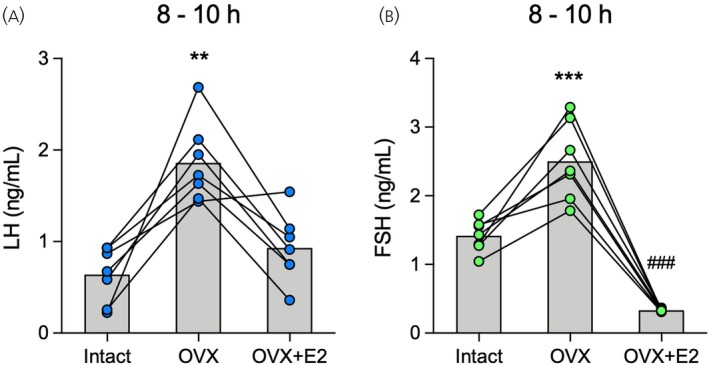 Figure 1
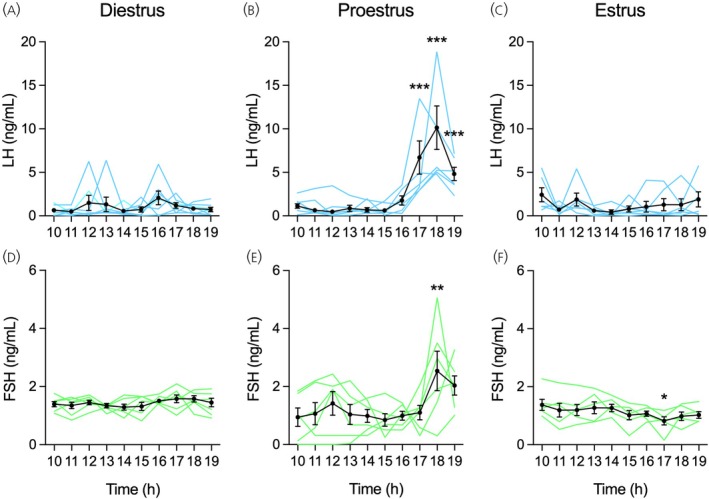 Figure 2
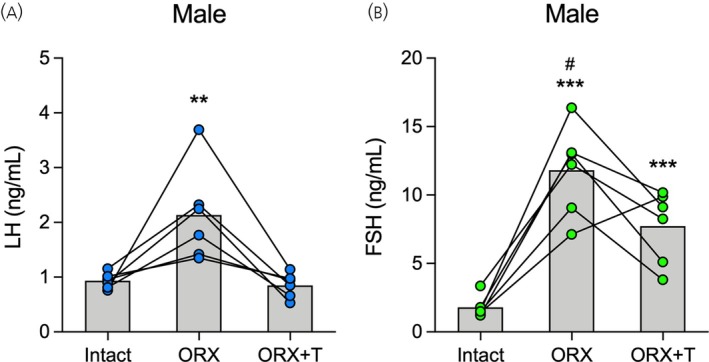 Figure 3
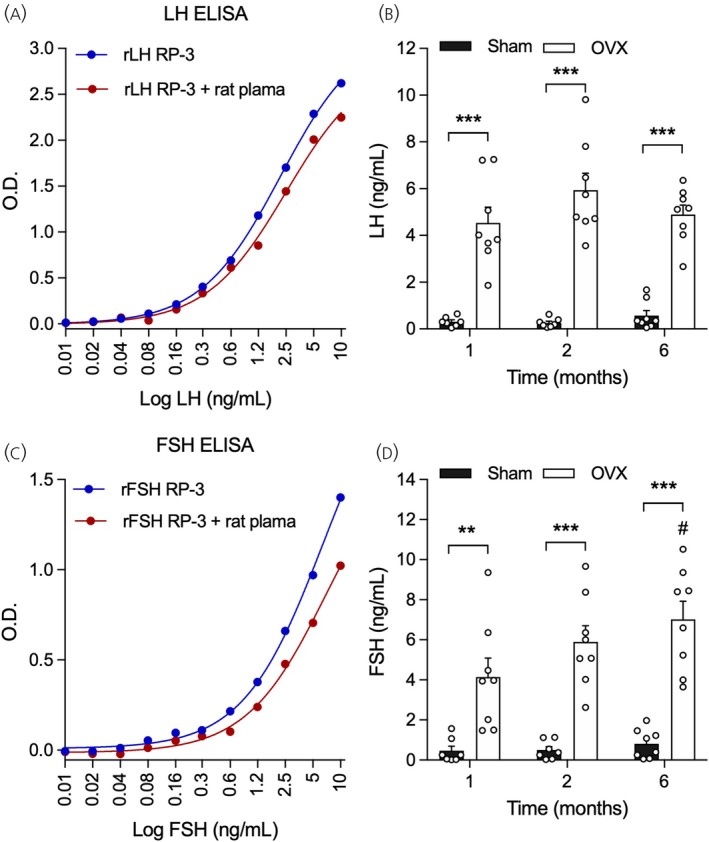 Figure 4
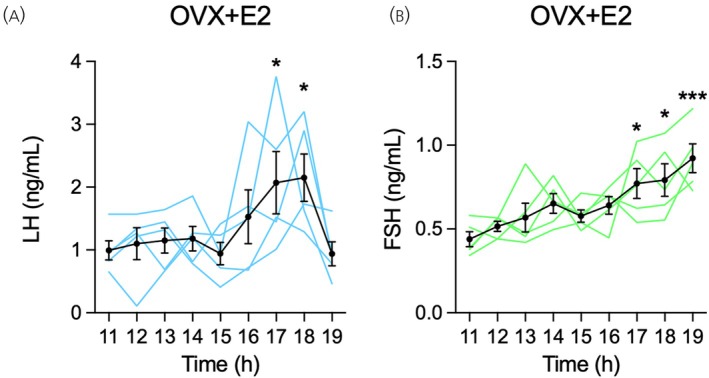 Figure 5
Peer Reviews
No public reviews on file for this paper yet. If you reviewed it on a platform where reviews are public (OpenReview, ICLR, NeurIPS, ICML), you can paste yours below so the community can read it here.
Videos
No videos yet. Explain this paper in a talk, walkthrough, or lecture? Add one.
Taxonomy
TopicsHypothalamic control of reproductive hormones · Ovarian function and disorders · Sperm and Testicular Function