Three-year risk prediction of aortic stenosis using routine medical records: derivation and validation in 919 954 individuals from two cohorts
Ben O Petrazzini, Waqas A Malick, Stamatios Lerakis, Lori B Croft, Ghislain Rocheleau, Robert S Rosenson, Ron Do

TL;DR
A machine learning model predicts aortic stenosis risk three years in advance using medical records, helping identify treatable cases early.
Contribution
A novel machine learning model (ASrisk) was developed and validated for 3-year aortic stenosis risk prediction using biomarkers and vital signs.
Findings
ASrisk identified AS sequelae and echocardiographic outcomes in undiagnosed individuals with high odds ratios.
Individuals with high ASrisk showed 11-fold enrichment for AS diagnosis and significant aortic valve area reduction after three years.
Abstract
All-cause mortality ranges between 33% and 42% for individuals with untreated moderate to severe aortic stenosis (AS). Transcatheter aortic valve replacement makes this a treatable condition, if identified early. Machine learning-based tools show great promise to predict cardiovascular outcomes. We developed and validated a machine learning model for 3-year prediction of AS risk (ASrisk) using serum biomarkers and vital sign measurements. We then evaluated the tool’s capacity to identify diagnoses of AS sequelae, echocardiographic outcomes in individuals not diagnosed with AS, as well as enrichment and 3-year aortic valve area reduction in individuals with high ASrisk. Among 919 954 participants, 429 996 were from the Mount Sinai Data Warehouse (MSDW) [2179 (0.5%) AS cases] and 489 958 were from the UK Biobank [5066 (1%) AS cases]. Odds ratio (OR) of AS sequelae increased…
Genes, proteins, chemicals, diseases, species, mutations and cell lines named across the full text — each resolved to its canonical identifier and authoritative record.
Click any figure to enlarge with its caption.
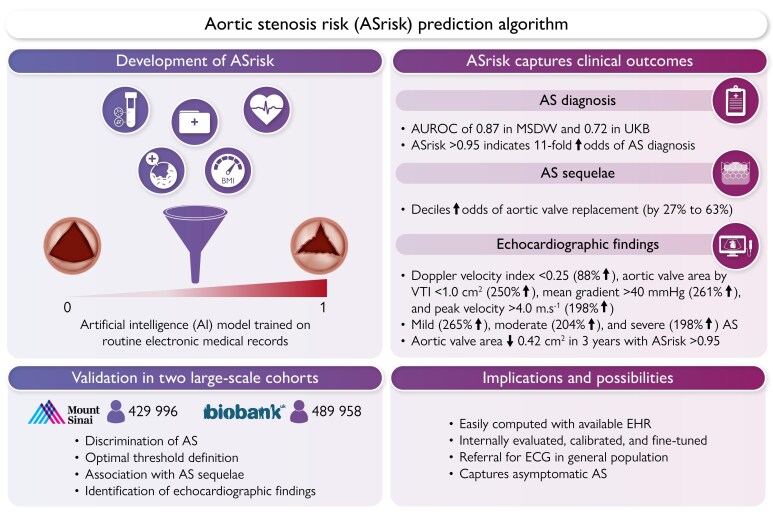 Figure 1
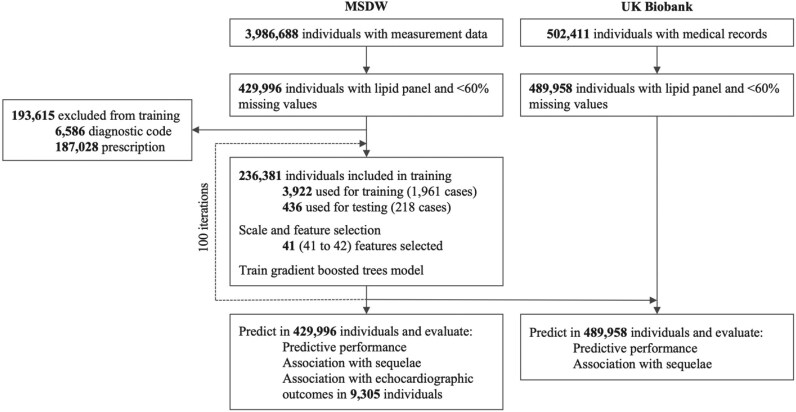 Figure 2
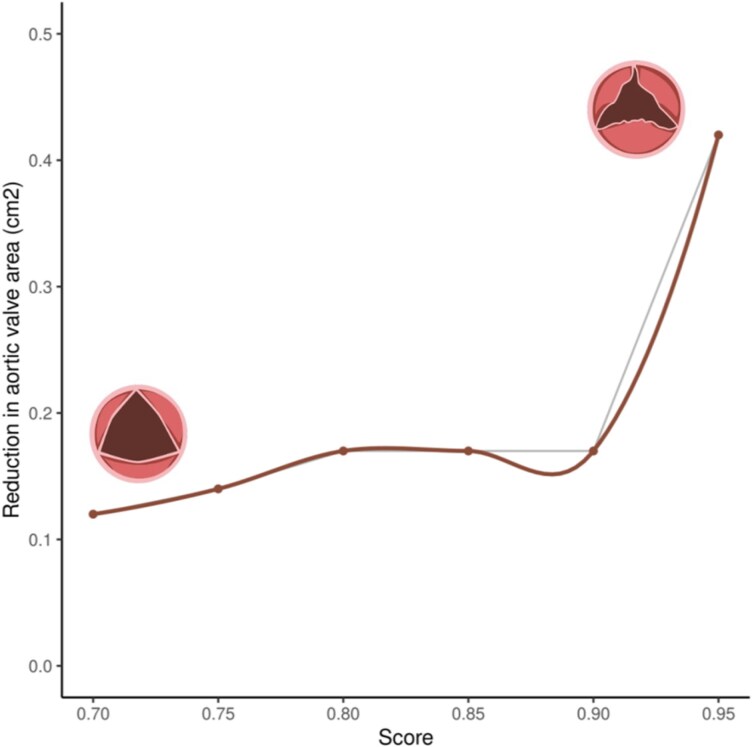 Figure 3
Peer Reviews
No public reviews on file for this paper yet. If you reviewed it on a platform where reviews are public (OpenReview, ICLR, NeurIPS, ICML), you can paste yours below so the community can read it here.
Videos
No videos yet. Explain this paper in a talk, walkthrough, or lecture? Add one.
Taxonomy
TopicsCardiac Valve Diseases and Treatments · Congenital Heart Disease Studies · Phonocardiography and Auscultation Techniques