Hybrid minimally invasive correction for flexible flatfeet in young adults: a prospective cohort study
Ahmed S. Elhalawany, Ahmed Kholeif, Abo Bakr Zein, Mohamed Nagy, Mahmoud M. Elsaqa, Mohammed Ali, Ahmed Khedr

TL;DR
A new surgical approach combining two procedures improves foot alignment and function in young adults with flexible flatfeet.
Contribution
A hybrid minimally invasive technique combining MDCO and STA is proposed for treating moderate to severe flexible flatfeet.
Findings
Significant radiological improvements were observed in talo-navicular coverage and talo-calcaneal angles after surgery.
AOFAS scores improved from an average of 62.69 preoperatively to 94.19 at three years postoperatively.
12.5% of patients experienced sinus tarsi pain, and 9.3% required removal of the arthroereisis implant.
Abstract
Introduction: This study aims to assess the functional and radiological outcomes of combining minimally invasive medial displacing calcaneal osteotomy (MDCO) with subtalar arthroereisis (STA) for the treatment of symptomatic planovalgus feet in young adults. Methods: A single-centre, prospective cohort study was conducted between November 2015 and February 2022. The study included a total of 32 patients with flexible flatfoot who were treated with subtalar arthroereisis combined with medialising calcaneal osteotomy with at least three years of follow-up. Radiographic evaluation included talar coverage angle, AP talo-first metatarsal (T1MT), AP talo-calcaneal, lateral talo-first metatarsal, and calcaneal pitch angles. Function was assessed by the AOFAS score. Results: Angles and scores were compared preoperatively and at the third-year follow-up. The mean talo-navicular coverage angle…
Genes, proteins, chemicals, diseases, species, mutations and cell lines named across the full text — each resolved to its canonical identifier and authoritative record.
Click any figure to enlarge with its caption.
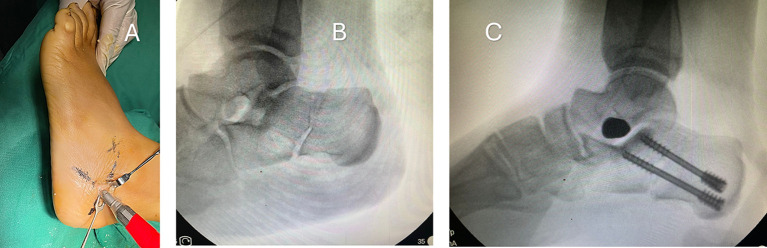 Figure 1
 Figure 1
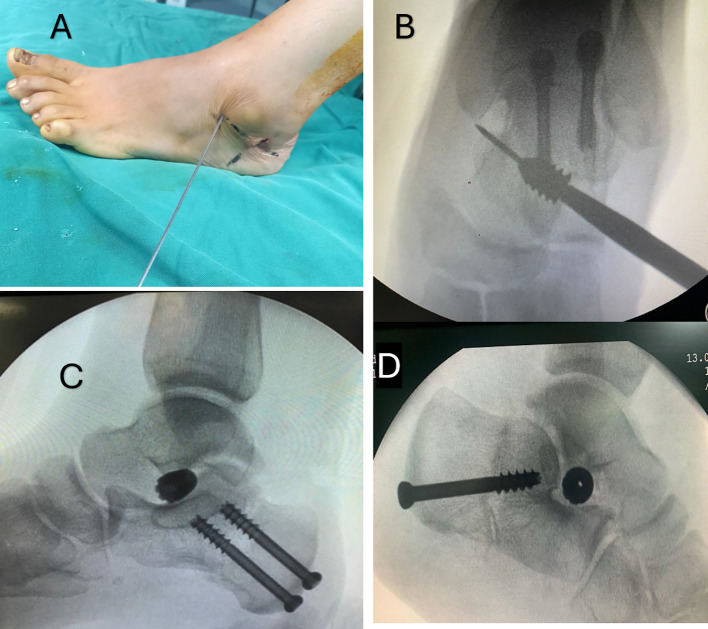 Figure 2
 Figure 2
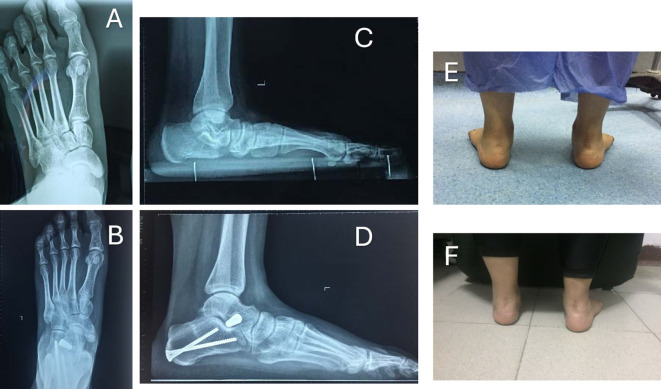 Figure 3
 Figure 3
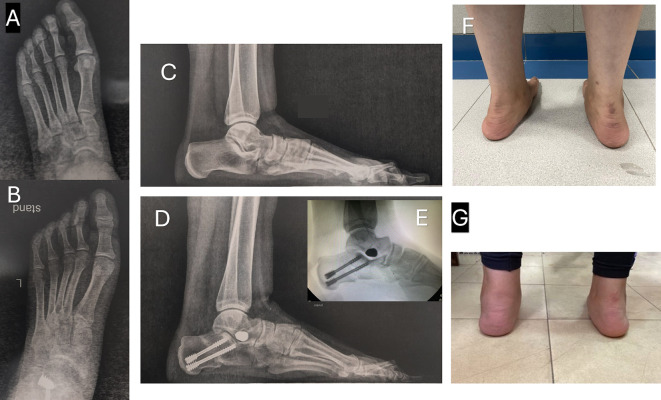 Figure 4
 Figure 4
Peer Reviews
No public reviews on file for this paper yet. If you reviewed it on a platform where reviews are public (OpenReview, ICLR, NeurIPS, ICML), you can paste yours below so the community can read it here.
Videos
No videos yet. Explain this paper in a talk, walkthrough, or lecture? Add one.
Taxonomy
TopicsFoot and Ankle Surgery · Lower Extremity Biomechanics and Pathologies · Bone fractures and treatments