The power and limits of predicting inter-protein exon-exon interactions using protein 3D structures
Jeanine Liebold, Aylin Del Moral-Morales, Karen Manalastas-Cantos, Olga Tsoy, Stefan Kurtz, Jan Baumbach, Khalique Newaz

TL;DR
This paper explores how 3D protein structures can help predict how alternative splicing affects protein interactions by identifying which exons interact.
Contribution
The study shows for the first time that existing methods for predicting protein interactions can also predict exon-exon interactions with reasonable accuracy.
Findings
Using 3D structures of human protein heterodimers, the study identified around 230,000 residue-residue interactions and 20,400 exon-exon interactions.
Existing PPIIP methods achieved up to 76% accuracy in predicting exon-exon interactions based on the area under the ROC curve.
Abstract
Alternative splicing (AS) effects on cellular functions can be captured by studying changes in the underlying protein-protein interactions (PPIs). Because AS results in the gain or loss of exons, existing methods for predicting AS-related PPI changes utilize known inter-protein exon-exon interactions (EEIs), which cover <0.5% of known human PPIs. Hence, there is a need to extend the limited EEI knowledge to advance the functional understanding of AS. Here, we explore whether existing 3-dimensional (3D) protein structure-based computational PPI interface prediction (PPIIP) methods, originally designed to predict inter-protein residue-residue interactions (RRIs), can be utilized to predict EEIs. We evaluate the PPIIP methods for the RRI- and EEI-prediction tasks using all known experimentally determined 3D structures of human protein heterodimers from the Protein Data Bank available at…
Genes, proteins, chemicals, diseases, species, mutations and cell lines named across the full text — each resolved to its canonical identifier and authoritative record.
Click any figure to enlarge with its caption.
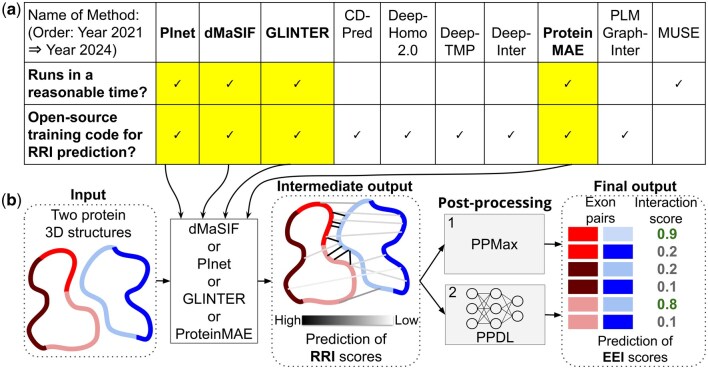 Figure 1
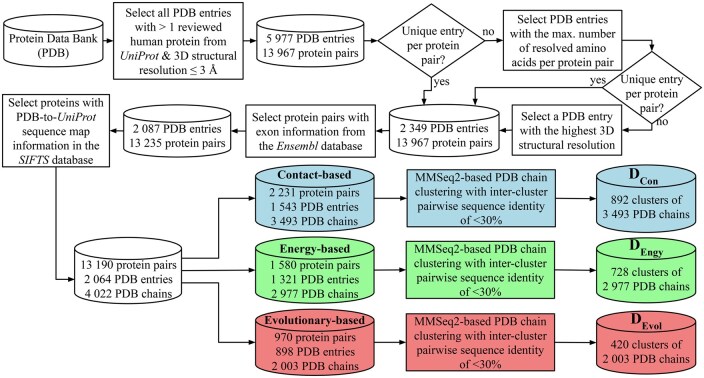 Figure 2
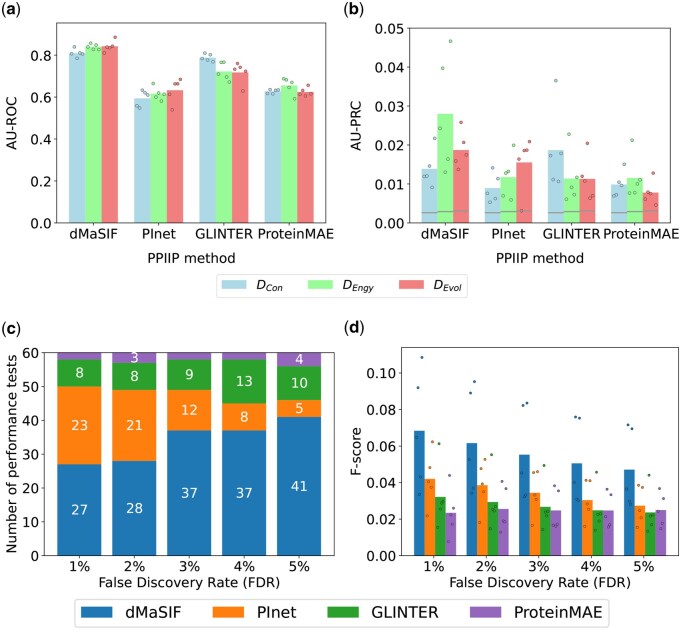 Figure 3
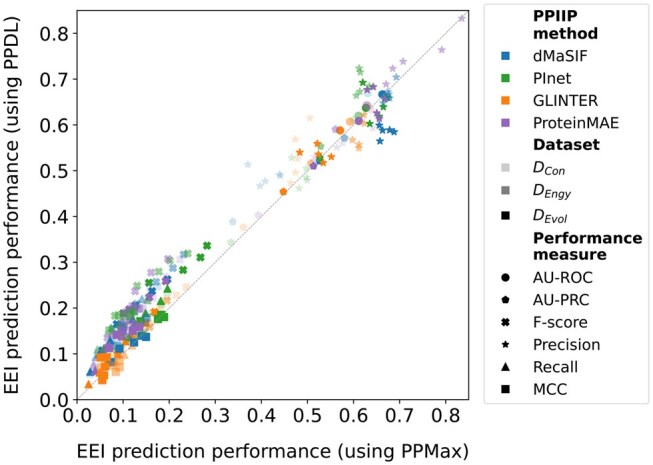 Figure 4
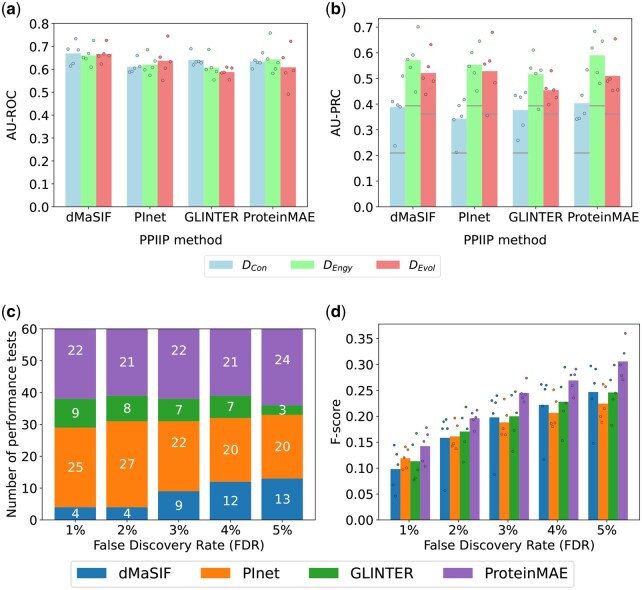 Figure 5
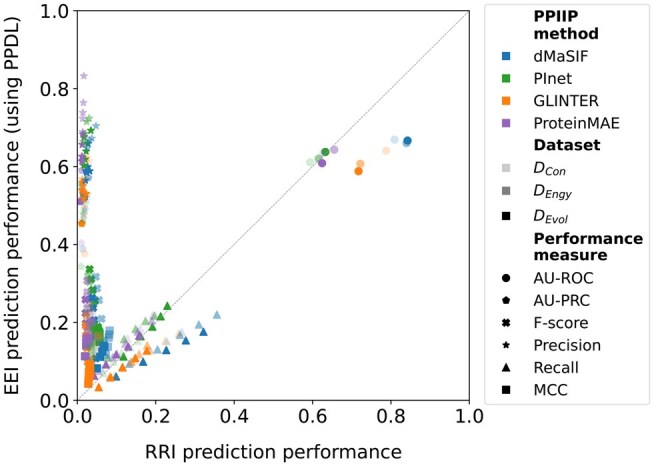 Figure 6
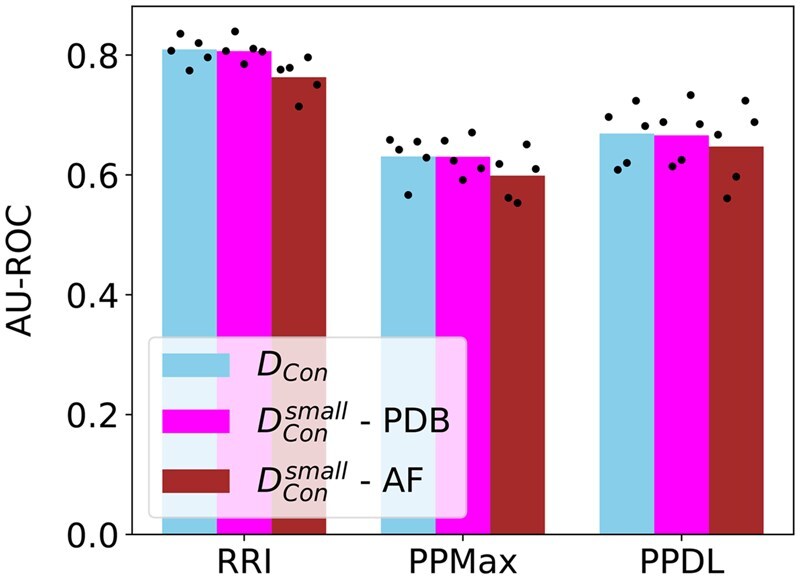 Figure 7
Peer Reviews
No public reviews on file for this paper yet. If you reviewed it on a platform where reviews are public (OpenReview, ICLR, NeurIPS, ICML), you can paste yours below so the community can read it here.
Videos
No videos yet. Explain this paper in a talk, walkthrough, or lecture? Add one.
Taxonomy
TopicsBioinformatics and Genomic Networks · Machine Learning in Bioinformatics · Protein Structure and Dynamics