Putting BASIL in a BLT: A Bayesian filtering method for estimating the fitness effects of nascent adaptive mutations
Huan-Yu Kuo, Sergey Kryazhimskiy, Tobias Bollenbach, Tobias Bollenbach, Tobias Bollenbach

TL;DR
The paper introduces BASIL, a Bayesian method that improves the accuracy of estimating the fitness effects of beneficial mutations in BLT experiments.
Contribution
BASIL is a novel Bayesian method that dynamically updates lineage fitness estimates and outperforms existing BLT analysis tools.
Findings
BASIL provides more accurate and robust fitness estimates than FitMut2 in both simulated and real BLT data.
Noise variance in BLT data scales non-linearly with lineage abundance, which BASIL accounts for in its model.
Existing methods like FitMut2 can produce biased estimates, especially under strong selection.
Abstract
The distribution of fitness effects (DFE) of new beneficial mutations is a key quantity that dictates the dynamics of adaptation. The barcode lineage tracking (BLT) approach is an important advance toward measuring DFEs. BLT experiments enable researchers to track the frequencies of ~105 barcoded lineages in large microbial populations and detect up to thousands of nascent beneficial mutations in a single experiment. However, reliably identifying adapted lineages and estimating the fitness effects of driver mutations remains a challenge because lineage dynamics are subject to demographic and measurement noise and competition with other lineages. We show that the commonly used Levy-Blundell method for analyzing BLT data and its improved version FitMut2 can produce biased fitness estimates, particularly if selection is strong. To address this problem, we develop a new method called BASIL…
Genes, proteins, chemicals, diseases, species, mutations and cell lines named across the full text — each resolved to its canonical identifier and authoritative record.
Click any figure to enlarge with its caption.
 Figure 1
 Figure 2
 Figure 3
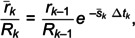 Figure 4
 Figure 5
 Figure 6
 Figure 7
 Figure 8
 Figure 9
 Figure 10
 Figure 11
 Figure 12
 Figure 13
 Figure 14
 Figure 15
 Figure 16
 Figure 17
 Figure 18
 Figure 19
 Figure 20
 Figure 21
 Figure 22
 Figure 23
 Figure 24
 Figure 25
 Figure 26
 Figure 27
 Figure 28
 Figure 29
 Figure 30
 Figure 31
 Figure 32
 Figure 33
 Figure 34
 Figure 35
 Figure 36
 Figure 37
 Figure 38
 Figure 39
 Figure 40
 Figure 41
 Figure 42
 Figure 43
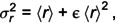 Figure 44
 Figure 45
 Figure 46
 Figure 47
 Figure 48
 Figure 49
 Figure 50
Peer Reviews
No public reviews on file for this paper yet. If you reviewed it on a platform where reviews are public (OpenReview, ICLR, NeurIPS, ICML), you can paste yours below so the community can read it here.
Videos
No videos yet. Explain this paper in a talk, walkthrough, or lecture? Add one.
Taxonomy
TopicsEvolution and Genetic Dynamics · Genomics and Phylogenetic Studies · Genetic diversity and population structure