Occurrence of Angiostrongylus cantonensis in invasive snails in the French territories of America, French Guiana, Guadeloupe, and Martinique
Céline Dard, Dorothée Harrois, Loïc Epelboin, Magalie Pierre-Demar, Noémie Vireeye, Gélixa Gamiette, Régis Delannoye, Lydéric Aubert, Stéphanie Guyomard-Rabenirina, Séverine Ferdinand, Antoine Talarmin, Nicole Desbois-Nogard

TL;DR
This study found that the rat lungworm parasite is present in invasive snails across French territories in the Americas, with different snail species playing key roles in different regions.
Contribution
The study identifies Lissachatina immaculata as a new potential intermediate host for Angiostrongylus cantonensis in French Guiana.
Findings
Lissachatina fulica was the main carrier of A. cantonensis in Guadeloupe and Martinique.
Lissachatina immaculata was confirmed as a potential intermediate host in French Guiana for the first time.
Infection rates in snails were high, but human cases remain rare due to limited human-snail interaction.
Abstract
Angiostrongylus cantonensis is the primary etiological agent of eosinophilic meningitis, transmitted through rats (definitive hosts) and molluscs (potential intermediate hosts). Human infection occurs accidentally through the ingestion of contaminated hosts. First reported in the French West Indies in 2002, cases of A. cantonensis infections are emerging due to the spread of its hosts, particularly the invasive African giant snail (Lissachatina fulica). This study aims to assess the prevalence of A. cantonensis in gastropods across Guadeloupe, Martinique, and French Guiana, providing insights into its transmission dynamics. Terrestrial gastropods were collected in 2017 from residential areas with prior human cases and other selected sites with no reported case. The gastropods’ species were identified by a malacologist and processed for DNA extraction. Molecular diagnosis of A.…
Genes, proteins, chemicals, diseases, species, mutations and cell lines named across the full text — each resolved to its canonical identifier and authoritative record.
Click any figure to enlarge with its caption.
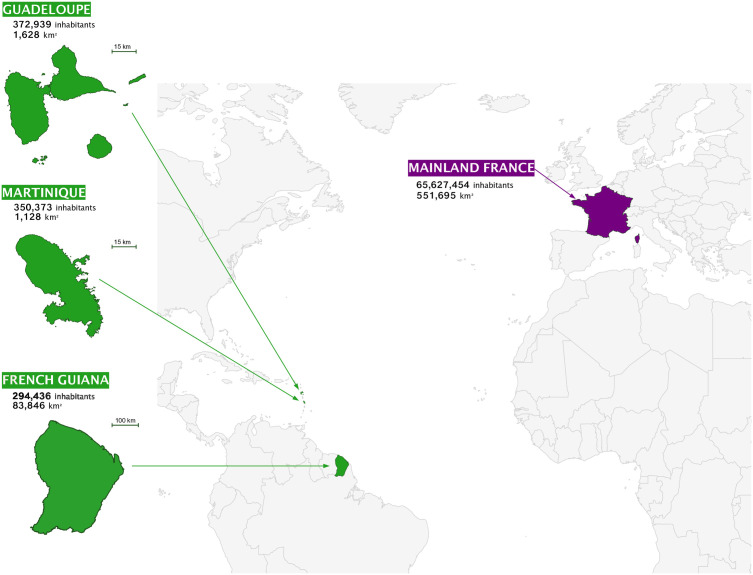 Figure 1
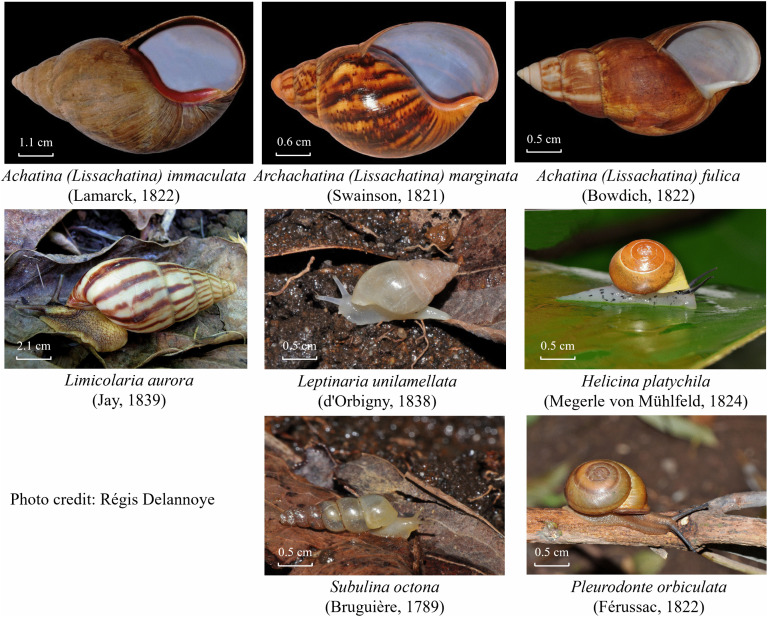 Figure 2
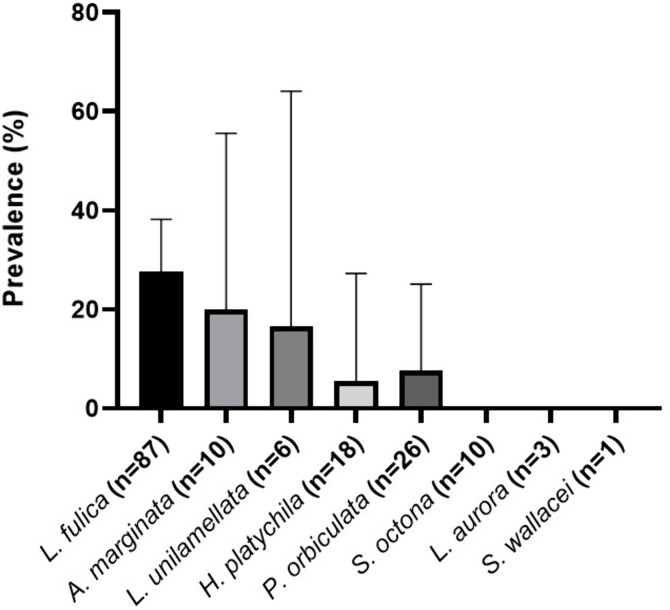 Figure 3
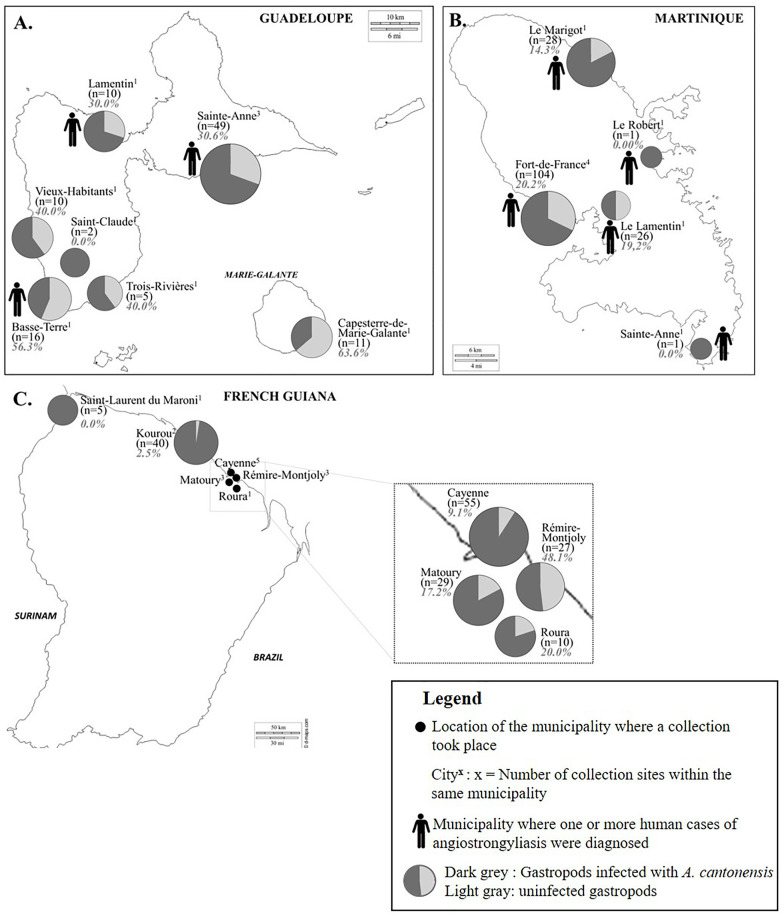 Figure 4
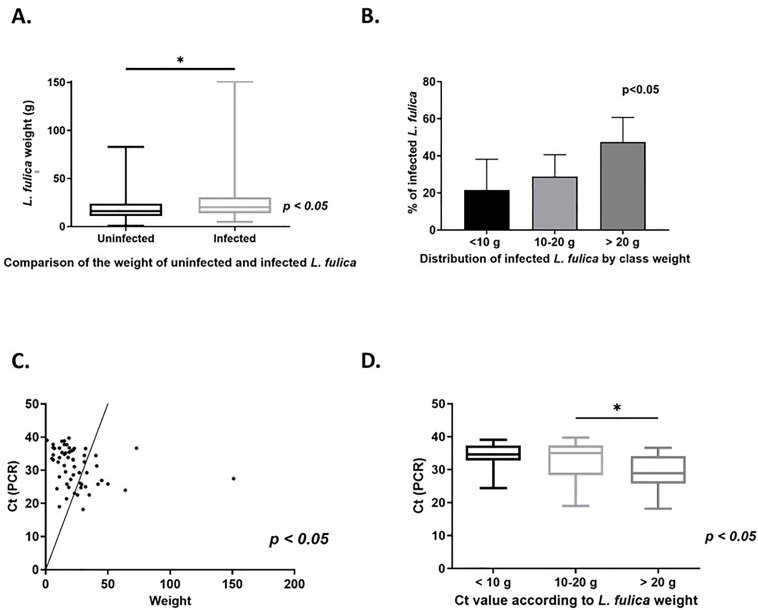 Figure 5
Peer Reviews
No public reviews on file for this paper yet. If you reviewed it on a platform where reviews are public (OpenReview, ICLR, NeurIPS, ICML), you can paste yours below so the community can read it here.
Videos
No videos yet. Explain this paper in a talk, walkthrough, or lecture? Add one.
Taxonomy
TopicsMollusks and Parasites Studies · Legionella and Acanthamoeba research · Helminth infection and control