Assessing the impact of World Trade Center (WTC) exposures on post-bronchodilator lung function: Insights from WTC survivor population
Ziyue Wang, Jiacheng Ge, Yuyan Wang, Katherine Siu, Roberta Goldring, Beno Oppenheimer, Yongzhao Shao, Joan Reibman, Mengling Liu

TL;DR
This study examines how exposure to the World Trade Center disaster, along with obesity and smoking, affects lung function in survivors, finding that small airway dysfunction is linked to WTC exposure.
Contribution
The study introduces post-bronchodilator oscillometry as a more sensitive method for detecting small airway dysfunction in WTC survivors.
Findings
Dust-cloud exposure and worker status were associated with elevated AX, R5, and R20, indicating small airway dysfunction.
Obesity and smoking had larger effects on lung function than WTC exposures.
Post-bronchodilator oscillometry detected small airway dysfunction more effectively than spirometry.
Abstract
To assess the effects of World Trade Center (WTC) exposures, obesity, and smoking on post-bronchodilator (post-BD) lung function in WTC Survivors. Data included 5,243 participants enrolled in WTC Environmental Health Center (WTC EHC) program between 2005 and 2022. WTC-related exposures included dust-cloud exposure and occupational/residential roles. Lung function included post-BD spirometry (FEV1, FVC) and impulse oscillometry (R5, R20, AX). Multivariable linear and quantile regressions assessed associations with WTC exposures, BMI, and smoking, adjusting for demographics. Dust-cloud exposure and Worker status were associated with elevated AX, R5, and R20, indicating small airway dysfunction. Spirometry showed minimal impact from dust exposure, though Workers had lower FEV₁ and FVC than Residents. Obesity and smoking were consistently linked to poorer lung function, with effect sizes…
Genes, proteins, chemicals, diseases, species, mutations and cell lines named across the full text — each resolved to its canonical identifier and authoritative record.
Click any figure to enlarge with its caption.
 Figure 1
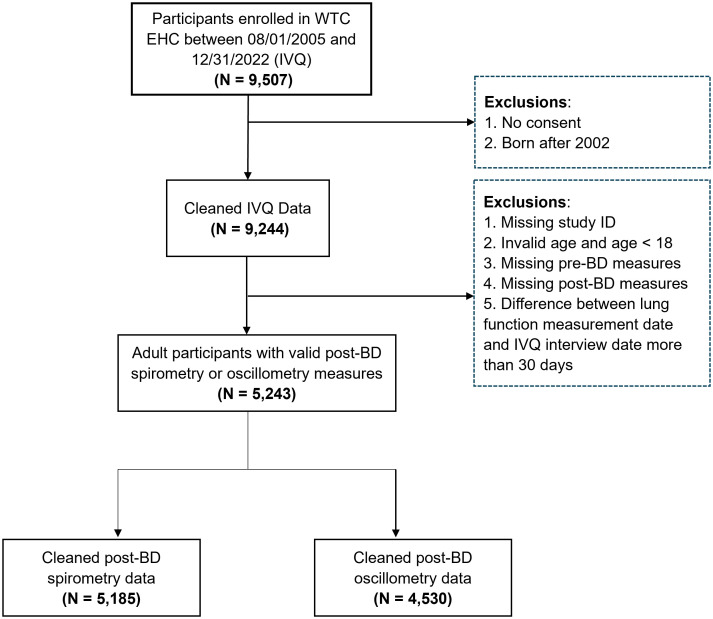 Figure 2
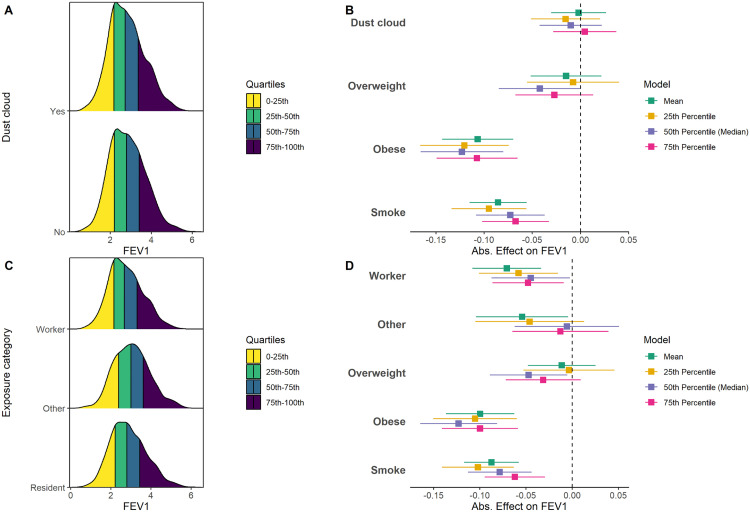 Figure 3
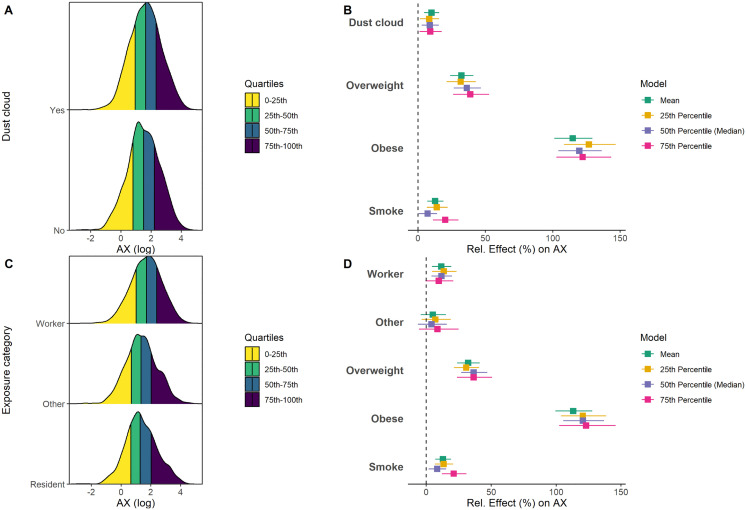 Figure 4
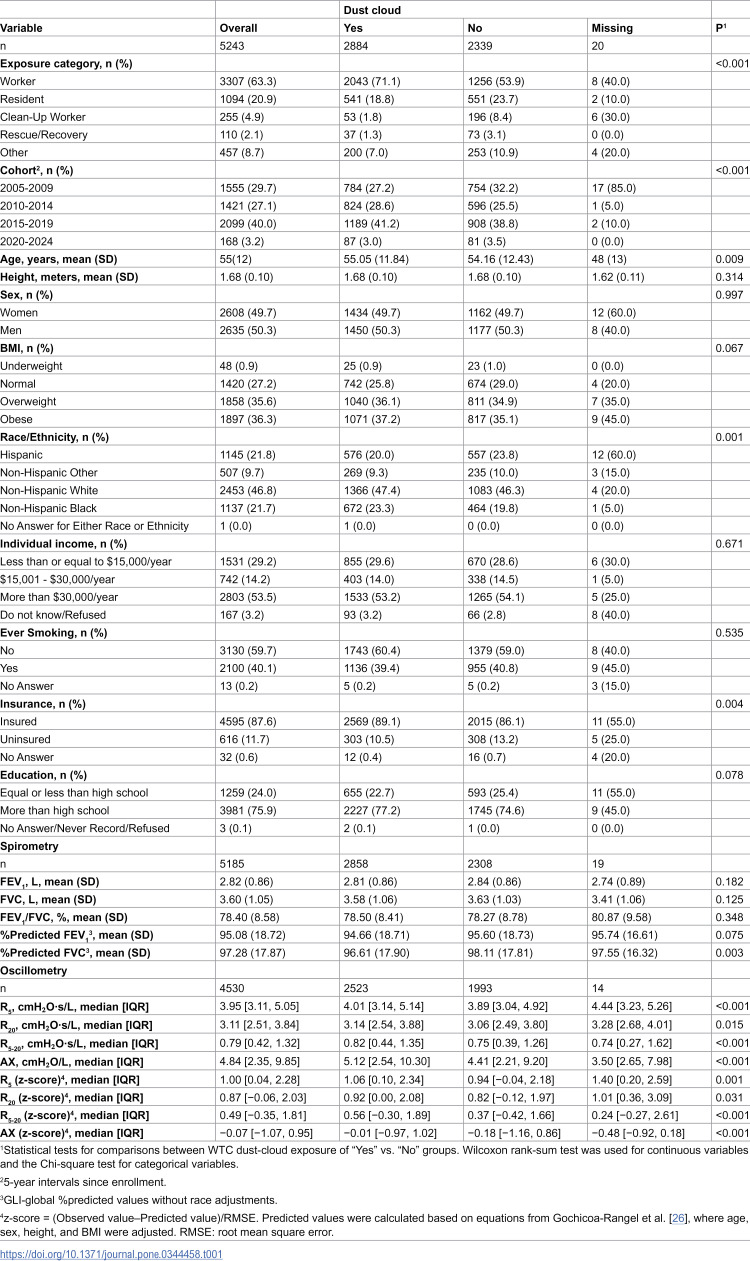 Figure 5
Peer Reviews
No public reviews on file for this paper yet. If you reviewed it on a platform where reviews are public (OpenReview, ICLR, NeurIPS, ICML), you can paste yours below so the community can read it here.
Videos
No videos yet. Explain this paper in a talk, walkthrough, or lecture? Add one.
Taxonomy
TopicsOccupational Health and Performance · Posttraumatic Stress Disorder Research · Disaster Response and Management