Research on electromagnetic compatibility analysis of automation equipment based on generative adversarial networks and pulse sparse convolution
Wenrui Ding, Deren Feng

TL;DR
This paper introduces a new framework using GANs and pulse sparse convolution to improve EMI analysis in high-speed industrial systems.
Contribution
A novel pulse-aware GAN framework with FPGA implementation for real-time, energy-efficient EMI analysis in industrial automation.
Findings
The framework achieves a Fréchet distance of 0.72 and a global difference metric of 0.18 ± 0.03 on an industrial EMC dataset.
It reduces pulse-width and phase prediction errors by over 40% compared to classical numerical solvers.
The FPGA implementation enables deterministic inference at 5 GS/s with 0.71 W power consumption.
Abstract
Electromagnetic interference (EMI) analysis in high-speed industrial systems is increasingly challenged by multi-gigahertz sampling rates, complex transient behaviors, and stringent real-time constraints. To address these challenges, this paper proposes a pulse-aware generative and analysis framework based on a generative adversarial network (GAN) combined with pulse sparse convolution using leaky integrate-and-fire (LIF) spiking neurons. A multi-scale discriminator and gradient penalty stabilization are employed to improve waveform generation fidelity, achieving a Fréchet distance (FID) of 0.72 and a global difference metric (GDM) of 0.18 ± 0.03 on an industrial-grade Electromagnetic compatibility (EMC) dataset. The proposed framework is further applied to crosstalk prediction, where it reduces pulse-width and phase prediction errors by more than 40% compared with classical numerical…
Genes, proteins, chemicals, diseases, species, mutations and cell lines named across the full text — each resolved to its canonical identifier and authoritative record.
Click any figure to enlarge with its caption.
 Figure 1
 Figure 2
 Figure 3
 Figure 4
 Figure 5
 Figure 6
 Figure 7
 Figure 8
 Figure 9
 Figure 10
 Figure 11
 Figure 12
 Figure 13
 Figure 14
 Figure 15
 Figure 16
 Figure 17
 Figure 18
 Figure 19
 Figure 20
 Figure 21
 Figure 22
 Figure 23
 Figure 24
 Figure 25
 Figure 26
 Figure 27
 Figure 28
 Figure 29
 Figure 30
 Figure 31
 Figure 32
 Figure 33
 Figure 34
 Figure 35
 Figure 36
 Figure 37
 Figure 38
 Figure 39
 Figure 40
 Figure 41
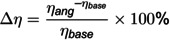 Figure 42
 Figure 43
 Figure 44
 Figure 45
 Figure 46
 Figure 47
 Figure 48
 Figure 49
 Figure 50
Peer Reviews
No public reviews on file for this paper yet. If you reviewed it on a platform where reviews are public (OpenReview, ICLR, NeurIPS, ICML), you can paste yours below so the community can read it here.
Videos
No videos yet. Explain this paper in a talk, walkthrough, or lecture? Add one.
Taxonomy
TopicsElectromagnetic Compatibility and Noise Suppression · Lightning and Electromagnetic Phenomena · Power Line Communications and Noise