Metabolic syndrome among patients with severe mental illness attending a tertiary hospital in northwestern, Tanzania: A cross sectional study
Didas Raymond Msele, Eligi Karol Kimosso, Florian Emanuel Ghaimo, Samuel Chacha, Noel Mrema Kilonzo, Matiko Mwita, Samuel Likindikoki

TL;DR
This study found that about one-third of patients with severe mental illness in Tanzania have metabolic syndrome, with older patients being at higher risk.
Contribution
The study reports the prevalence of metabolic syndrome in severe mental illness patients in northwestern Tanzania and identifies age as a significant risk factor.
Findings
33.1% of participants with severe mental illness had metabolic syndrome.
Participants aged ≥45 years had fivefold higher odds of having metabolic syndrome compared to those aged 18–24 years.
The study highlights the need for routine screening and a multi-disciplinary approach for aging patients with severe mental illness.
Abstract
Patients with severe mental illness exhibit a significantly higher prevalence of metabolic syndrome, with a risk approximately two times greater than that of the general population. This elevated risk may be attributed to factors such as the mental illness itself, the use of psychotropic medications, obesity, high-fat diets, low levels of physical activity, and smoking. The study aimed to determine the prevalence of metabolic syndrome and its associated factors among patients with severe mental illness attending Bugando Medical Centre [BMC] in Mwanza, Tanzania. This cross-sectional study included adults aged 18 years and above who attended the psychiatric clinic at BMC. Systematic random sampling was used. Data were collected using a structured questionnaire. Data analysis was performed using STATA version 17. Ethical approval was granted by the Institutional Review Board of MUHAS. In…
Genes, proteins, chemicals, diseases, species, mutations and cell lines named across the full text — each resolved to its canonical identifier and authoritative record.
Click any figure to enlarge with its caption.
 Figure 1
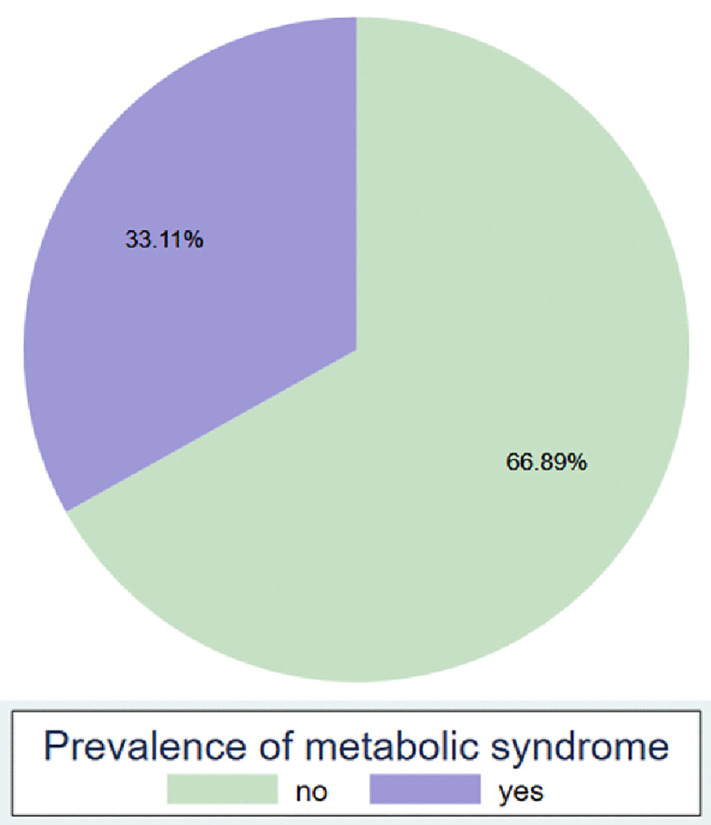 Figure 2
 Figure 3
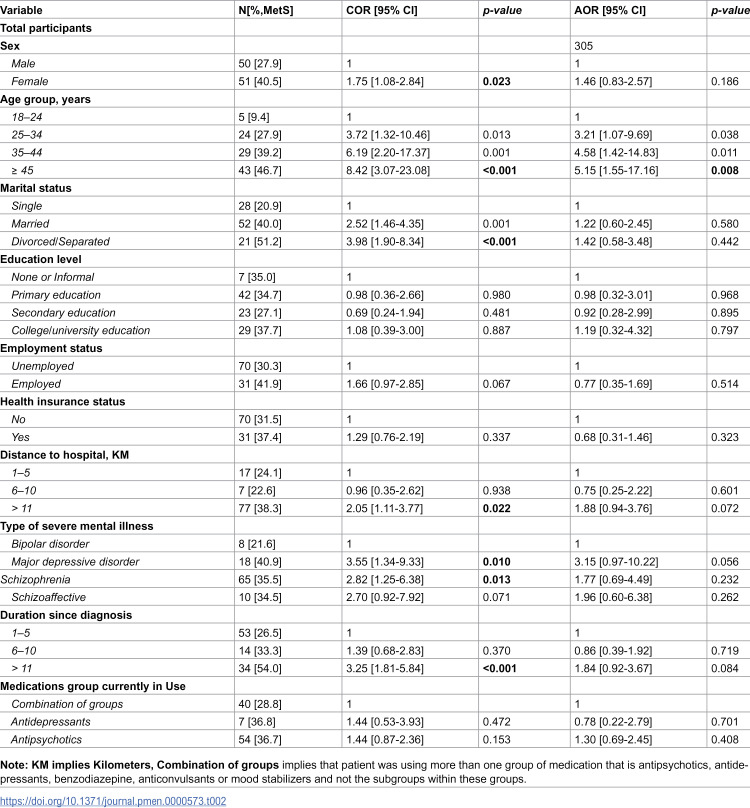 Figure 4
Peer Reviews
No public reviews on file for this paper yet. If you reviewed it on a platform where reviews are public (OpenReview, ICLR, NeurIPS, ICML), you can paste yours below so the community can read it here.
Videos
No videos yet. Explain this paper in a talk, walkthrough, or lecture? Add one.
Taxonomy
TopicsSchizophrenia research and treatment · Bipolar Disorder and Treatment · Sleep and related disorders