Trust over repeated interactions: Majority group members generalize more from interactions with non-coethnic partners
Siyeona Chang, Maria Abascal, Delia Baldassarri

TL;DR
This study shows that negative experiences with outgroup members reduce future trust and willingness to interact with them.
Contribution
The paper introduces a novel approach to understanding how repeated interactions affect intergroup trust and behavior.
Findings
Participants who had untrustworthy outgroup partners were less likely to choose outgroup partners again.
Uncertain participants gave less in the second round after an untrustworthy first interaction.
The study emphasizes intergroup contact as a key factor in shaping future trust and interaction patterns.
Abstract
People increasingly live in complex, heterogeneous communities characterized by differentiation, where groups may lack the shared history and/or close ties that can nurture trust in more traditional communities. How does trust generalize from an interaction with one stranger––either trustworthy or untrustworthy––to subsequent interactions with other strangers? Does trust generalize more from or toward interactions with outgroup members than ingroup members? And, does an interaction with one stranger affect someone’s willingness to interact with strangers from the same group moving forward? This study examines these questions using a repeated trust game in which 1,255 US White adults were paired with a White or Latino partner who behaved in a trustworthy or untrustworthy way. Results reveal that participants paired with an untrustworthy outgroup member in the first round were less likely…
Genes, proteins, chemicals, diseases, species, mutations and cell lines named across the full text — each resolved to its canonical identifier and authoritative record.
Click any figure to enlarge with its caption.
 Figure 1
 Figure 2
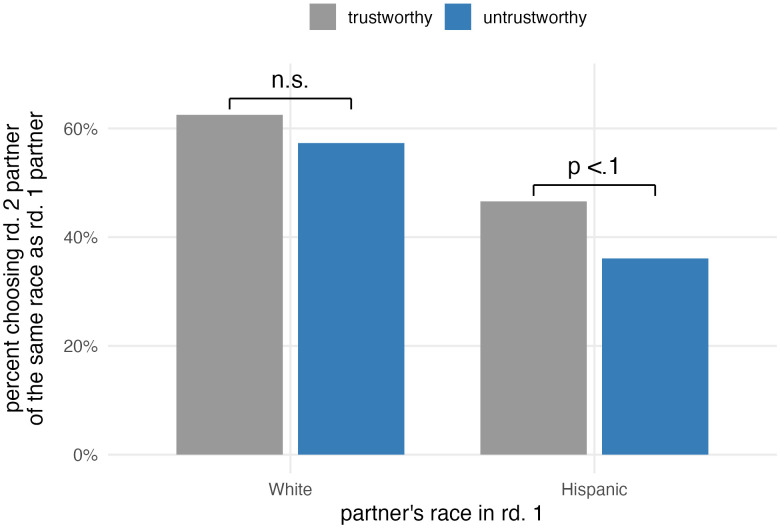 Figure 3
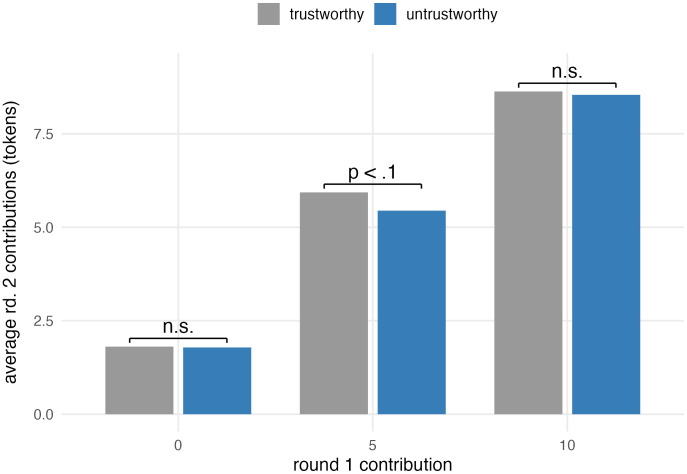 Figure 4
 Figure 5
 Figure 6
Peer Reviews
No public reviews on file for this paper yet. If you reviewed it on a platform where reviews are public (OpenReview, ICLR, NeurIPS, ICML), you can paste yours below so the community can read it here.
Videos
No videos yet. Explain this paper in a talk, walkthrough, or lecture? Add one.
Taxonomy
TopicsExperimental Behavioral Economics Studies · Evolutionary Game Theory and Cooperation · Social Power and Status Dynamics