A pruned and parameter-efficient Xception framework for skin cancer classification
Şafak Kılıç, Yahya Doğan, Sameena Naaz, Sameena Naaz, Sameena Naaz

TL;DR
This paper introduces a more efficient and accurate framework for classifying skin cancer using pruned neural networks and advanced techniques, achieving high accuracy with fewer parameters.
Contribution
A novel framework combining model pruning, SMOTE, data augmentation, and Avg-TopK pooling for efficient and accurate skin cancer classification.
Findings
The proposed framework achieved an overall accuracy of 91.52% on the HAM10000 dataset.
Model pruning reduced parameters by 35%, from 20.9 million to 13.5 million, without significant loss in accuracy.
The use of SMOTE and data augmentation improved generalization across all skin lesion classes.
Abstract
Skin cancer is one of the most prevalent and potentially lethal diseases worldwide, with early detection being critical for patient survival. This study presents a novel framework that leverages transfer learning, pruning, SMOTE, data augmentation, and the advanced Avg-TopK pooling method to improve the accuracy and efficiency of skin cancer classification using dermoscopic images. The HAM10000 dataset was used to evaluate the performance of various transfer learning models, with Xception as the top performer. A layer-based pruning strategy was proposed to optimize the model and reduce its complexity. SMOTE and data augmentation were applied to address the class imbalance within the dataset, significantly improving the model’s generalization across all skin lesion classes. The utilization of the Avg-TopK pooling technique further enhanced model accuracy by preserving crucial image…
Genes, proteins, chemicals, diseases, species, mutations and cell lines named across the full text — each resolved to its canonical identifier and authoritative record.
Click any figure to enlarge with its caption.
 Figure 1
 Figure 2
 Figure 3
 Figure 4
 Figure 5
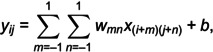 Figure 6
 Figure 7
 Figure 8
 Figure 9
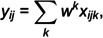 Figure 10
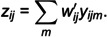 Figure 11
 Figure 12
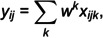 Figure 13
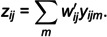 Figure 14
 Figure 15
 Figure 16
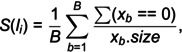 Figure 17
 Figure 18
 Figure 19
 Figure 20
 Figure 21
 Figure 22
 Figure 23
 Figure 24
 Figure 25
 Figure 26
 Figure 27
 Figure 28
 Figure 29
 Figure 30
 Figure 31
 Figure 32
 Figure 33
 Figure 34
 Figure 35
 Figure 36
 Figure 37
 Figure 38
 Figure 39
 Figure 40
 Figure 41
 Figure 42
 Figure 43
 Figure 44
 Figure 45
 Figure 46
 Figure 47
 Figure 48
 Figure 49
 Figure 50
Peer Reviews
No public reviews on file for this paper yet. If you reviewed it on a platform where reviews are public (OpenReview, ICLR, NeurIPS, ICML), you can paste yours below so the community can read it here.
Videos
No videos yet. Explain this paper in a talk, walkthrough, or lecture? Add one.
Taxonomy
TopicsCutaneous Melanoma Detection and Management · Nonmelanoma Skin Cancer Studies · AI in cancer detection