Deceased kidney donor cystatin C and subsequent recipient measured glomerular filtration rate at one year after transplantation
Isabelle J. C. Dielwart, Daan Kremer, Tim J. Knobbe, Dion Groothof, Henri G. D. Leuvenink, Jenny E. Kootstra-Ros, Martin H. de Borst, Marco van Londen, Jan-Stephan F. Sanders, Robert A. Pol, Stephan J. L. Bakker

TL;DR
This study found that cystatin C, but not creatinine, in deceased kidney donors is linked to better kidney function in recipients one year after transplantation.
Contribution
The study demonstrates that cystatin C is a more reliable indicator of donor kidney function than creatinine in deceased donors.
Findings
Donor plasma creatinine was not associated with recipient measured glomerular filtration rate (mGFR) at one year.
Donor cystatin C was significantly associated with recipient graft function at one year after transplantation.
The association of cystatin C with recipient mGFR remained after adjusting for potential confounders.
Abstract
Deceased donor kidney selection is largely determined by creatinine-based kidney function estimation. However, muscle wasting is common in potential donors and affects the accuracy of creatinine-based kidney function assessment. Cystatin C could serve as a muscle-mass independent alternative for this purpose. The primary aim of this study was to evaluate the associations of donor creatinine and cystatin C with recipient measured glomerular filtration (mGFR) at one year after transplantation. Using data from the prospective TransplantLines study, multivariable linear regression analyses were performed to examine the associations of donor plasma creatinine and cystatin C with recipient I125-iothalamate mGFR. Donor plasma creatinine and cystatin C data were available for 96 donor-recipient pairs. Median pre-donation creatinine and cystatin C concentrations were 56.0 [49.5–71.0] µmol/L…
Genes, proteins, chemicals, diseases, species, mutations and cell lines named across the full text — each resolved to its canonical identifier and authoritative record.
Click any figure to enlarge with its caption.
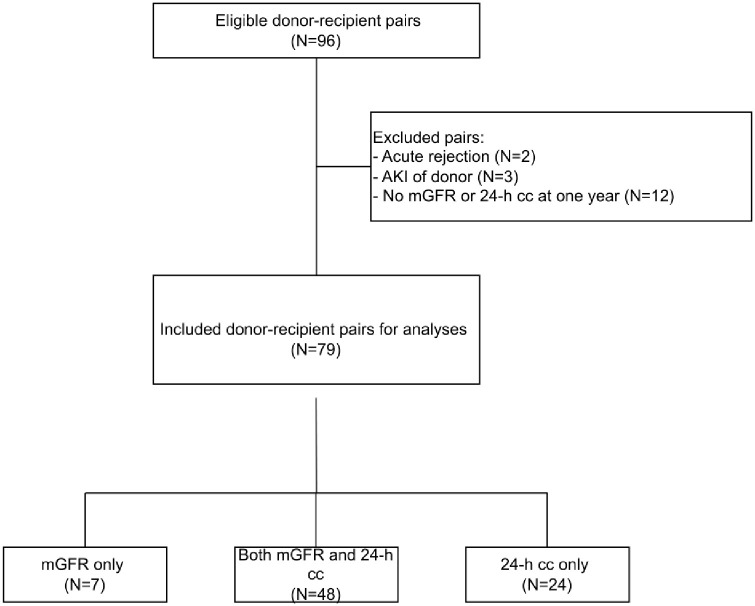 Figure 1
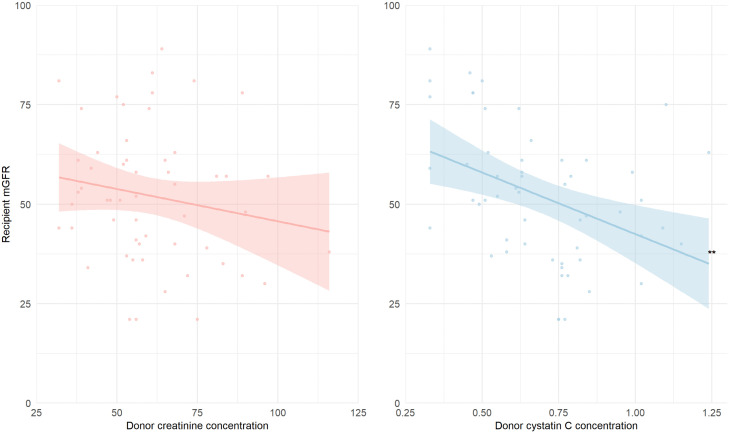 Figure 2
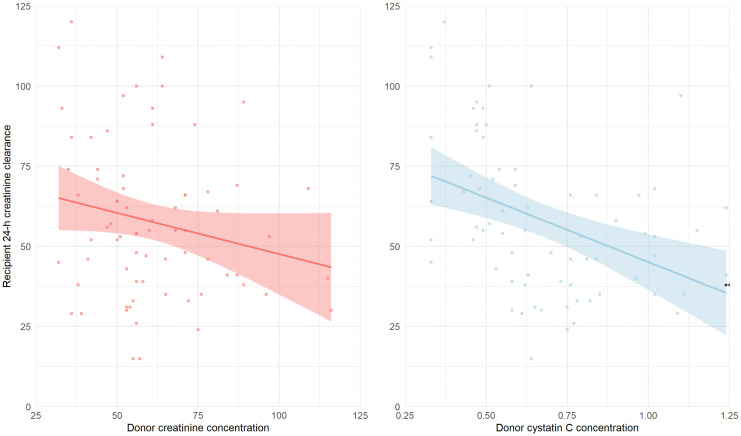 Figure 3
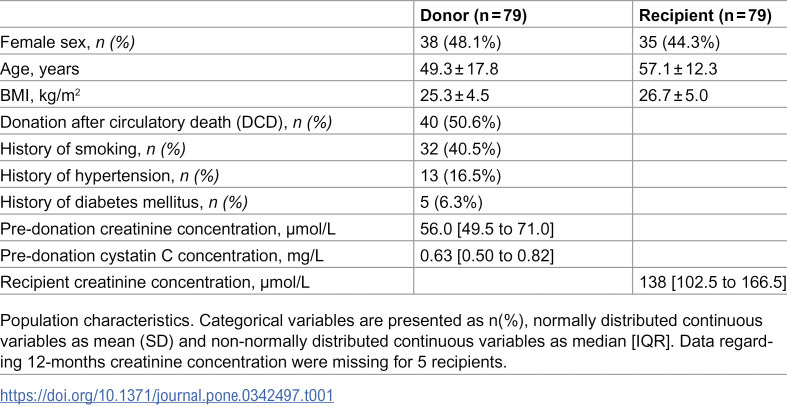 Figure 4
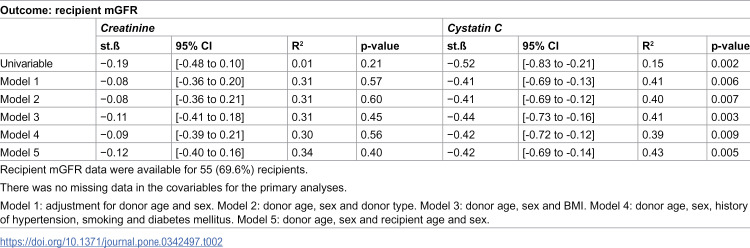 Figure 5
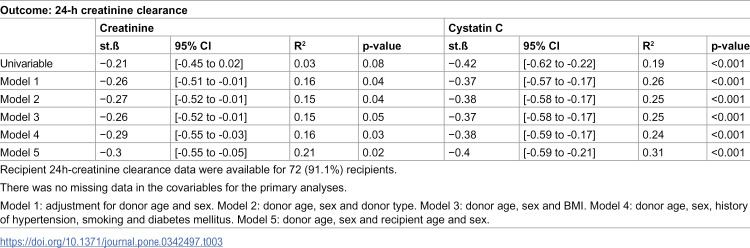 Figure 6
Peer Reviews
No public reviews on file for this paper yet. If you reviewed it on a platform where reviews are public (OpenReview, ICLR, NeurIPS, ICML), you can paste yours below so the community can read it here.
Videos
No videos yet. Explain this paper in a talk, walkthrough, or lecture? Add one.
Taxonomy
TopicsChronic Kidney Disease and Diabetes · Organ Donation and Transplantation · Renal and Vascular Pathologies