Computational modelling of the equine arteritis virus GP5/M Dimer: Implications for immune evasion and virulence
Michael Veit, Anna Karolina Matczuk, Vishwanatha R. A. P. Reddy, Vishwanatha R. A. P. Reddy, Vishwanatha R. A. P. Reddy

TL;DR
This study uses computational modeling to understand the structure of a key protein in equine arteritis virus, revealing how it helps the virus evade the immune system and cause disease.
Contribution
The paper presents the first 3D structure prediction of the EAV GP5/M dimer using AlphaFold3, revealing structural features linked to immune evasion and virulence.
Findings
The EAV GP5/M dimer has a longer ectodomain with variable regions that contain neutralizing epitopes.
Conserved transmembrane domains suggest structural similarities between EAV and PRRSV.
N-glycosylation sites and membrane-proximal epitopes are linked to immune evasion and virulence.
Abstract
Equine arteritis virus (EAV) is a positive-stranded RNA virus of the Arteriviridae family. Its GP5/M dimer, the principal component of the viral envelope, mediates virus budding and serves as a key target for neutralizing antibodies. Using AlphaFold3, we predicted the 3D structure of the EAV GP5/M dimer and compared it to its homolog in porcine reproductive and respiratory syndrome virus (PRRSV). Both complexes share a conserved architecture comprising a short ectodomain, three helical transmembrane regions, and a β-sheet-rich endodomain. EAV GP5 features a longer ectodomain with four α-helices and a disulfide-linked β-sheet, which forms the most variable and surface-exposed region containing neutralizing epitopes. Adjacent conserved and variable N-glycosylation sites suggest immune evasion mechanisms involving antigenic drift and glycan shielding. Another epitope, located in a…
Genes, proteins, chemicals, diseases, species, mutations and cell lines named across the full text — each resolved to its canonical identifier and authoritative record.
Click any figure to enlarge with its caption.
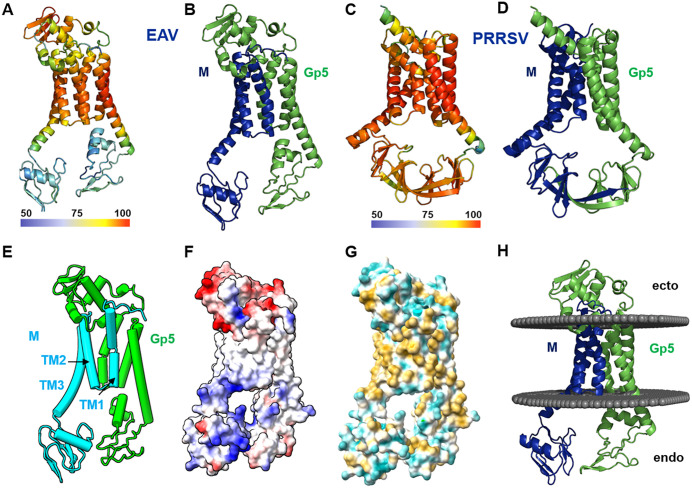 Figure 1
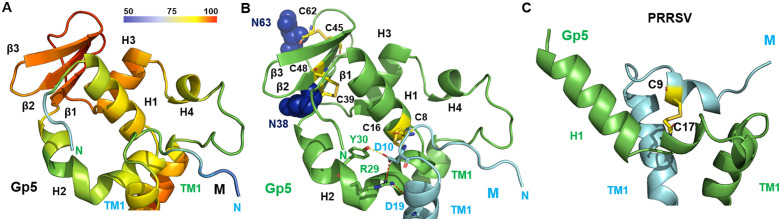 Figure 2
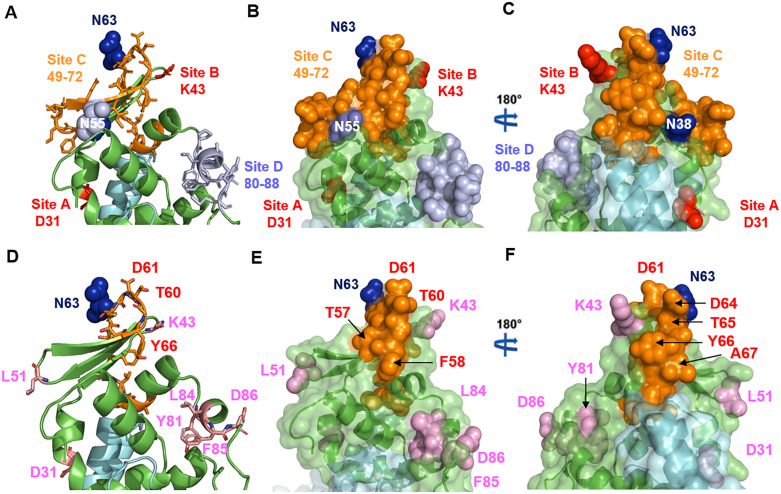 Figure 3
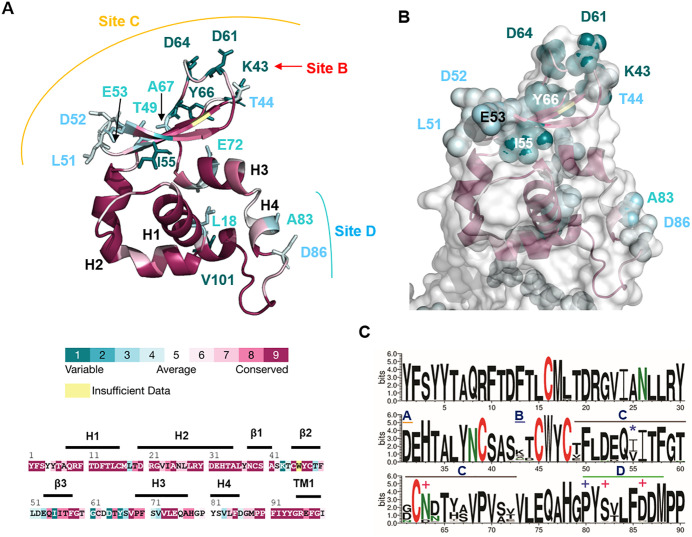 Figure 4
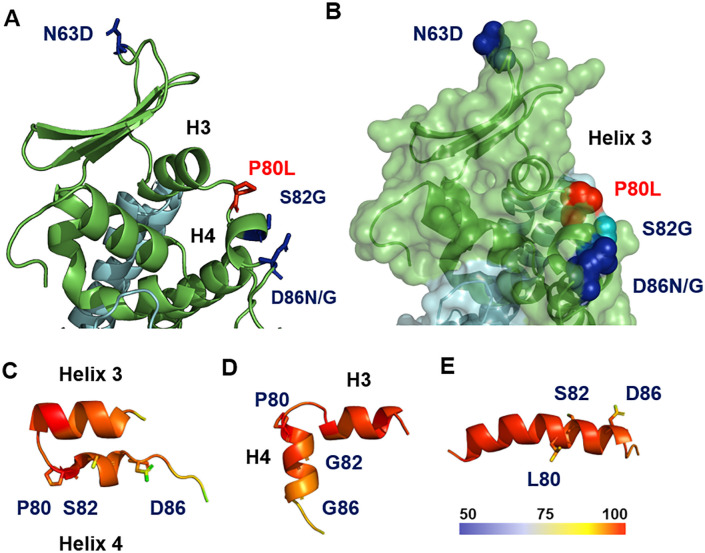 Figure 5
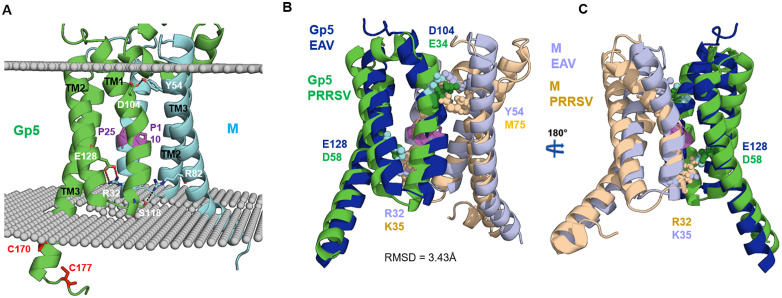 Figure 6
Peer Reviews
No public reviews on file for this paper yet. If you reviewed it on a platform where reviews are public (OpenReview, ICLR, NeurIPS, ICML), you can paste yours below so the community can read it here.
Videos
No videos yet. Explain this paper in a talk, walkthrough, or lecture? Add one.
Taxonomy
TopicsAnimal Virus Infections Studies · SARS-CoV-2 and COVID-19 Research · Virology and Viral Diseases