Tunable icephobicity of surface-grown metal–organic frameworks with nanohierarchical texture
Simrandeep Bahal, Jianhui Zhang, Vikramjeet Singh, Prasenjit Kabi, Abbas Heydari, Manish K. Tiwari

TL;DR
This paper explores how metal-organic frameworks (MOFs) can be used to create icephobic surfaces that reduce ice formation and adhesion.
Contribution
The study identifies nanoconfinement and chemical functionalization as key factors in enhancing icephobic properties of MOFs.
Findings
Surface-grown MOFs lowered ice nucleation temperature by 4–5°C and reduced ice adhesion strength by up to two-thirds.
Nanoconfinement in sub-nanometre pores increases the energy barrier for ice nucleation and reduces ice contact.
Hydrophobic alkyl silane functionalization is the most effective strategy to enhance icephobic properties.
Abstract
Metal–organic frameworks (MOFs) have emerged as promising candidates for advanced surface treatments due to their inherent porosity, structural tunability, and functional versatility. Herein, we utilize these unique attributes of MOFs to systematically investigate their potential as passive icephobic surfaces, which is a critical requirement to mitigate ice accretion, which significantly impacts safety and performance across numerous technologies. Specifically, we elucidate how MOFs’ pore size, surface morphology, and chemical functionality synergistically influence ice nucleation temperature and ice adhesion strength. Employing surface-grown MOFs (UiO-66, UiO-67 and MOF-5), we demonstrate that these coatings consistently lowered the median ice nucleation temperature by approximately 4–5 °C and reduced ice adhesion strength by up to two-thirds compared to bare glass. Through a combined…
Genes, proteins, chemicals, diseases, species, mutations and cell lines named across the full text — each resolved to its canonical identifier and authoritative record.
Click any figure to enlarge with its caption.
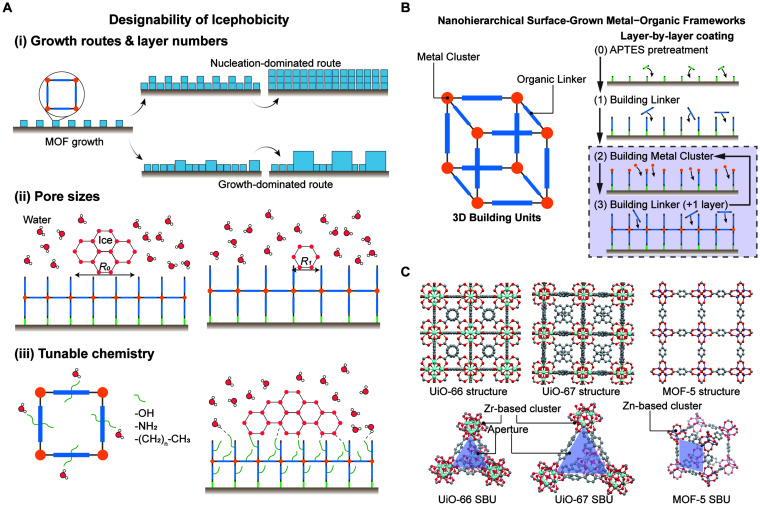 Figure 1
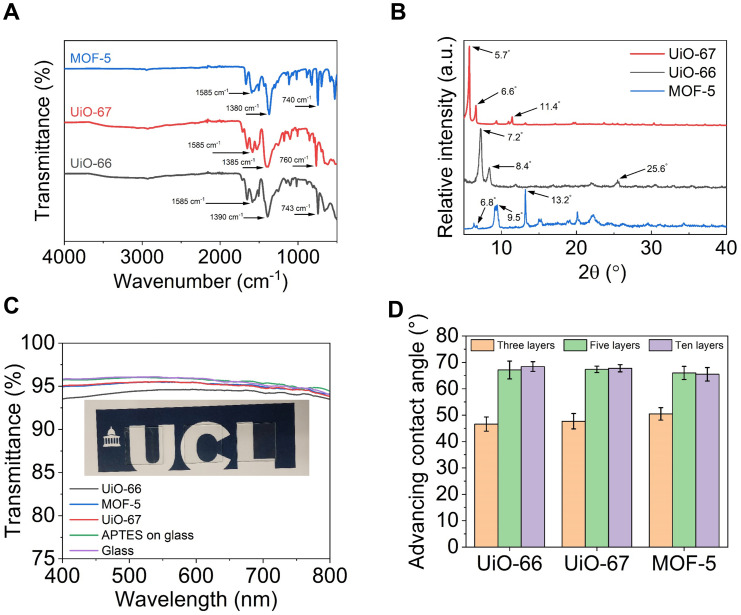 Figure 2
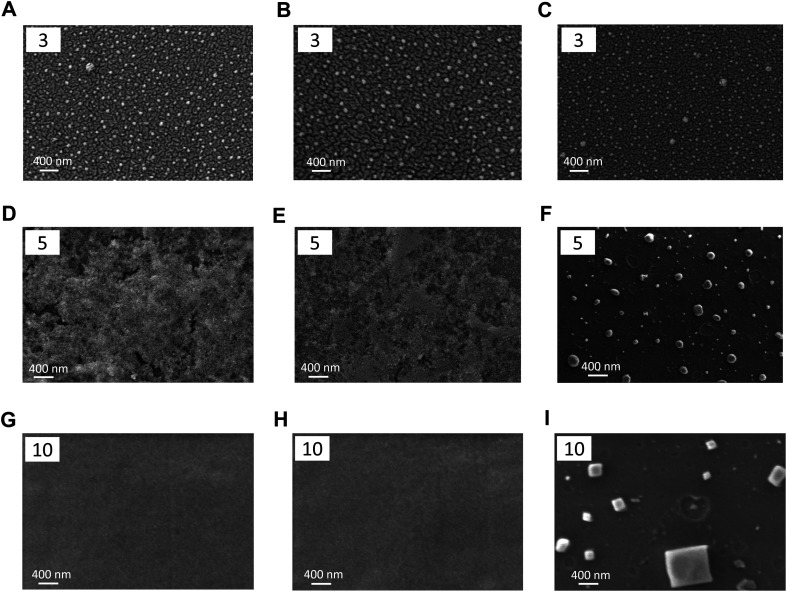 Figure 3
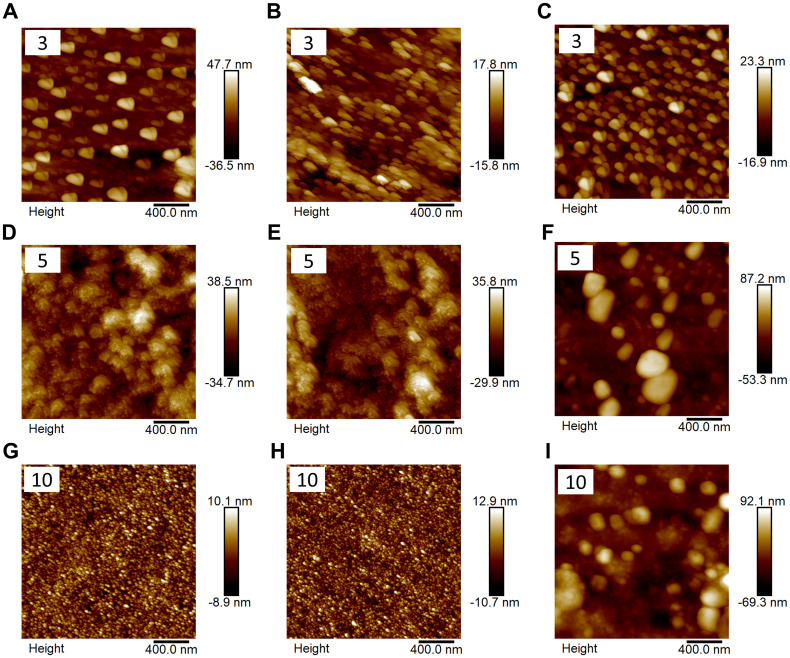 Figure 4
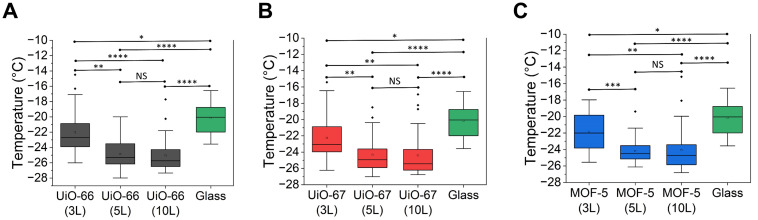 Figure 5
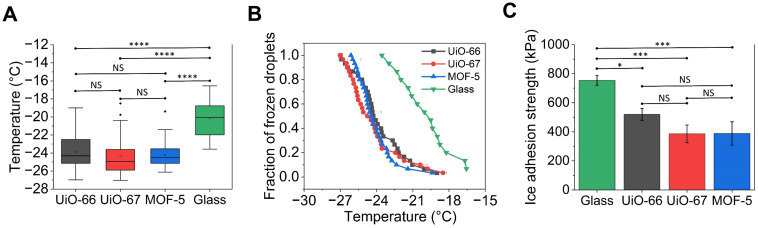 Figure 6
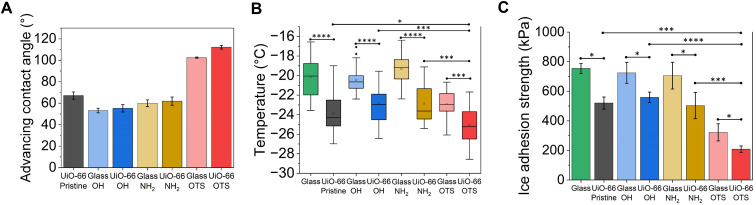 Figure 7
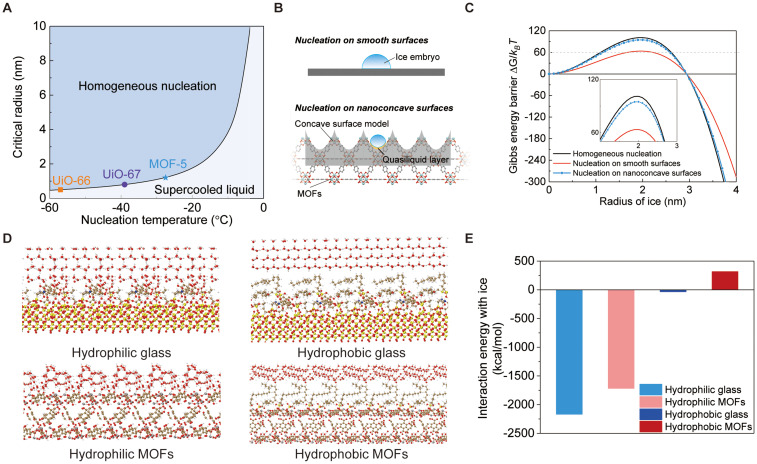 Figure 8
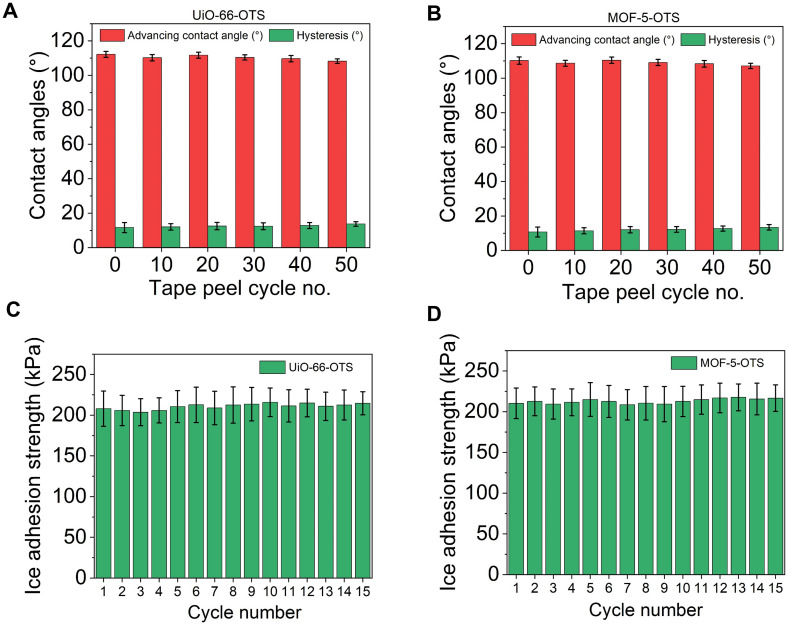 Figure 9
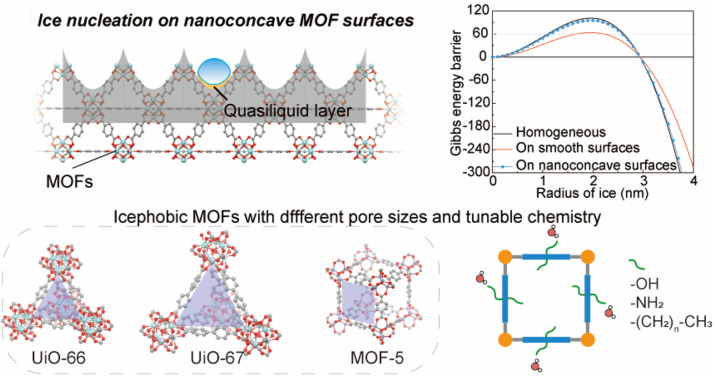 Figure 10
 Figure 11
 Figure 12
Peer Reviews
No public reviews on file for this paper yet. If you reviewed it on a platform where reviews are public (OpenReview, ICLR, NeurIPS, ICML), you can paste yours below so the community can read it here.
Videos
No videos yet. Explain this paper in a talk, walkthrough, or lecture? Add one.
Taxonomy
TopicsMetal-Organic Frameworks: Synthesis and Applications · Surface Modification and Superhydrophobicity · Covalent Organic Framework Applications