Curcumin induces apoptosis in osteosarcoma cells by regulating the glycolytic pathway via the MAPK axis: a mechanistic study
Yi Wang, Yuxi Zhang, Yuhan Zhang, Jierui Zhao, Jinlian Liao, Jingwen Luo, Min Chen, Peng Peng

TL;DR
Curcumin kills osteosarcoma cells by blocking glycolysis and triggering apoptosis through the MAPK pathway.
Contribution
This study reveals a novel mechanism of curcumin-induced apoptosis via glycolytic inhibition and MAPK activation in osteosarcoma.
Findings
Curcumin inhibited cell proliferation and migration while promoting apoptosis in osteosarcoma cells.
Curcumin upregulated pro-apoptotic proteins and phosphorylated P38 and JNK, while downregulating glycolytic enzymes.
The TUNEL assay confirmed curcumin's concentration-dependent enhancement of apoptosis in osteosarcoma cells.
Abstract
This study investigated the mechanism by which curcumin induces apoptosis through glycolytic regulation in osteosarcoma cells (U2OS, MG63) via the MAPK axis. Network pharmacology, protein-protein interaction analysis, and molecular docking were integrated to identify core targets and validate the central role of the MAPK pathway. In vitro, curcumin dose-dependently inhibited cell proliferation (IC50: 32.6 μmol/L in MG63, 37.3 μmol/L in U2OS) and migration, while promoting apoptosis as confirmed by CCK-8, wound healing, flow cytometry, and TUNEL assays. Western blot analysis demonstrated that curcumin significantly upregulated the expression of pro-apoptotic proteins Bax and Cleaved-PARP, as well as phosphorylated P38 and JNK (P-P38, P-JNK), while downregulating the glycolytic enzymes HK2 and PKM2 and the anti-apoptotic protein Bcl-2 (all P < 0.05). Total JNK and P38 levels remained…
Genes, proteins, chemicals, diseases, species, mutations and cell lines named across the full text — each resolved to its canonical identifier and authoritative record.
Click any figure to enlarge with its caption.
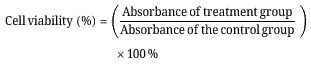 Figure 1
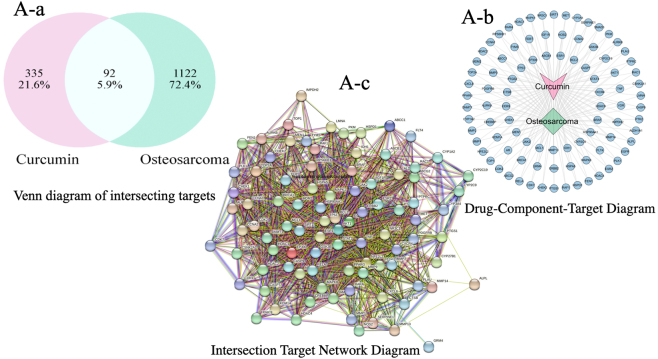 Figure 1
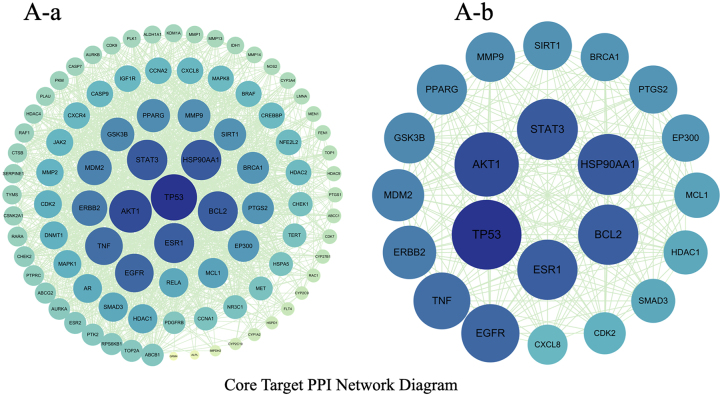 Figure 2
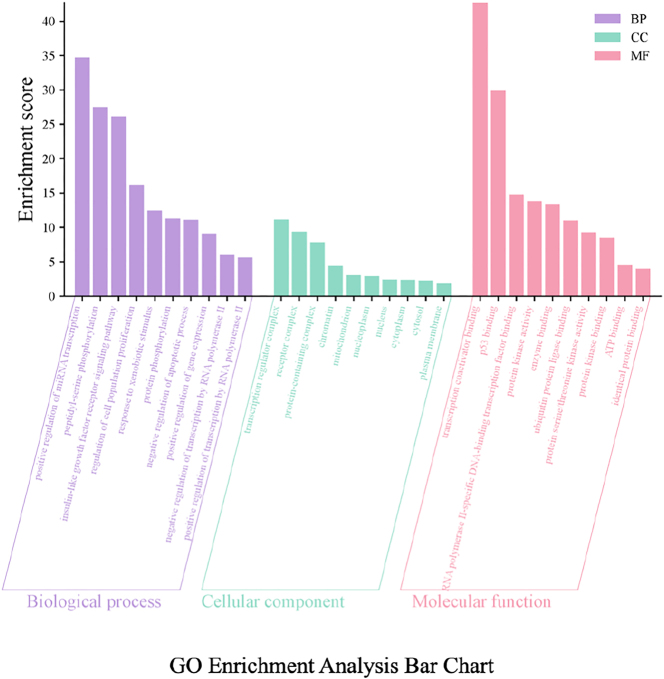 Figure 3
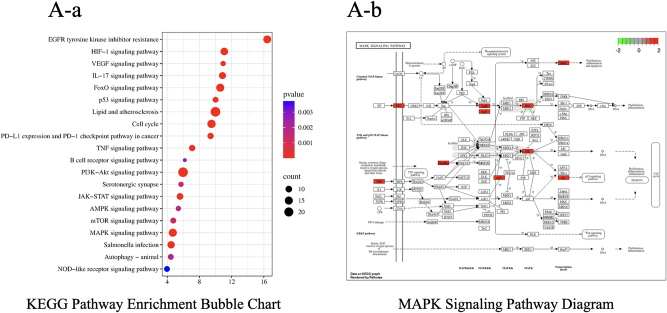 Figure 4
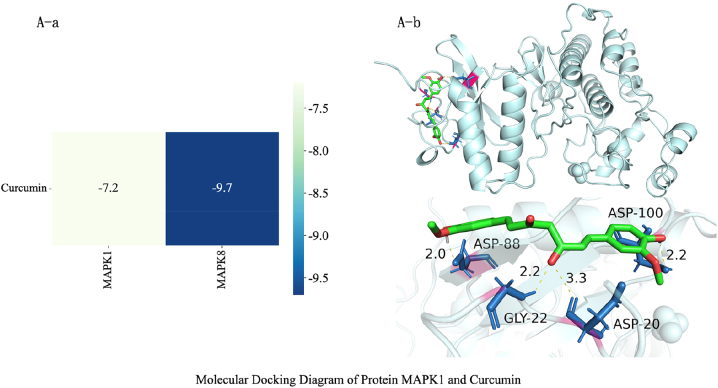 Figure 5
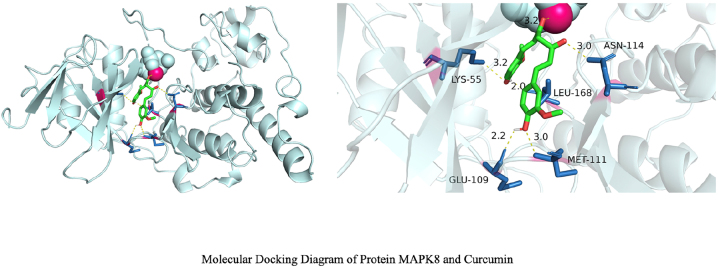 Figure 6
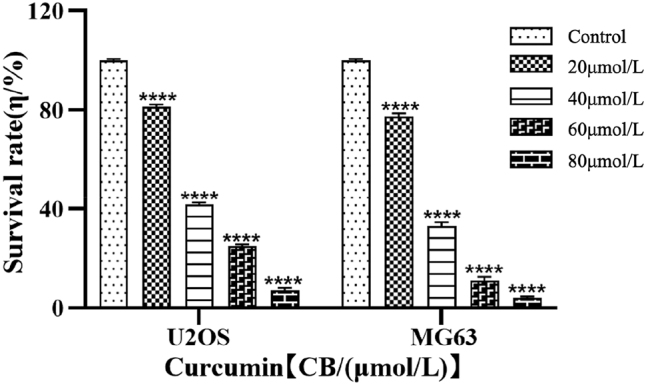 Figure 7
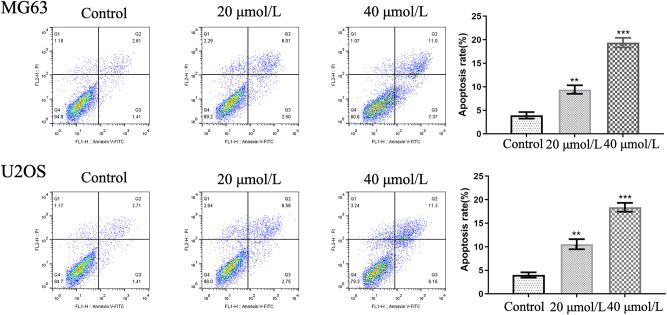 Figure 8
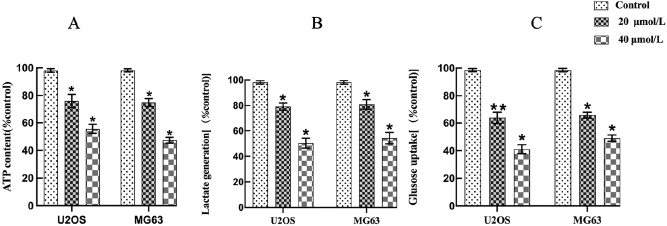 Figure 9
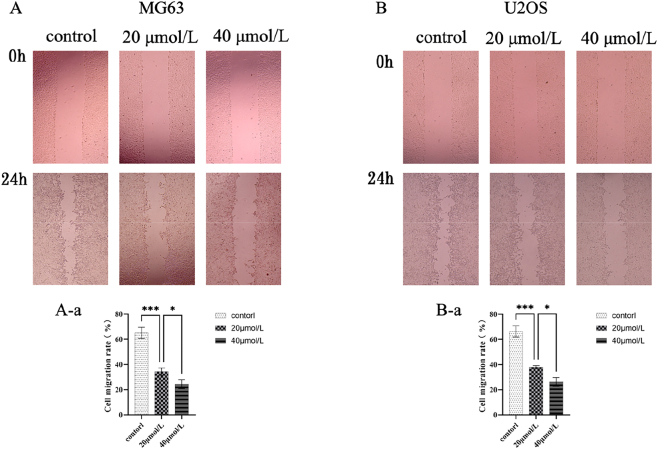 Figure 10
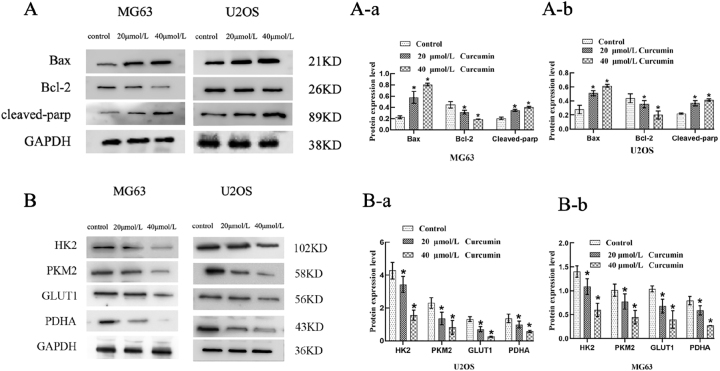 Figure 11
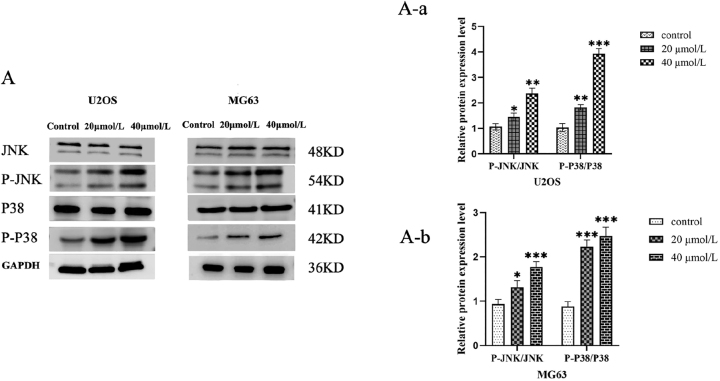 Figure 12
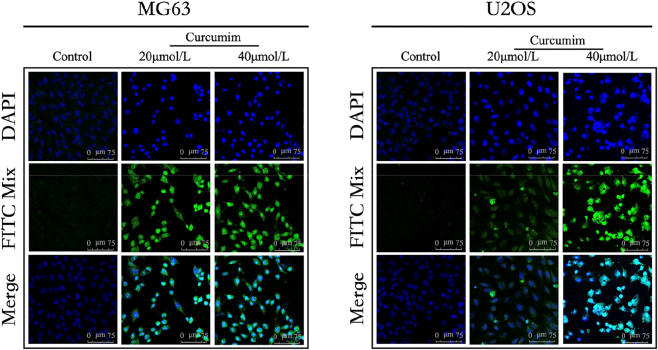 Figure 13
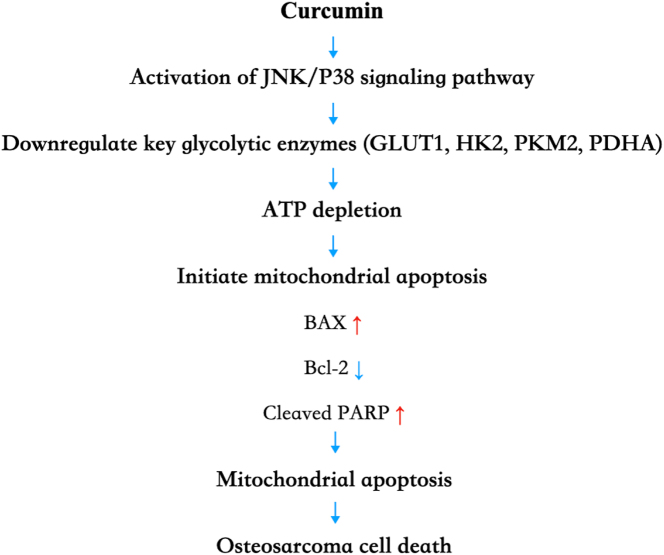 Figure 14
Peer Reviews
No public reviews on file for this paper yet. If you reviewed it on a platform where reviews are public (OpenReview, ICLR, NeurIPS, ICML), you can paste yours below so the community can read it here.
Videos
No videos yet. Explain this paper in a talk, walkthrough, or lecture? Add one.
Taxonomy
TopicsCurcumin's Biomedical Applications · Calpain Protease Function and Regulation · Cell death mechanisms and regulation