Photochemical reduction of aryl chlorides, bromides, and iodides via ternary EDA complexes with guanidine bases
Robert J. Hannan, Alexandria M. Vondran, Sunghwan Cho, Kerry M. Hanson, Claire Tonnelé, David Casanova, Christopher J. Bardeen, Ana Bahamonde

TL;DR
A simple guanidine base called TBD can act as a powerful photoreductant, enabling the reduction of various aryl halides under visible light.
Contribution
The discovery that guanidine bases like TBD can function as photoactive reductants through ternary EDA complexes is novel.
Findings
TBD promotes the reduction of aryl iodides, bromides, and unactivated aryl chlorides under visible light.
A ternary EDA complex formed between TBD and aryl halides enables electron transfer and generates aryl radicals.
The method supports diverse reactivity pathways like hydrodehalogenation, borylation, and radical cyclization.
Abstract
Photoredox catalysis has traditionally required sophisticated catalyst design, multi-photon systems, or photoelectrochemical strategies to reach the reducing potentials necessary for aryl chloride activation. In a surprising departure from these paradigms, we find that a simple, bench-stable guanidine base, TBD, functions as a powerful photoreductant under visible light, promoting the reduction of aryl iodides, bromides, and even unactivated aryl chlorides—as well as Birch-type dearomatization of polyarenes. Mechanistic interrogation reveals an unusual ternary EDA complex formed between a TBD dimer and the aryl halide, which upon excitation engages in an electron transfer, generating aryl radicals. These intermediates enable hydrodehalogenation, borylation, and radical cyclization pathways, demonstrating broad downstream reactivity. This discovery establishes guanidine bases as a new…
Genes, proteins, chemicals, diseases, species, mutations and cell lines named across the full text — each resolved to its canonical identifier and authoritative record.
Click any figure to enlarge with its caption.
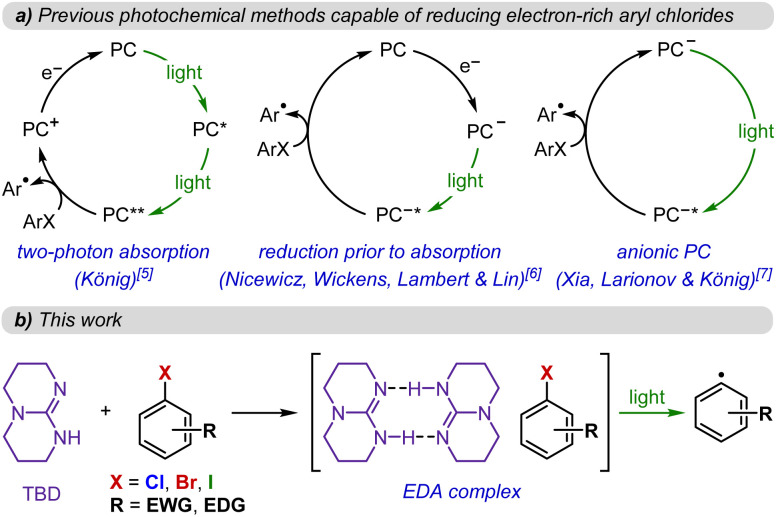 Figure 1
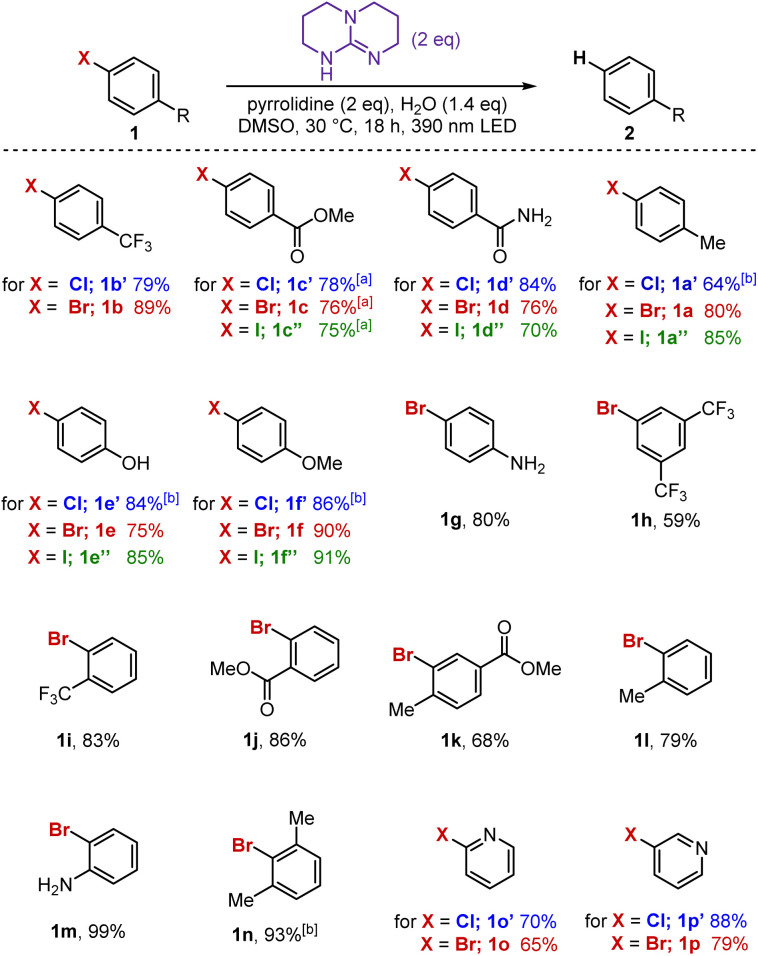 Figure 2
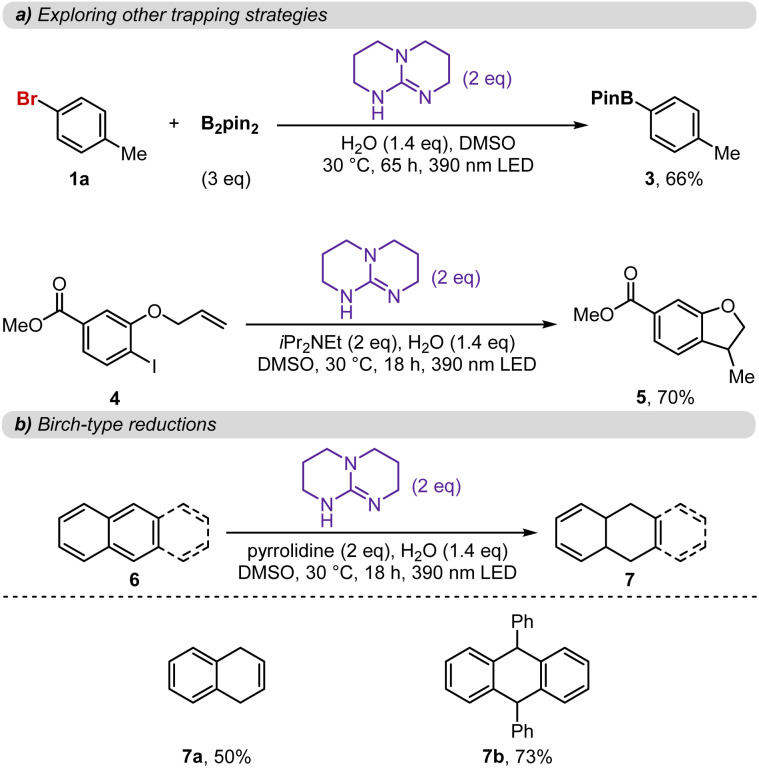 Figure 3
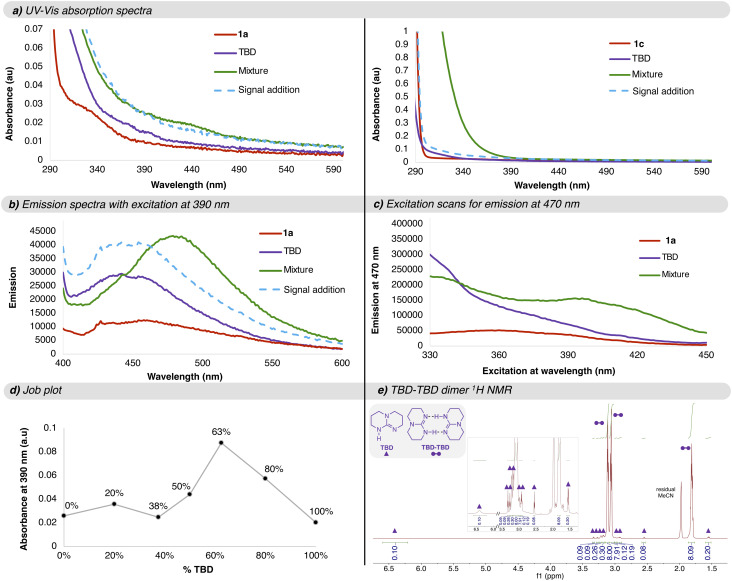 Figure 4
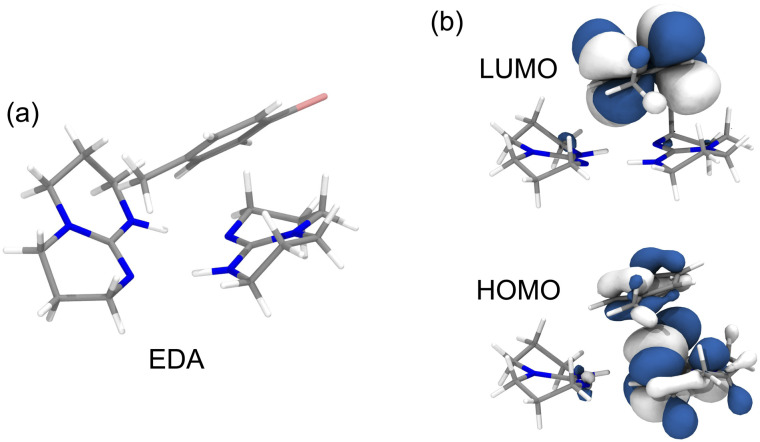 Figure 5
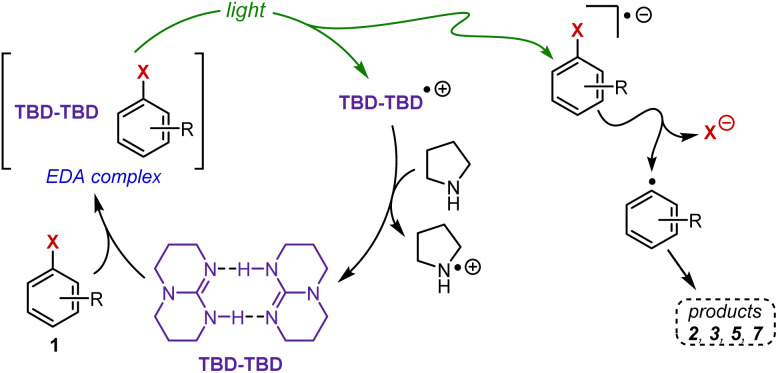 Figure 6
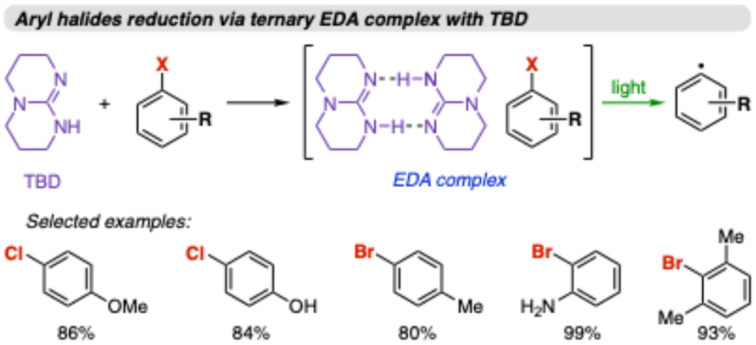 Figure 7
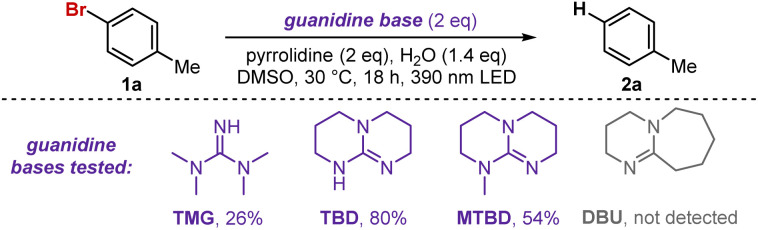 Figure 8
Peer Reviews
No public reviews on file for this paper yet. If you reviewed it on a platform where reviews are public (OpenReview, ICLR, NeurIPS, ICML), you can paste yours below so the community can read it here.
Videos
No videos yet. Explain this paper in a talk, walkthrough, or lecture? Add one.
Taxonomy
TopicsRadical Photochemical Reactions · Oxidative Organic Chemistry Reactions · Catalytic Cross-Coupling Reactions