Transcriptomics of Plasmodium vivax rosetting
Catarina Bourgard, Julia Weber Ferraboli, Stefanie Costa Pinto Lopes, Marcus Vinicius Guimarães de Lacerda, Per Sunnerhagen, Letusa Albrecht, Fabio Trindade Maranhão Costa

TL;DR
This study explores the genetic basis of Plasmodium vivax rosetting, a malaria-related phenomenon, by comparing gene expression in isolates with high and low rosetting rates.
Contribution
The study identifies differentially expressed genes associated with rosetting in Plasmodium vivax, highlighting key proteins involved in this virulence mechanism.
Findings
172 genes conserved in Plasmodium with unknown functions are differentially expressed in high rosetting isolates.
Integral membrane and adhesin-like proteins, including PHIST proteins, are significantly associated with rosetting.
The 6-cysteine gene family and specific proteins like TRAG16 and MSP7-like are positively regulated in high rosetting isolates.
Abstract
Plasmodium vivax rosetting is a cytoadhesion phenomenon associated with parasite virulence and clinical manifestations of malaria. However, the molecular mechanisms underlying this process remain poorly understood. Comparative transcriptomic analysis between isolates with different rosetting capacities may provide insights into the molecular base and clinical outcome of parasite populations with distinct rosetting characteristics. Our study aims to identify and describe the transcription profile of P. vivax isolates with high and low rosetting rates. We used RNA-seq to compare the transcriptomes of 10 field P. vivax isolates from the Brazilian Amazon. Among the 492 differentially expressed genes of P. vivax isolates with high rosetting (HR) versus low rosetting (LR) formation, 172 (34,96%) are annotated as genes conserved within Plasmodium and of unknown function. The expression…
Genes, proteins, chemicals, diseases, species, mutations and cell lines named across the full text — each resolved to its canonical identifier and authoritative record.
Click any figure to enlarge with its caption.
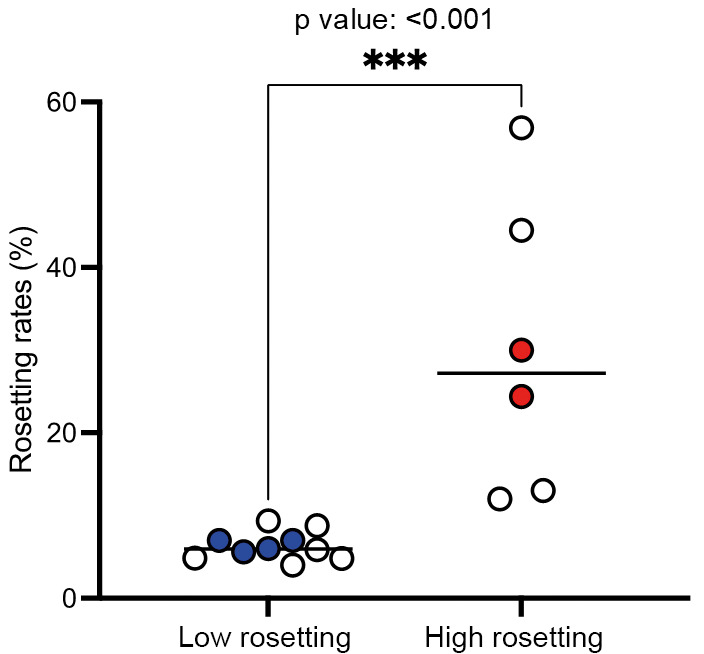 Figure 1
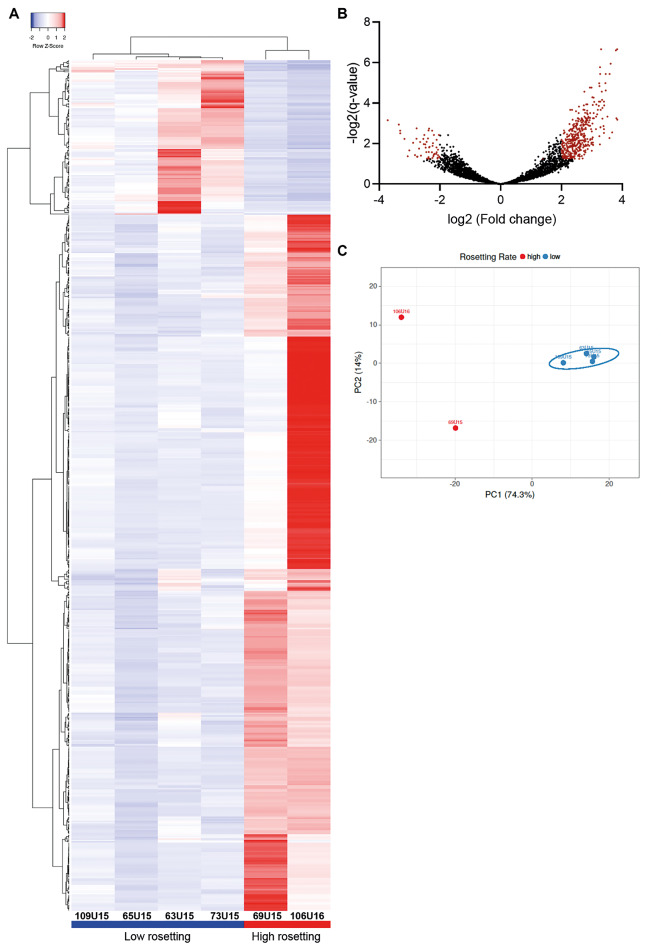 Figure 2
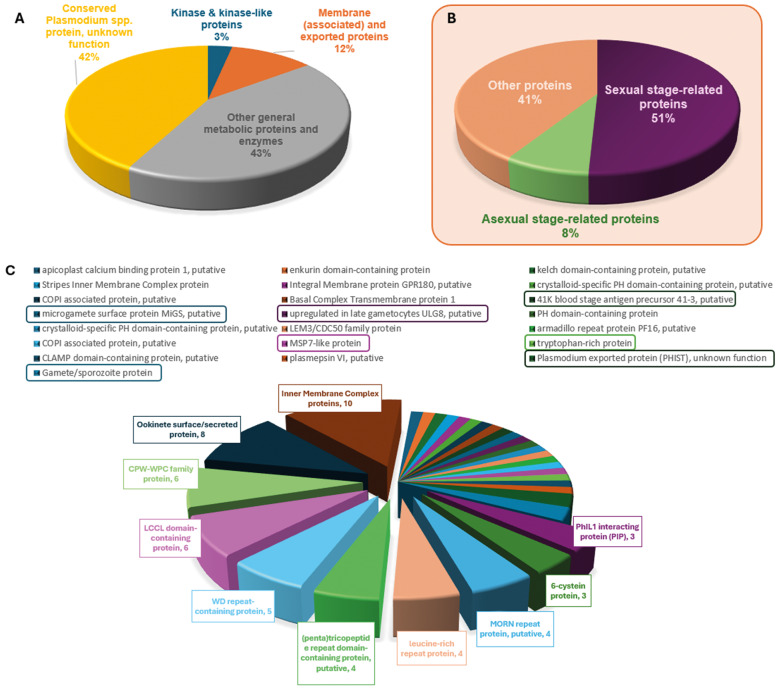 Figure 3
Peer Reviews
No public reviews on file for this paper yet. If you reviewed it on a platform where reviews are public (OpenReview, ICLR, NeurIPS, ICML), you can paste yours below so the community can read it here.
Videos
No videos yet. Explain this paper in a talk, walkthrough, or lecture? Add one.
Taxonomy
TopicsMalaria Research and Control · Microbial infections and disease research · vaccines and immunoinformatics approaches