Organoids for Metabolic Disease Modeling
Arif Ibrahim Ardisasmita, Edward Eelco Salomon Nieuwenhuis, Sabine Annemijn Fuchs

TL;DR
Organoids can model metabolic diseases better than traditional methods by focusing on specific functions rather than full organ replication.
Contribution
The paper proposes using organoids to model specific metabolic functions rather than whole organs, enhancing disease modeling accuracy.
Findings
Organoids replicate key metabolic functions missing in 2D models.
Organoids effectively model specific metabolic defects in diseases like methylmalonic acidemia and Wilson's disease.
Focusing on function over organ resemblance improves disease modeling and therapeutic development.
Abstract
Inherited metabolic diseases (IMDs) are a diverse group of rare genetic disorders that disrupt metabolic pathways, leading to severe clinical manifestations. Disease models ranging from complex animal models to simple in vitro systems have provided insights into IMDs, but each has limitations. Organoids, three‐dimensional in vitro models, bridge this gap by replicating key metabolic functions that are absent in most simple 2D cell models. While organoids do not fully mimic organ complexity, they effectively model disease‐specific metabolic defects, as seen in methylmalonic acidemia, Wilson's disease, and cystic fibrosis. Recognizing that function is more critical than organ resemblance, we propose focusing on the specific function of interest rather than selecting a model solely based on its derivation from the most affected organ. Focusing on specific biological processes enables…
Genes, proteins, chemicals, diseases, species, mutations and cell lines named across the full text — each resolved to its canonical identifier and authoritative record.
Click any figure to enlarge with its caption.
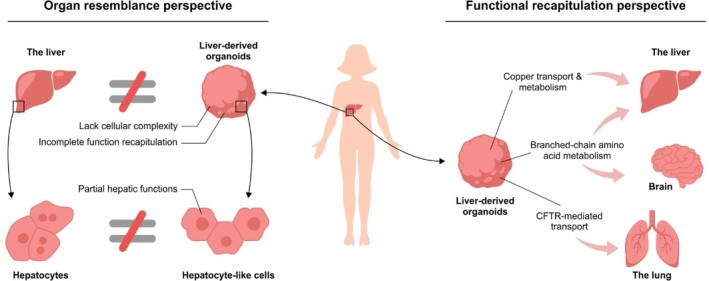 Figure 1
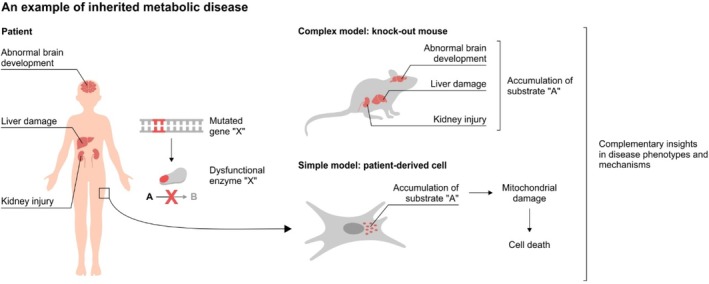 Figure 2
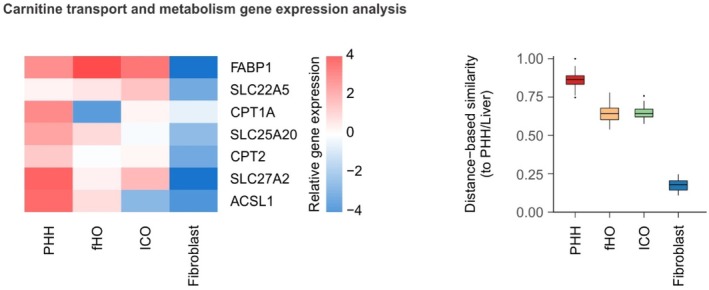 Figure 3
Peer Reviews
No public reviews on file for this paper yet. If you reviewed it on a platform where reviews are public (OpenReview, ICLR, NeurIPS, ICML), you can paste yours below so the community can read it here.
Videos
No videos yet. Explain this paper in a talk, walkthrough, or lecture? Add one.
Taxonomy
TopicsMicrobial Metabolic Engineering and Bioproduction · Metabolism and Genetic Disorders · Biotin and Related Studies