Global analysis of protein degradation reveals instability of diverse regulators in Escherichia coli
Elliot J. MacKrell, Brett Lomenick, Yanping Qiu, Hannah Jeckel, Jeff Jones, Tsui-Fen Chou, David A. Tirrell

TL;DR
This study identifies many unstable proteins in E. coli, showing how protein degradation helps bacteria adapt to different conditions.
Contribution
The work introduces a new method combining chemoproteomics, text mining, and machine learning to identify proteolytic regulation in E. coli.
Findings
Proteolysis regulates diverse homeostatic and stress response proteins in E. coli.
Mutagenesis of PdeH's N-terminal extension disrupted ClpXP recognition and altered biofilm morphology.
Lon-mediated degradation of FliZ and CsgD suggests proteolysis aids transitions between motility and biofilm states.
Abstract
The identification of proteins regulated by proteolysis is important for defining homeostatic, developmental, and stress response pathways in bacteria. We present an experimental and computational analysis of protein degradation that reveals protease substrates among nascent proteins in exponential and stationary phase Escherichia coli cells. We validate the active degradation of proteins involved in motility, biofilm development, metabolism, and proteolysis itself. Our work highlights the role of protein degradation in shaping protein abundance dynamics across protein functionalities and physiological states and identifies opportunities for further investigation of this essential aspect of proteostasis. Regulated protein degradation underlies the timely execution of essential gene expression programs in bacteria. Here, we deployed time-resolved chemoproteomics, text mining of the…
Genes, proteins, chemicals, diseases, species, mutations and cell lines named across the full text — each resolved to its canonical identifier and authoritative record.
Click any figure to enlarge with its caption.
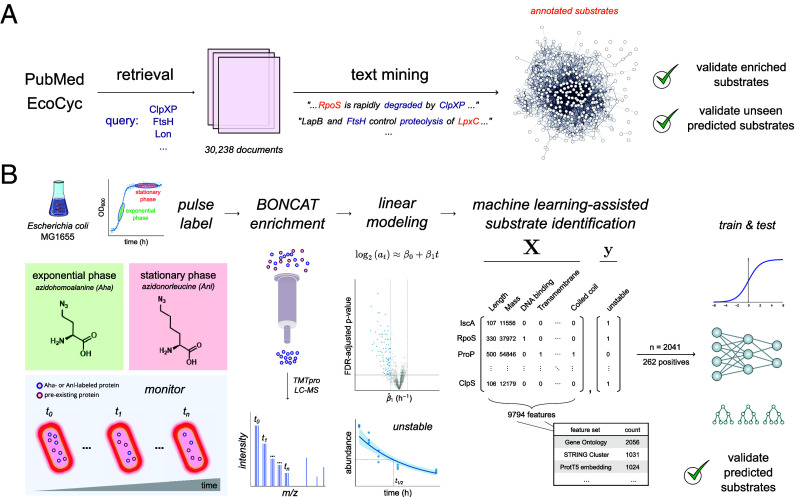 Figure 1
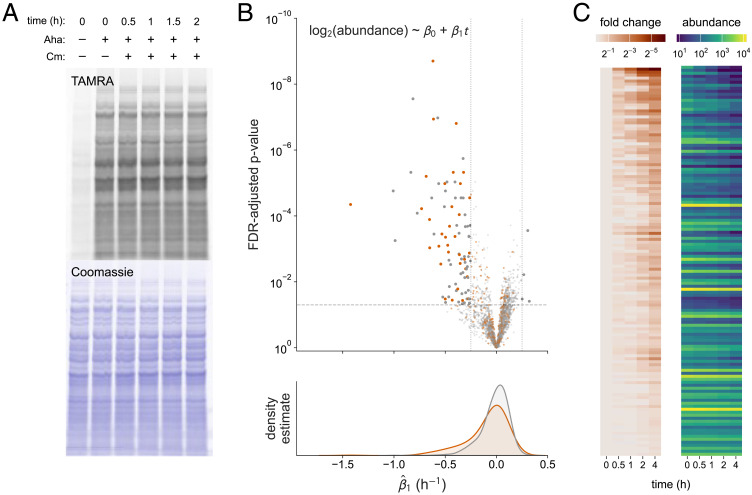 Figure 2
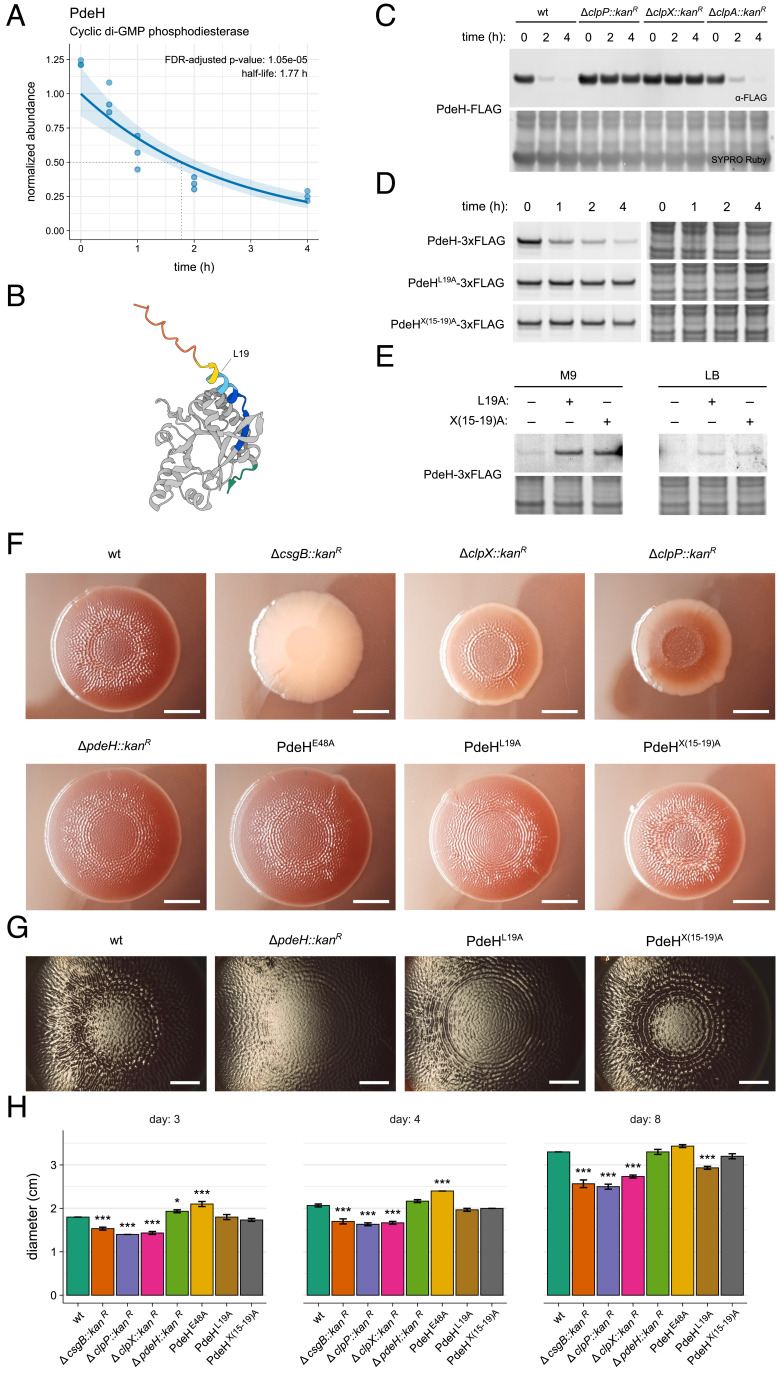 Figure 3
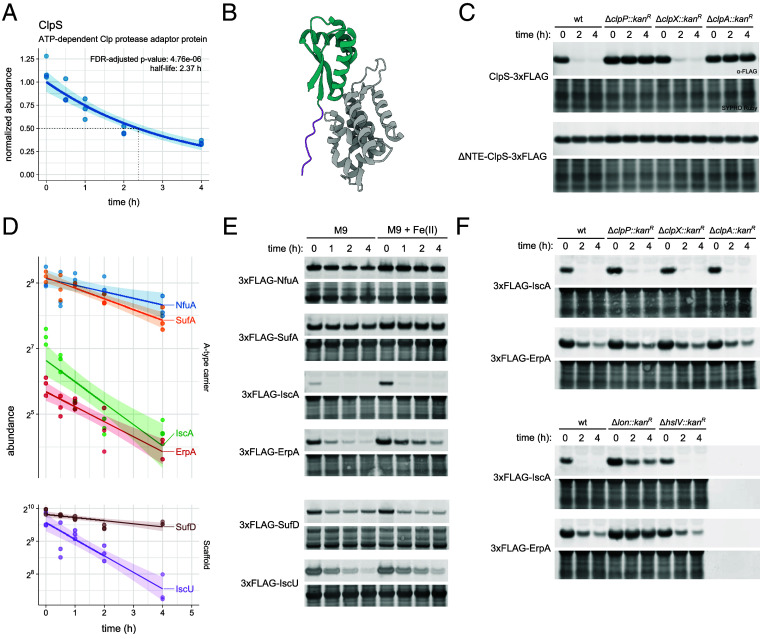 Figure 4
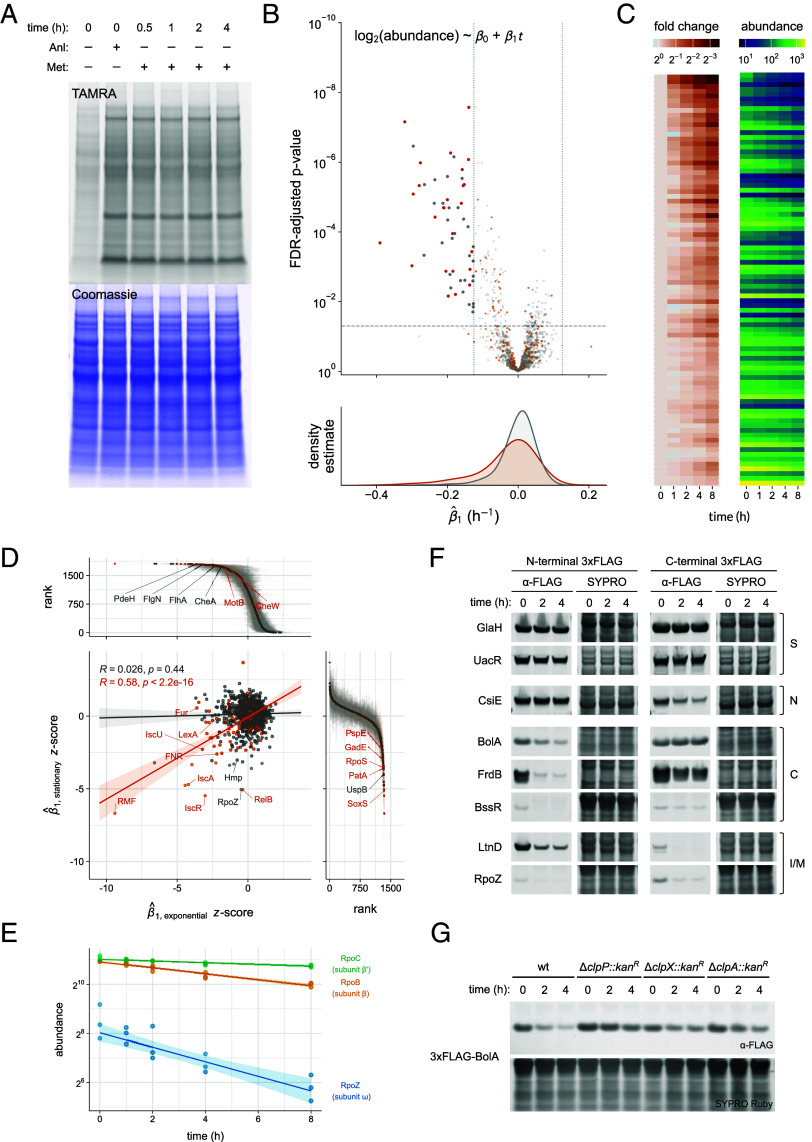 Figure 5
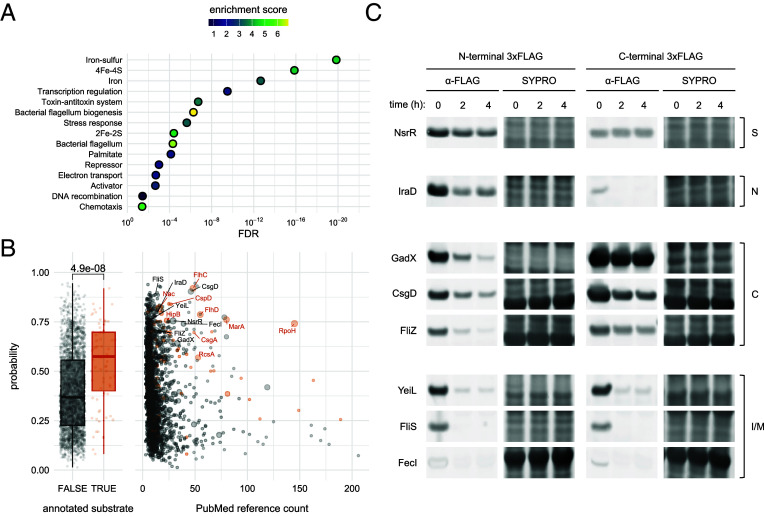 Figure 6
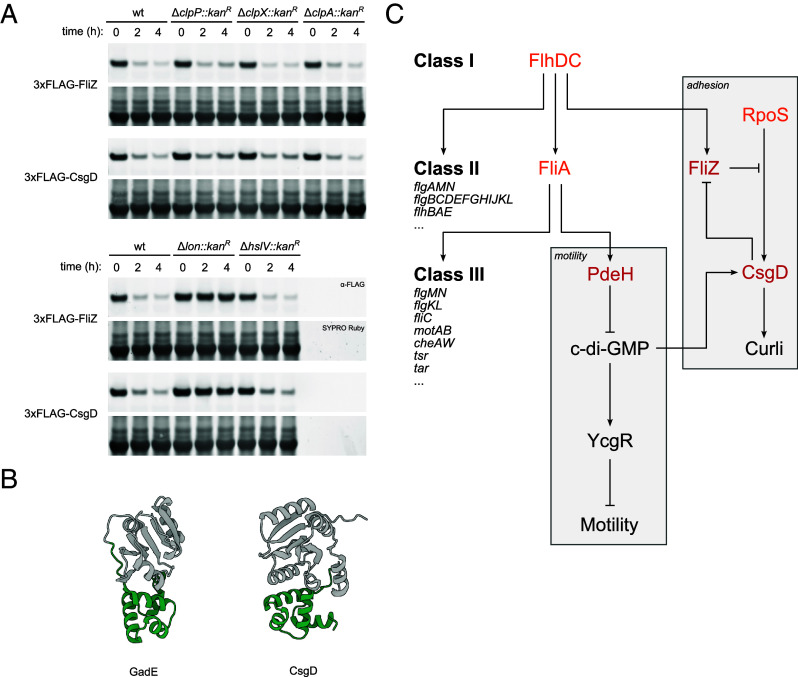 Figure 7
Peer Reviews
No public reviews on file for this paper yet. If you reviewed it on a platform where reviews are public (OpenReview, ICLR, NeurIPS, ICML), you can paste yours below so the community can read it here.
Videos
No videos yet. Explain this paper in a talk, walkthrough, or lecture? Add one.
Taxonomy
TopicsBacterial Genetics and Biotechnology · Bacterial biofilms and quorum sensing · RNA and protein synthesis mechanisms