Inhibition of FicD-mediated AMPylation and deAMPylation by isoprenoid diphosphates
Aubrie M. Blevins, Wei Peng, Lisa N. Kinch, Zihan Monshad, Andrea G. Paredes, Christina Volz, Jared Rutter, Amanda K. Casey, Kevin G. Hicks, Kim Orth

TL;DR
Researchers found that isoprenoid diphosphates can inhibit FicD, a protein involved in stress response, offering potential for drug development.
Contribution
Identification of geranyl- and farnesyl-pyrophosphate as specific FicD inhibitors with differential effects on disease-causing variants.
Findings
Geranyl- and farnesyl-pyrophosphate inhibit FicD-mediated AMPylation and deAMPylation.
Farnesyl-pyrophosphate competitively inhibits FicD by mimicking ATP in the active site.
Farnesyl-pyrophosphate inhibits specific FicD variants linked to hereditary spastic paraplegia but not neonatal diabetes.
Abstract
FicD regulates Unfolded Protein Response (UPR) signaling in metazoans by fine-tuning BiP chaperone capacity. Therefore, targeting FicD activity may be a tractable method of altering UPR signaling for therapeutic benefit. We identify geranyl- and farnesyl-pyrophosphate as specific FicD inhibitors. Notably, these small molecules differentially inhibit disease-causing variants of FicD. A structure of farnesyl-pyrophosphate bound to the FicD active site helps explain the differential inhibition of pathogenic variants and provides insight into interactions that can be differentially exploited for modifying FicD activity. Their composition provides a chemical foundation for future drug development efforts targeting FicD activity. FicD regulates Unfolded Protein Response (UPR) through reversible AMPylation and deAMPylation of BiP, an HSP70 chaperone and master regulator of the UPR. FicD…
Genes, proteins, chemicals, diseases, species, mutations and cell lines named across the full text — each resolved to its canonical identifier and authoritative record.
Click any figure to enlarge with its caption.
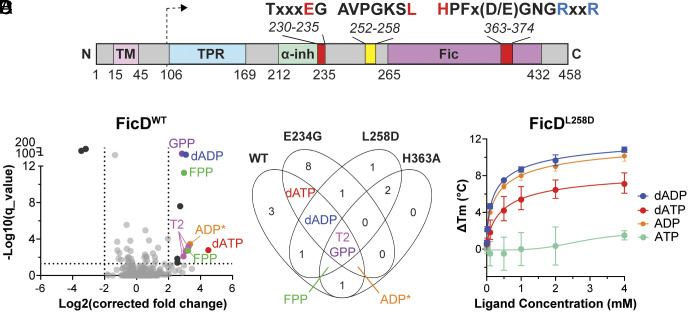 Figure 1
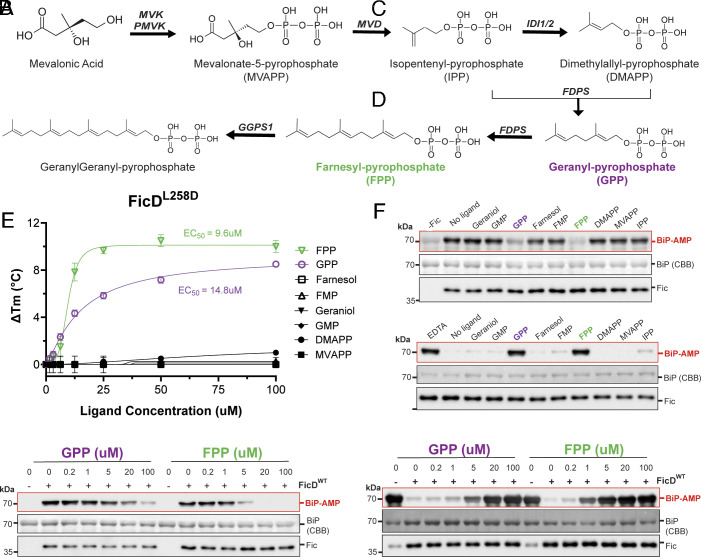 Figure 2
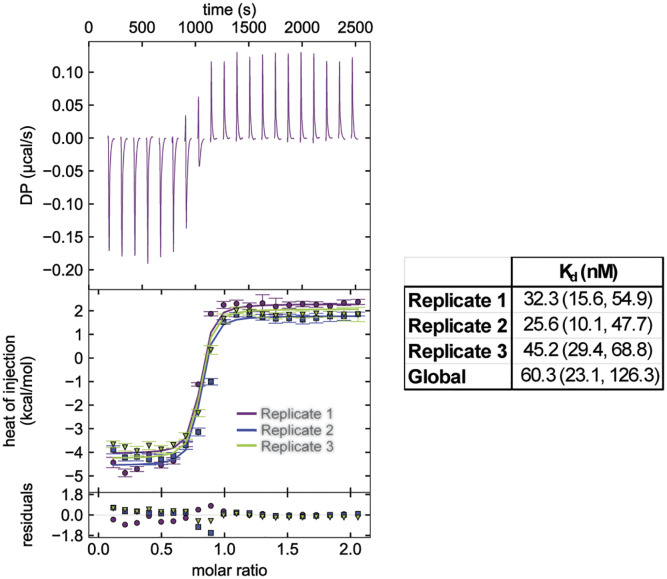 Figure 3
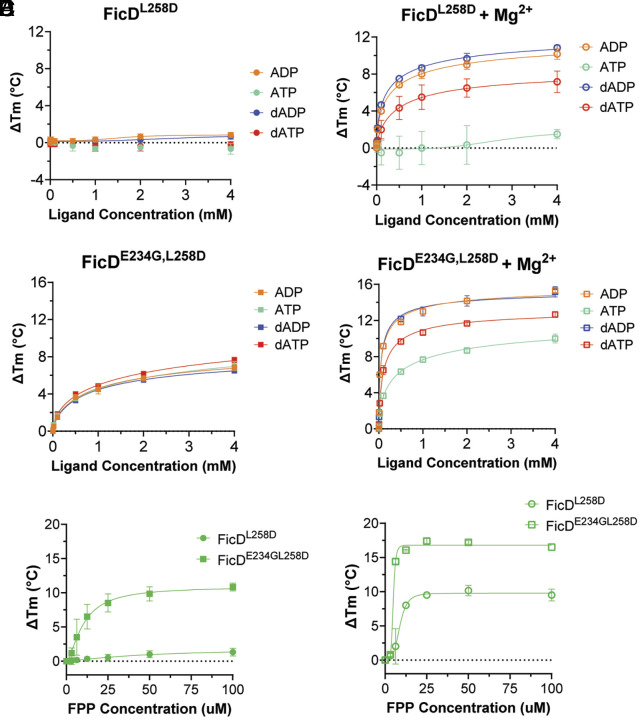 Figure 4
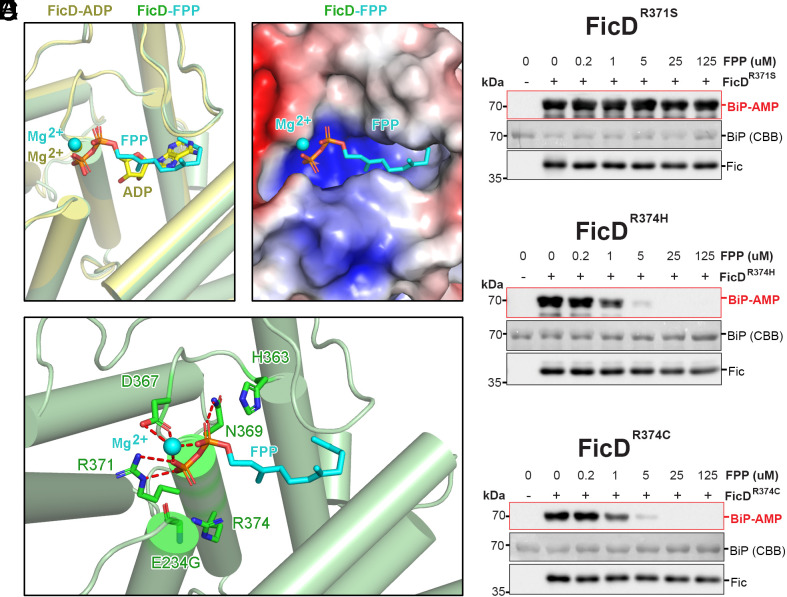 Figure 5
Peer Reviews
No public reviews on file for this paper yet. If you reviewed it on a platform where reviews are public (OpenReview, ICLR, NeurIPS, ICML), you can paste yours below so the community can read it here.
Videos
No videos yet. Explain this paper in a talk, walkthrough, or lecture? Add one.
Taxonomy
TopicsLegionella and Acanthamoeba research · Endoplasmic Reticulum Stress and Disease · Heat shock proteins research