Direct evidence of acid-driven protein desolvation
Farzad Hamdi, Ioannis Skalidis, Inken Kaja Schwerin, Jaydeep Belapure, Dmitry A. Semchonok, Fotis L. Kyrilis, Christian Tüting, Johannes Müller, Georg Künze, Panagiotis L. Kastritis

TL;DR
This paper shows how acidity affects water molecules around proteins, revealing a long-standing biochemical question about protein solvation.
Contribution
The study provides direct atomic-level evidence of acid-driven protein desolvation using cryoelectron microscopy and simulations.
Findings
Acidification causes nearly half of protein-bound waters to exchange with bulk solvent, losing ~100 waters per pH unit per molecule.
Persistent hydration shells remain around specific residues like asparagine, forming a pH-independent solvation layer.
Acid-induced water exchange displaces bound iron, linking solvation changes to metal release.
Abstract
Life depends on proteins, and proteins depend on water. Yet for 50 y, the open question around what happens to the water around proteins in acidic conditions has not been resolved. Here, we visualized biomolecular hydration at the atomic level as a function of increasing acidity. We saw hundreds of water molecules leave the structure, while a persistent shell of water remained, organized by ~40% of resolved waters. We also found that acidity shifts how specific metals, i.e., iron, are held in their binding sites. Our results resolve a long-standing question in biochemistry and reveal simple rules for how acidity affects protein solvation. Our findings may also aid the design of more stable or pH-tolerant proteins, critical for biotechnological applications. Water and its ability to modulate the protonation states of biomolecules govern the physical chemistry of life, dictating their…
Genes, proteins, chemicals, diseases, species, mutations and cell lines named across the full text — each resolved to its canonical identifier and authoritative record.
Click any figure to enlarge with its caption.
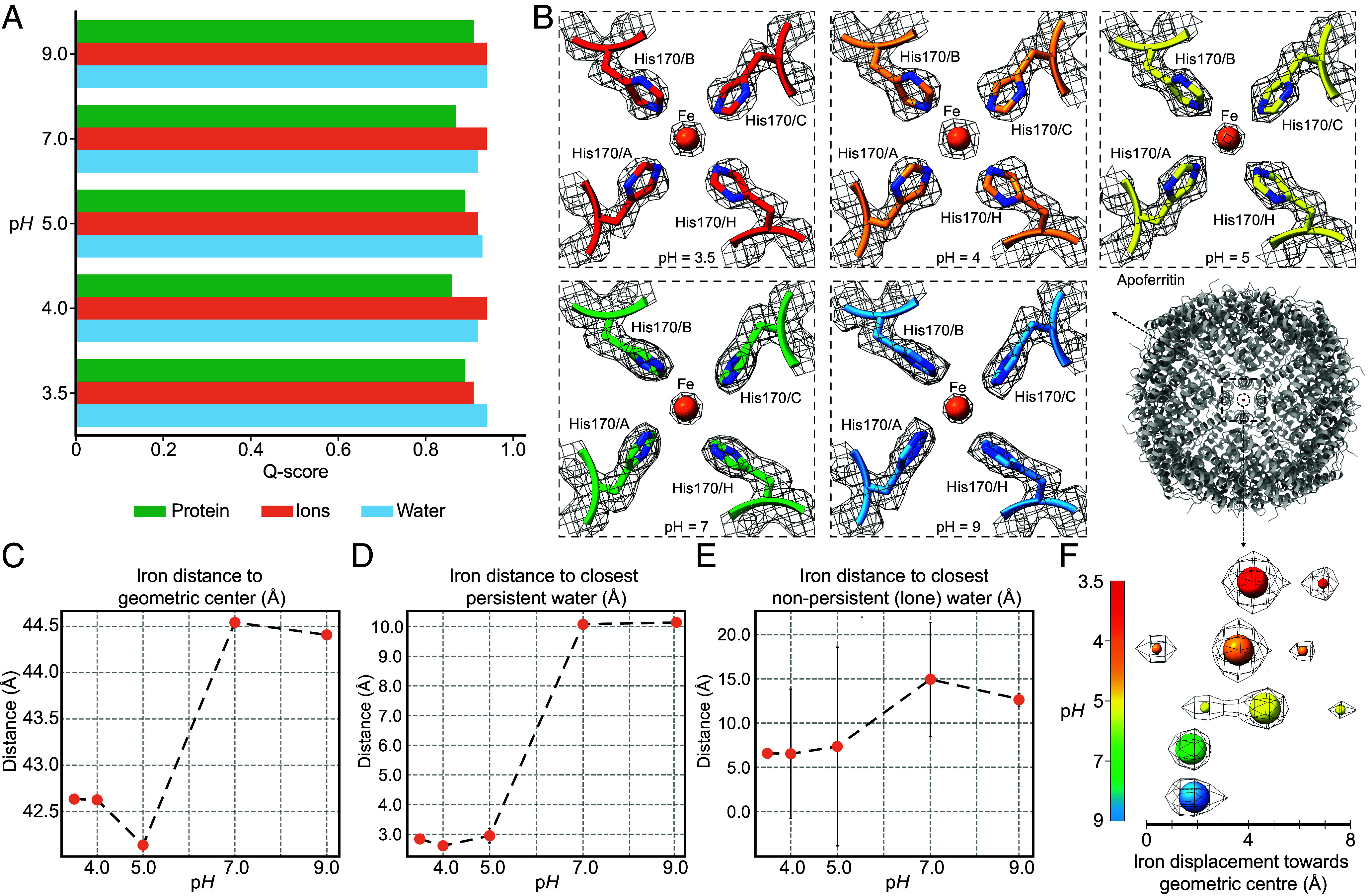 Figure 1
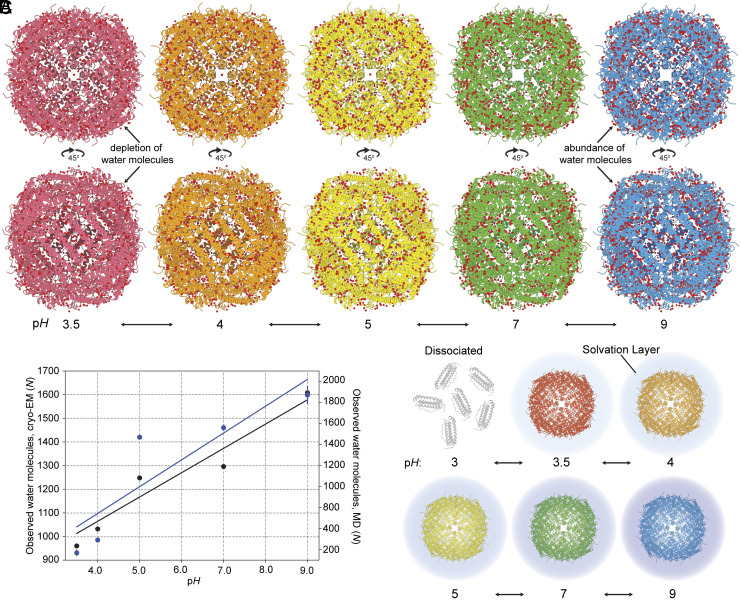 Figure 2
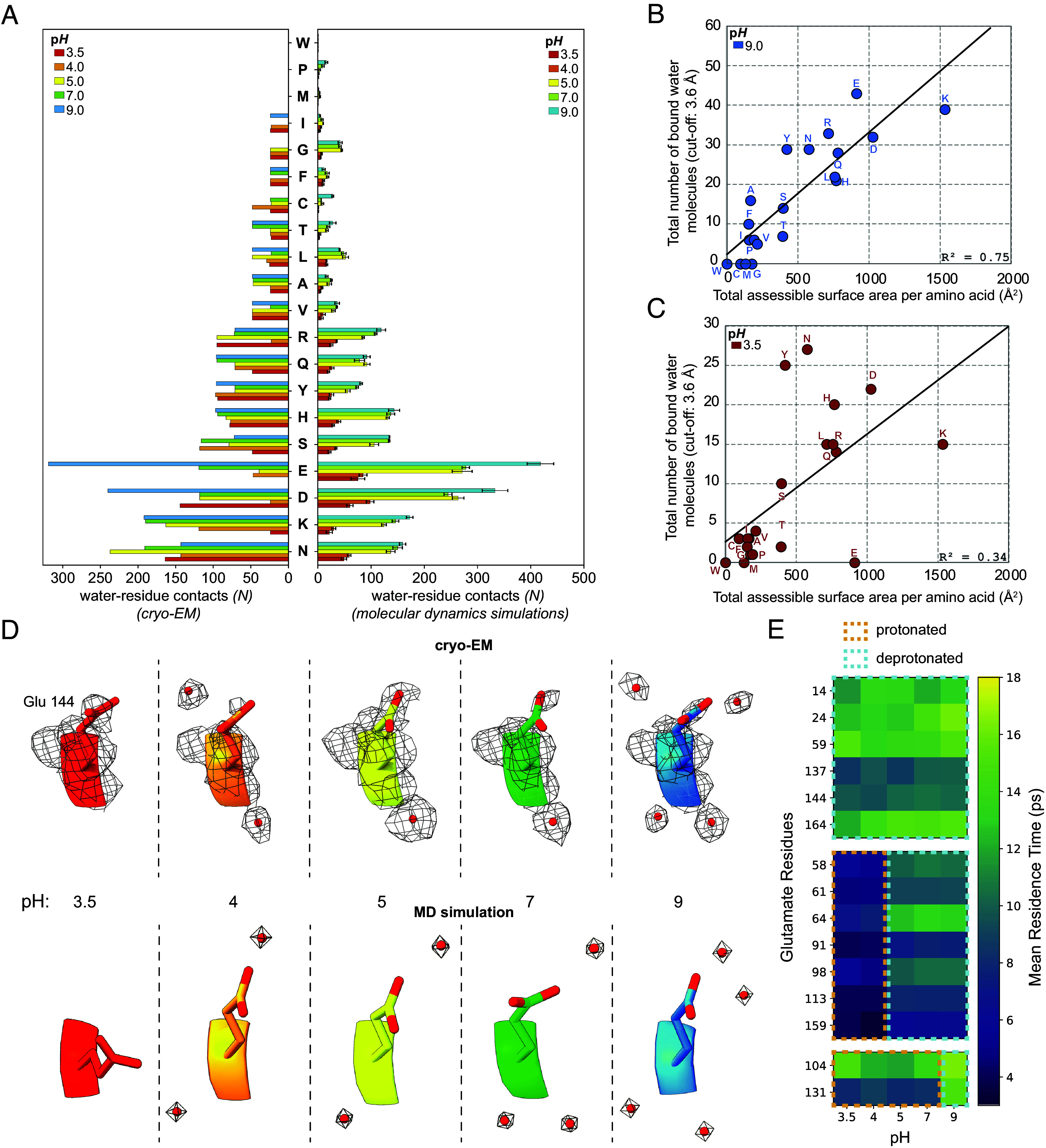 Figure 3
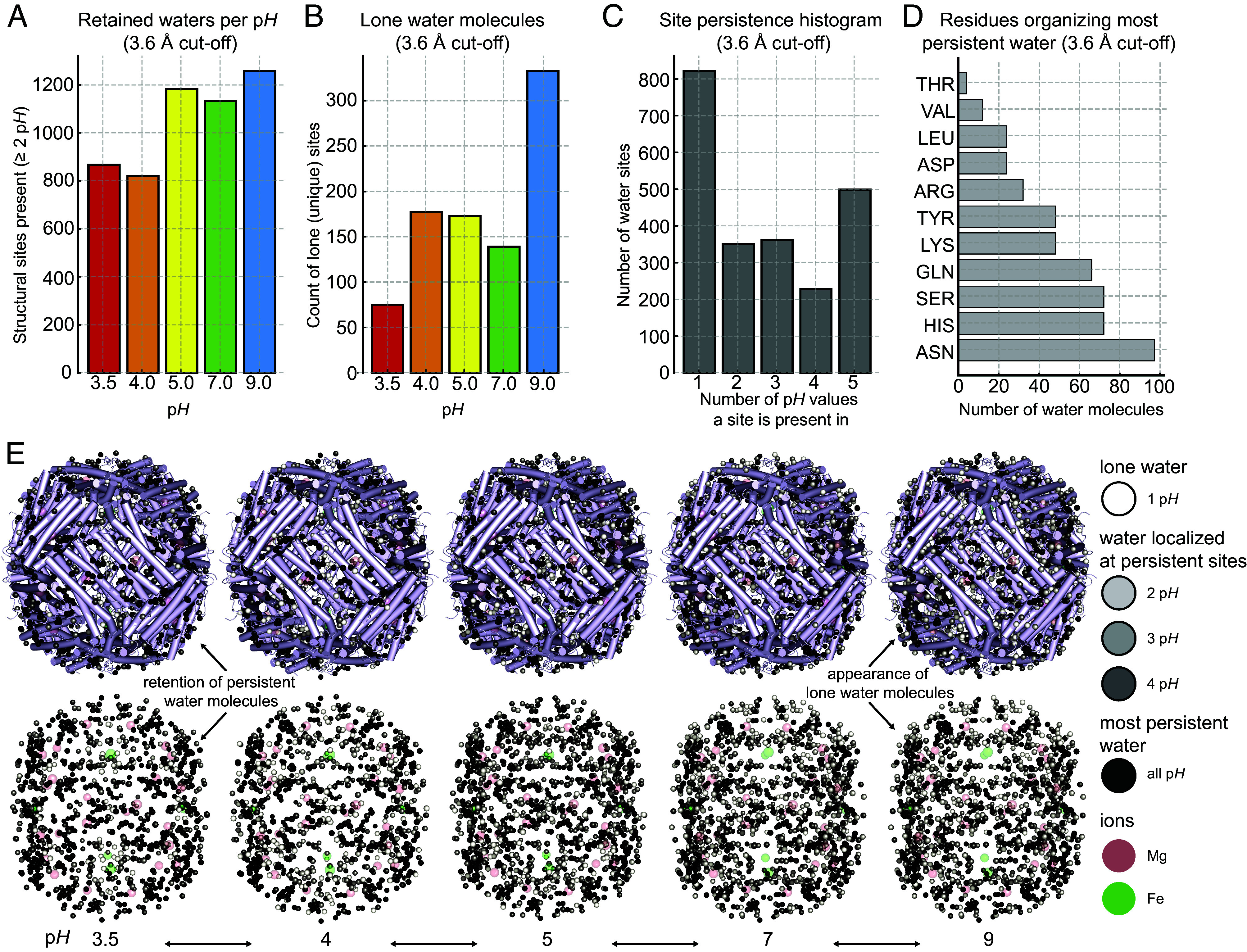 Figure 4
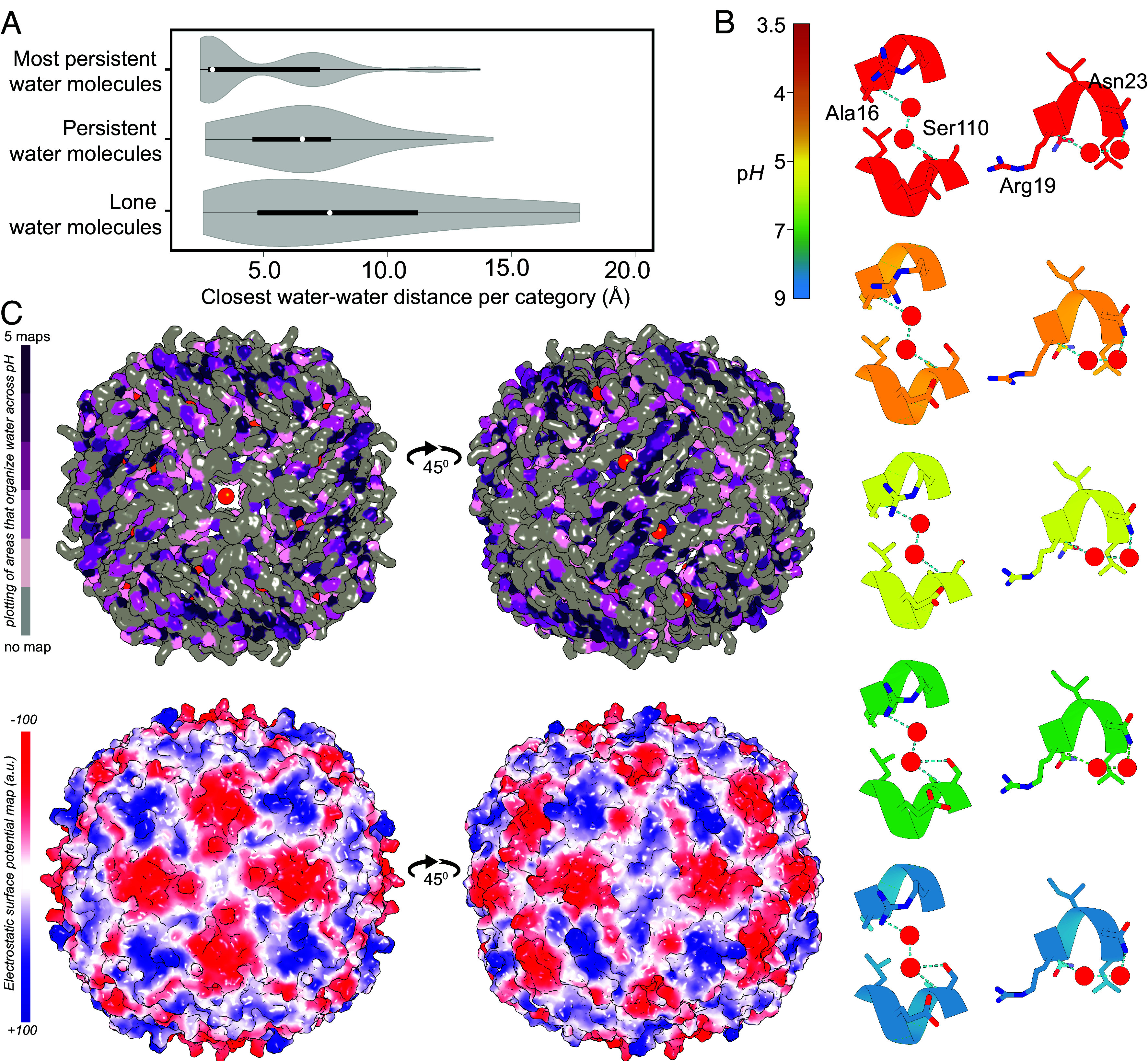 Figure 5
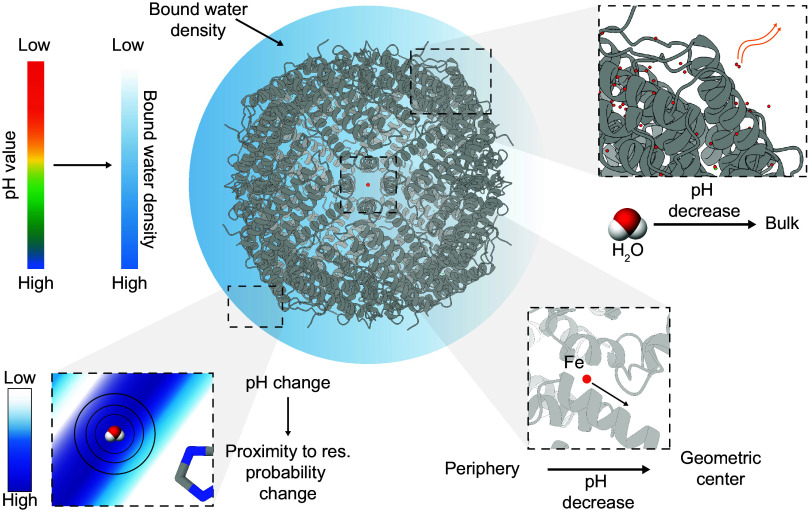 Figure 6
Peer Reviews
No public reviews on file for this paper yet. If you reviewed it on a platform where reviews are public (OpenReview, ICLR, NeurIPS, ICML), you can paste yours below so the community can read it here.
Videos
No videos yet. Explain this paper in a talk, walkthrough, or lecture? Add one.
Taxonomy
TopicsAdvanced Electron Microscopy Techniques and Applications · Protein Structure and Dynamics · Enzyme Structure and Function