The geometry of Nature’s stingers is universal due to stochastic mechanical wear
John Sebastian, Kaare H. Jensen

TL;DR
The study shows that the common paraboloid shape of stingers, teeth, and similar structures in nature arises from mechanical wear, not just evolution.
Contribution
The paper demonstrates that stochastic mechanical wear, not evolutionary convergence, explains the universal paraboloid tip geometry in biological and abiotic structures.
Findings
Biological stingers develop a paraboloid tip shape through mechanical wear and usage, similar to abiotic structures.
The power-law profile (z∼rn, n≈2) is a result of random erosive processes rather than evolutionary selection.
Self-similar shapes in nonconical stingers persist due to stochastic weathering.
Abstract
Pointed objects such as stingers, horns, and teeth have been observed to exhibit a paraboloid geometry at the tip. Interestingly, this tip geometry is not exclusive to biological structures; it is also found in abiotic forms as disparate as icicles and rock pinnacles. However, the conformity of tip shapes in biostingers has recently been selectively attributed to evolutionary convergence. In this work, we show that pointed tips of biological origin acquire the ubiquitous tip profile just as their abiotic counterparts are—by mechanical wear and usage. Our findings also explain the persistence of self-similar shapes observed in nonconical stingers, such as shark teeth and horns. Despite their ubiquity in Nature, spikes or stingers rarely exhibit sharp tips. Instead, a closer inspection of their roughly conical tips reveals a striking similarity in their profiles: They adhere to a…
Genes, proteins, chemicals, diseases, species, mutations and cell lines named across the full text — each resolved to its canonical identifier and authoritative record.
Click any figure to enlarge with its caption.
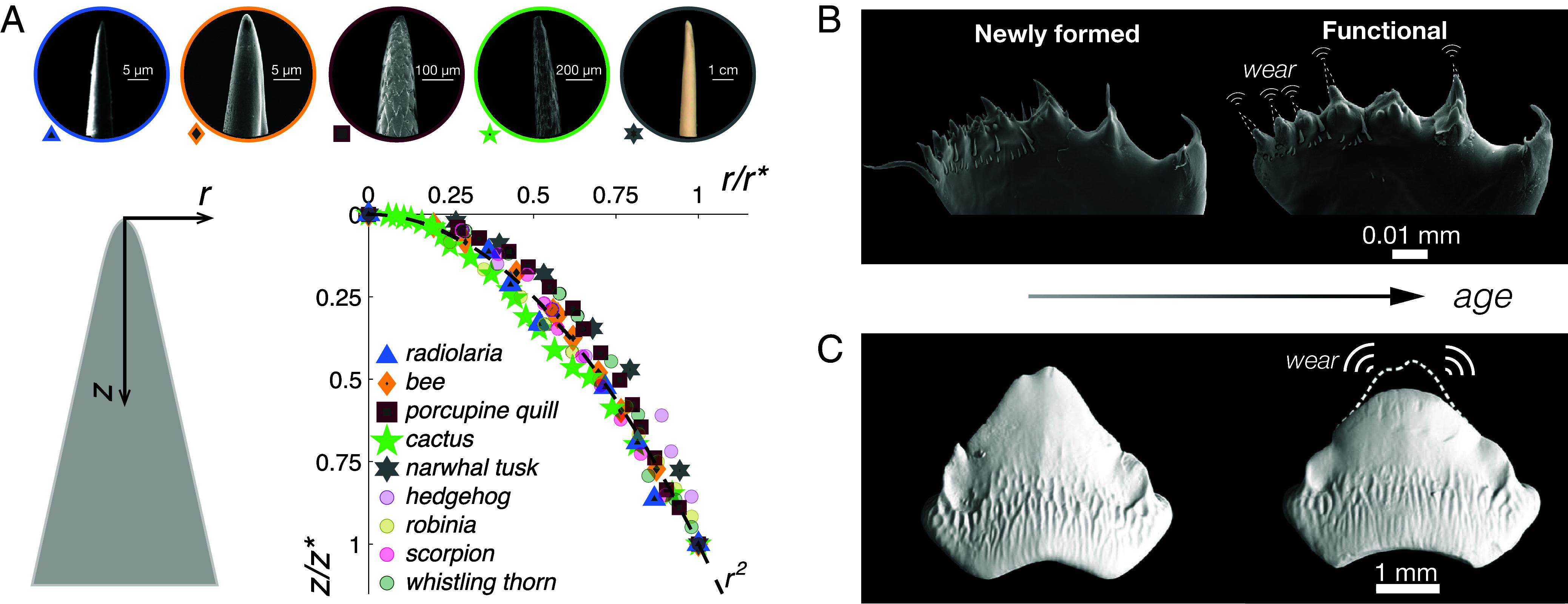 Figure 1
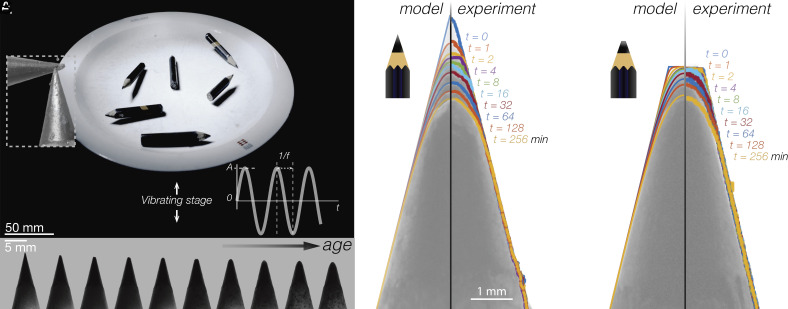 Figure 2
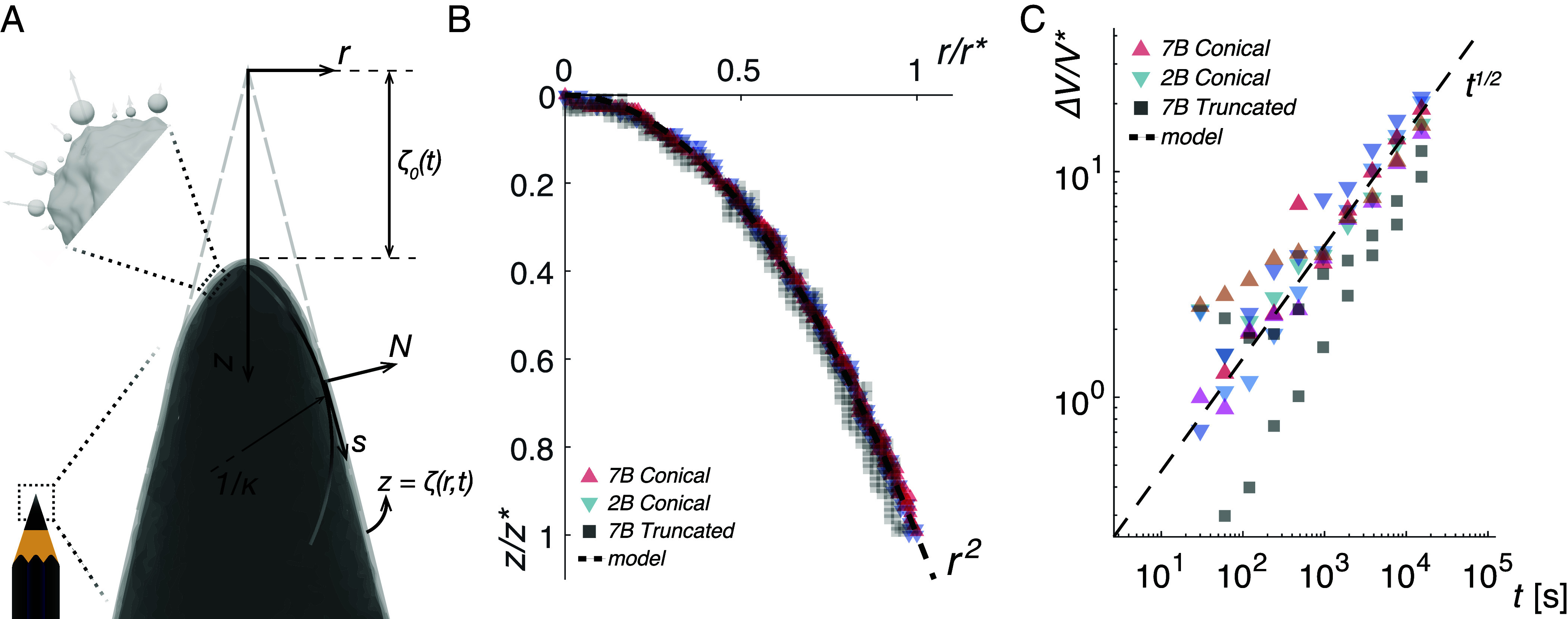 Figure 3
Peer Reviews
No public reviews on file for this paper yet. If you reviewed it on a platform where reviews are public (OpenReview, ICLR, NeurIPS, ICML), you can paste yours below so the community can read it here.
Videos
No videos yet. Explain this paper in a talk, walkthrough, or lecture? Add one.
Taxonomy
TopicsAdhesion, Friction, and Surface Interactions · Mineralogy and Gemology Studies · Force Microscopy Techniques and Applications