Nrf2 Activation in Inflammatory Diseases: A Review of Natural and Synthetic Modulators
Vitória B. Costa, Iolanda A. F. de Matos, Isabela R. G. Nogueira, Mariely A. de Godoi, Fábio R. M. Leite, Morgana R. Guimarães-Stabili

TL;DR
This review explores how activating the Nrf2 pathway can help reduce inflammation and oxidative stress in diseases, but also warns of potential risks in cancer.
Contribution
The paper provides a comprehensive review of Nrf2 modulators and their mechanisms in inflammatory diseases.
Findings
Nrf2 activation reduces oxidative damage and inflammation in diseases like rheumatoid arthritis and diabetes.
Natural and synthetic Nrf2 activators work through diverse molecular mechanisms.
Prolonged Nrf2 activation may promote cancer cell survival and resistance to treatment.
Abstract
The nuclear factor erythroid 2–related factor 2 (Nrf2) pathway is a central regulator of the cellular antioxidant response, playing a key role in modulating inflammation and defending against oxidative stress‐induced damage. A range of natural and synthetic compounds, including dimethyl fumarate, bardoxolone, oltipraz, RTA‐408, ursodiol, curcumin, sulforaphane, and resveratrol, have been shown to activate Nrf2 via distinct molecular mechanisms, thereby enhancing the expression of cytoprotective and antioxidant genes. These mechanisms include direct dissociation from Keap1, activation of AMP‐activated protein kinase, and modulation of signaling pathways relevant to cellular stress and immune regulation. In inflammatory diseases such as rheumatoid arthritis, periodontitis, diabetes mellitus, and inflammatory bowel diseases, Nrf2 activation has been associated with attenuation of oxidative…
Genes, proteins, chemicals, diseases, species, mutations and cell lines named across the full text — each resolved to its canonical identifier and authoritative record.
Click any figure to enlarge with its caption.
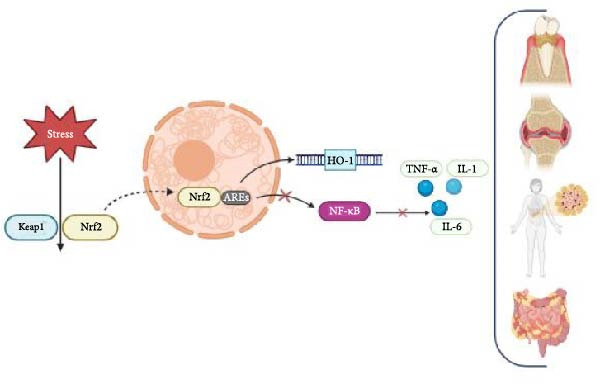 Figure 1
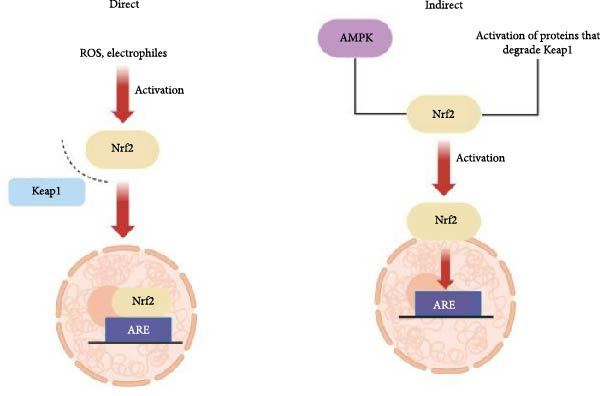 Figure 2
Peer Reviews
No public reviews on file for this paper yet. If you reviewed it on a platform where reviews are public (OpenReview, ICLR, NeurIPS, ICML), you can paste yours below so the community can read it here.
Videos
No videos yet. Explain this paper in a talk, walkthrough, or lecture? Add one.
Taxonomy
TopicsGenomics, phytochemicals, and oxidative stress · Curcumin's Biomedical Applications · Hops Chemistry and Applications