Feeding time index and mortality in intensive care stroke patients: an exploratory cohort study
Nevzat Mehmet MUTLU, Duygu Karaköse ÇALIŞKAN, Tülay Tunçer PEKER, Özlem Balkız SOYAL, Ayşe Pınar TİTİZ, Behiye Deniz KOSOVALI, Göksal GÜNERHAN, Büşra TEZCAN

TL;DR
This study explores how the timing and duration of feeding in ICU stroke patients relates to their survival, finding that early feeding may help but other factors like disease severity are more critical.
Contribution
Introduces the Feeding Time Index (FTI) as a novel metric to assess nutritional practices in ICU stroke patients and its potential association with mortality.
Findings
Higher FTI values were linked to lower mortality risk in univariate analysis but not in multivariate models.
Inability to feed orally and higher APACHE II scores were strong independent predictors of mortality.
FTI is suggested as a supportive metric for monitoring nutritional practices in ICU stroke patients.
Abstract
Stroke is a major cause of morbidity and mortality worldwide, with especially high mortality in intensive care unit (ICU) patients, whose prognosis is worsened by dysphagia, malnutrition, and aspiration risk. The Feeding Time Index (FTI)—defined as the ratio of feeding days to total ICU length of stay—quantified nutritional exposure. This exploratory cohort study aimed to evaluate the association between FTI and mortality in ICU patients with acute ischemic stroke (IS) or hemorrhagic stroke (HS) and to examine the potential role of FTI, together with the Acute Physiology and Chronic Health Evaluation II (APACHE II) score and oral feeding status, as a supportive metric for quantitative assessment of nutritional practices. In this retrospective observational study, 239 stroke patients admitted to the ICU were analyzed. Demographic data, clinical characteristics, APACHE II scores, time to…
Genes, proteins, chemicals, diseases, species, mutations and cell lines named across the full text — each resolved to its canonical identifier and authoritative record.
Click any figure to enlarge with its caption.
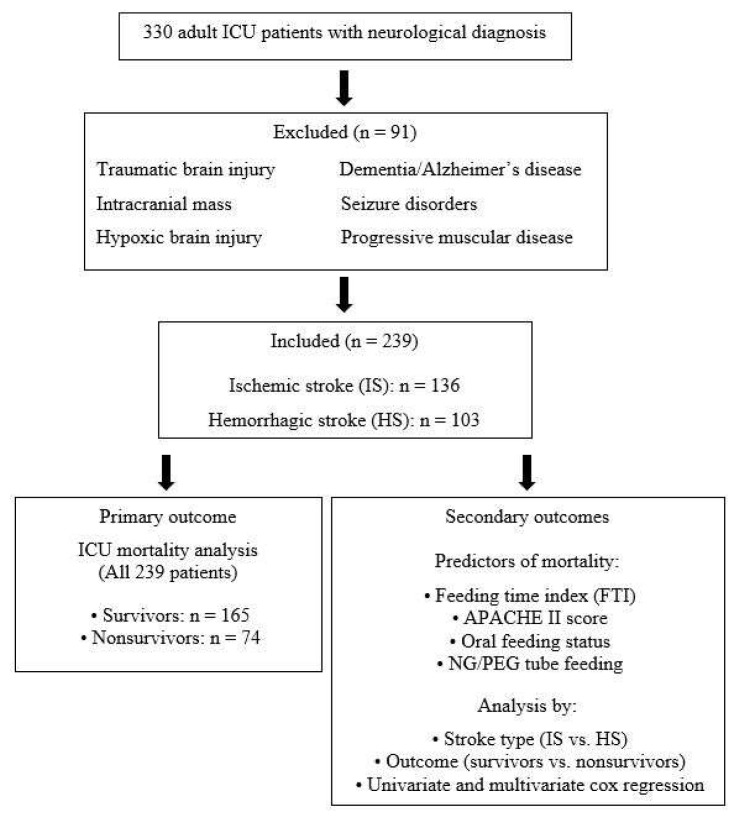 Figure 1
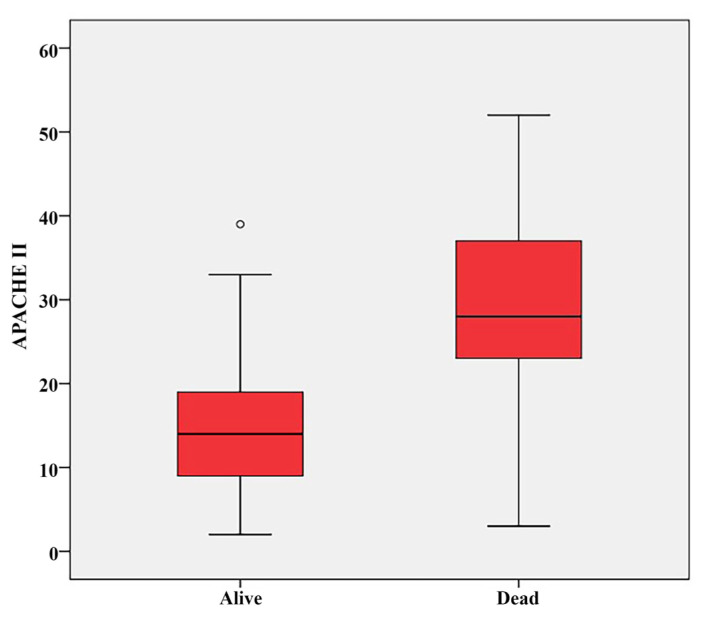 Figure 2
 Figure 3
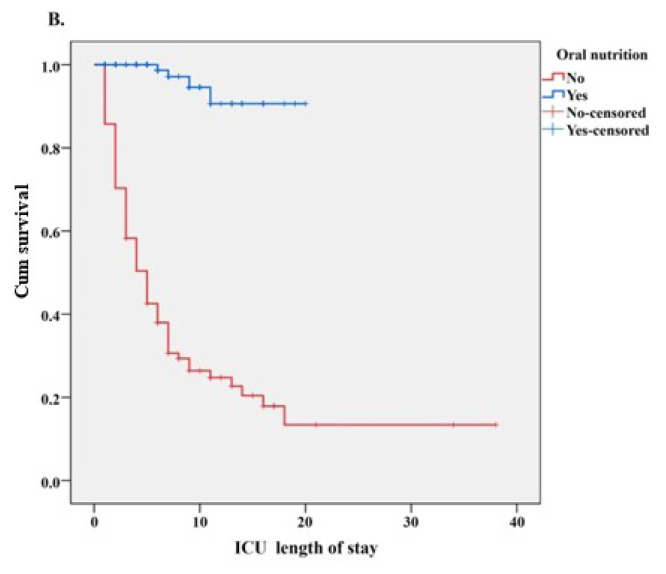 Figure 4
Peer Reviews
No public reviews on file for this paper yet. If you reviewed it on a platform where reviews are public (OpenReview, ICLR, NeurIPS, ICML), you can paste yours below so the community can read it here.
Videos
No videos yet. Explain this paper in a talk, walkthrough, or lecture? Add one.
Taxonomy
TopicsNutrition and Health in Aging · Dysphagia Assessment and Management · Clinical Nutrition and Gastroenterology