Evidence for microvesicle particles and platelet-activating factor as effectors for systemic effects of thermal burn injury
Akhil Varghese Parackal, Richard C. Fox, Aadil Umerani, Youngjun Park, R. Michael Johnson, Wenfeng Zhang, Zheng Xu, Alison A. Smith, Craig A. Rohan, Jeffrey B. Travers

TL;DR
This paper explores how thermal burn injuries cause systemic effects through microvesicle particles carrying a lipid mediator called PAF, offering new insights into treatment and outcomes.
Contribution
The paper introduces a novel model where microvesicle particles and PAF mediate systemic effects of thermal burn injuries.
Findings
Thermal burn injuries generate high levels of 1-alkyl PAF, which are potent PAF receptor agonists.
A pilot study showed microvesicle particles can be detected in the bloodstream hours after a burn injury.
The model explains why age and ethanol intoxication worsen systemic effects of burns.
Abstract
Thermal burn injury (TBI) is an important source of morbidity and mortality. The exact mechanisms for the systemic effects including multiple organ dysfunction (MOD) and immune deficits associated with extensive skin burn injuries are unclear and this knowledge gap has negatively impacted therapy. The goal of this review is to present evidence for a model of TBI-induced systemic effects that involves skin keratinocyte release of subcellular microvesicle particles (MVP) carrying the potent lipid mediator Platelet-activating Factor (PAF) as effectors. As TBI has been shown to generate high levels of potent 1-alkyl PAF versus lesser amounts of inhibitory 1-acyl PAF species, it would be expected that MVP produced by burn would be highly powerful PAF receptor agonists. In addition, we present results of a pilot study with 12 human subjects suggesting that MVP can be measured systemically…
Genes, proteins, chemicals, diseases, species, mutations and cell lines named across the full text — each resolved to its canonical identifier and authoritative record.
Click any figure to enlarge with its caption.
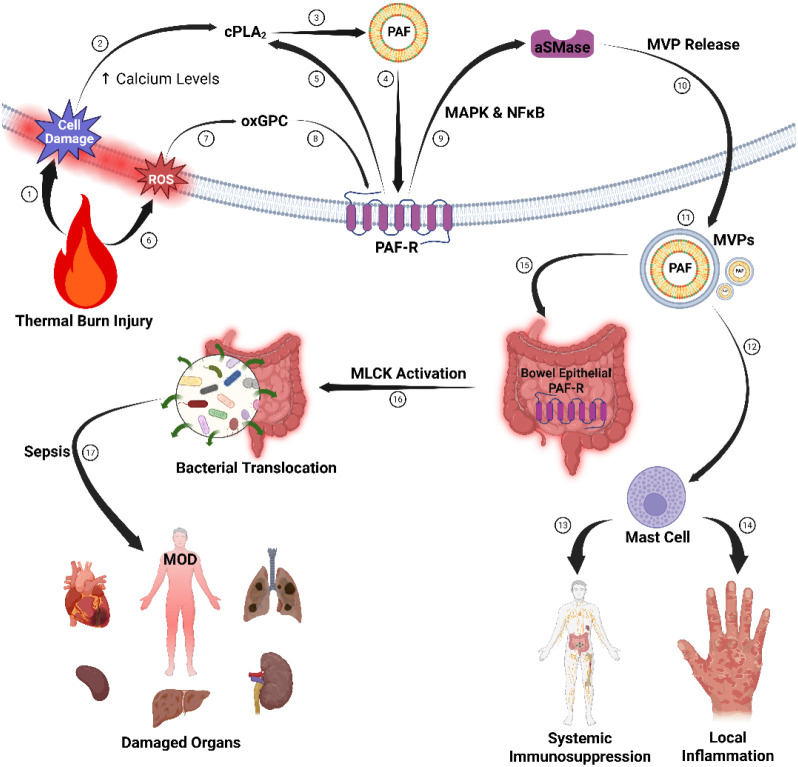 Figure 1
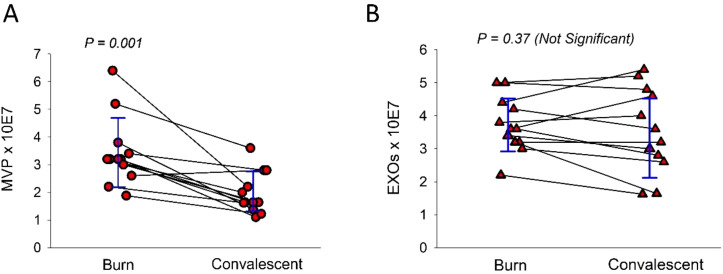 Figure 2
Peer Reviews
No public reviews on file for this paper yet. If you reviewed it on a platform where reviews are public (OpenReview, ICLR, NeurIPS, ICML), you can paste yours below so the community can read it here.
Videos
No videos yet. Explain this paper in a talk, walkthrough, or lecture? Add one.
Taxonomy
TopicsBurn Injury Management and Outcomes · Wound Healing and Treatments · Extracellular vesicles in disease