Haplotype editing with CRISPR-Cas9 as a therapeutic approach for dominant-negative missense mutations in NEFL
Poorvi H. Dua, Bazilco M.J. Simon, Chiara B.E. Marley, Carissa M. Feliciano, Hannah L. Watry, Quinn T. Cowan, Dylan Steury, Abin Abraham, Erin N. Gilbertson, Grace D. Ramey, John A. Capra, Bruce R. Conklin, Luke M. Judge

TL;DR
Researchers developed a gene-editing strategy to treat a genetic disorder by targeting common DNA variants linked to disease-causing mutations in motor neurons.
Contribution
The study introduces haplotype editing as a mutation-agnostic approach to inactivate dominant NEFL mutations in CMT2E.
Findings
Haplotype editing rescued disease phenotypes in iPSC-derived motor neurons with different NEFL missense mutations.
Gene inversion, a common editing by-product, failed to reliably disrupt mutant allele expression.
Population genetics analysis showed haplotype editing can benefit the largest number of patients with CMT2E.
Abstract
Inactivation of disease alleles by allele-specific editing is a promising approach to treat dominant-negative genetic disorders, provided the causative gene is haplosufficient. We previously edited a dominant NEFL missense mutation causing Charcot-Marie-Tooth type 2E (CMT2E) with inactivating frameshifts and rescued disease-relevant phenotypes in induced pluripotent stem cell (iPSC)-derived motor neurons. However, a multitude of different NEFL missense mutations cause CMT2E. Here, we addressed this challenge by targeting common single-nucleotide polymorphisms in cis with NEFL disease mutations for gene excision. We validated this haplotype editing approach in two iPSC lines with different missense mutations and demonstrated phenotypic rescue in iPSC-motor neurons. Surprisingly, our analysis revealed that gene inversion, a frequent by-product of excision editing, failed to reliably…
Genes, proteins, chemicals, diseases, species, mutations and cell lines named across the full text — each resolved to its canonical identifier and authoritative record.
Click any figure to enlarge with its caption.
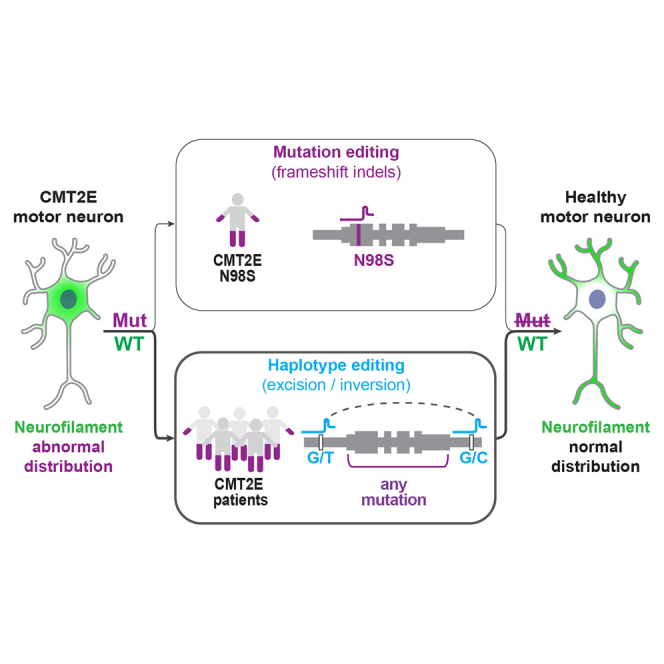 Figure 1
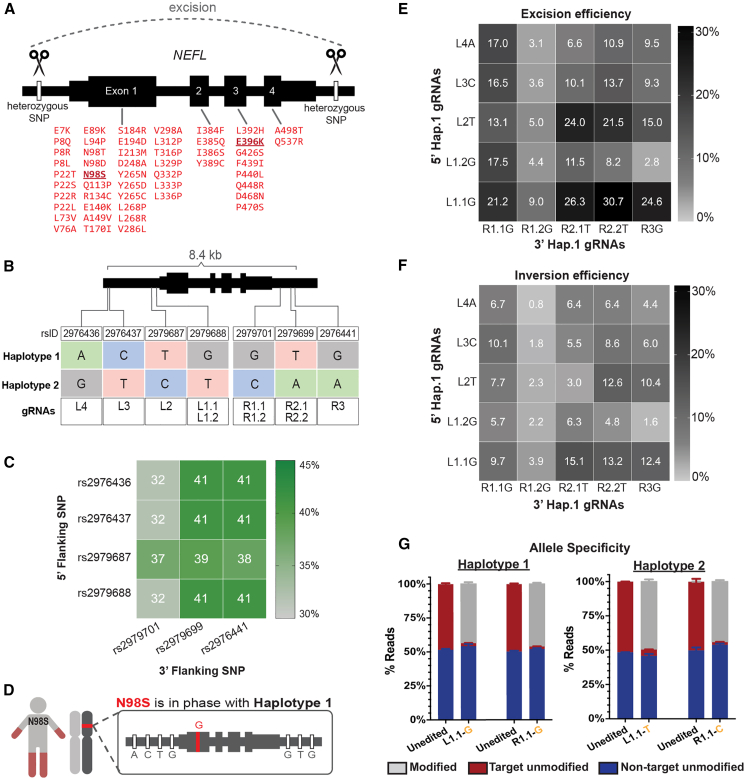 Figure 2
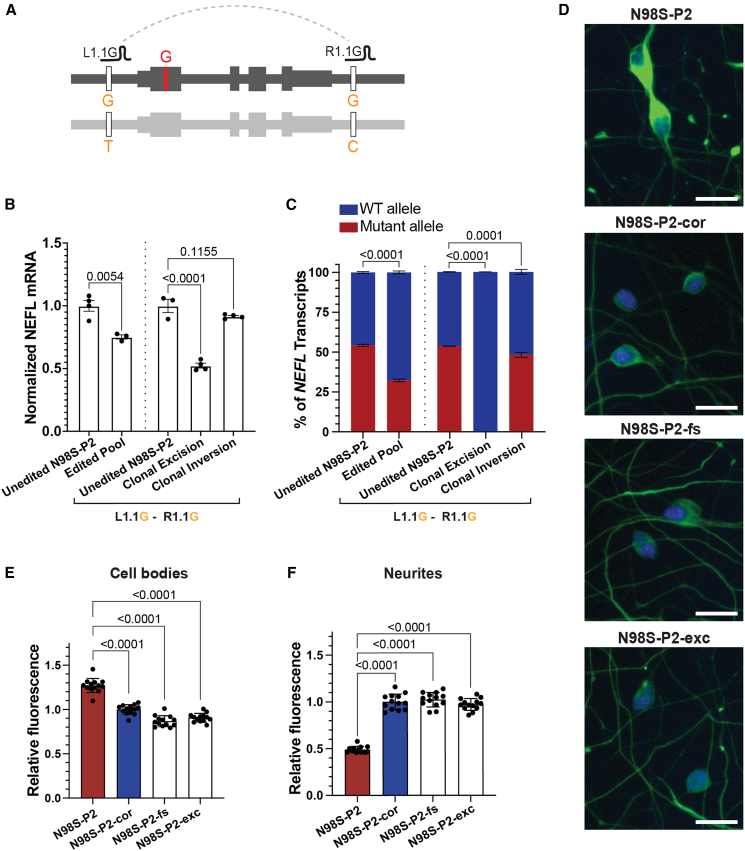 Figure 3
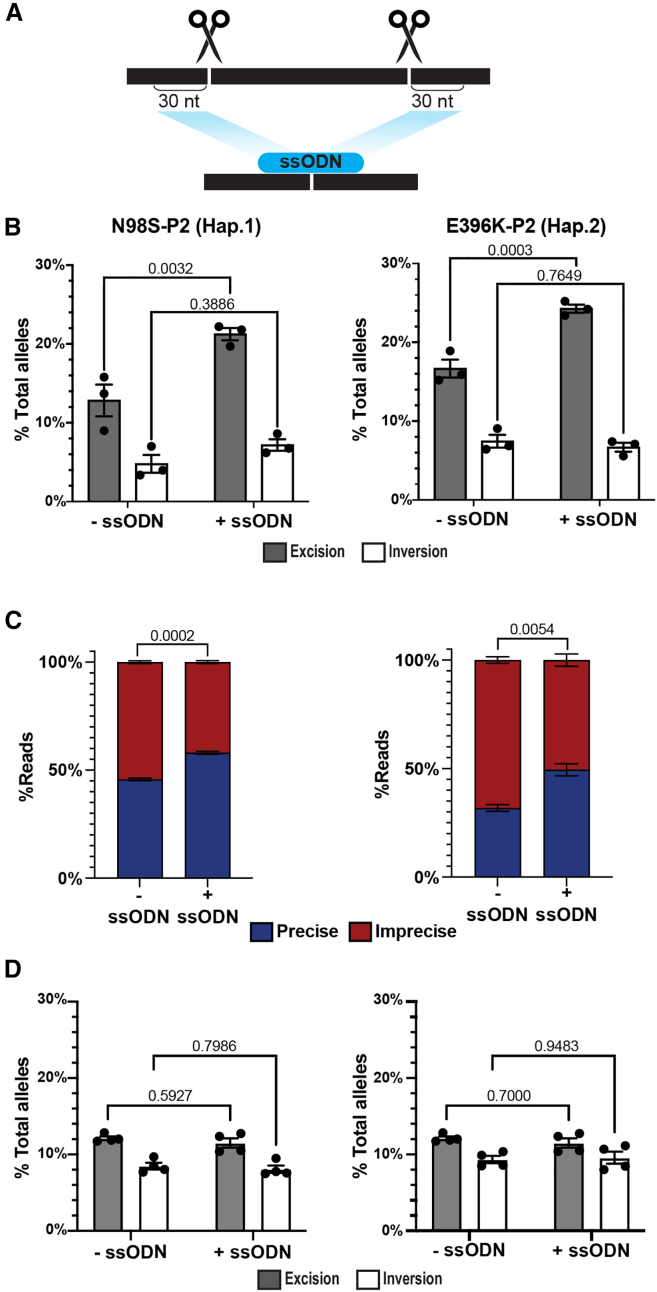 Figure 4
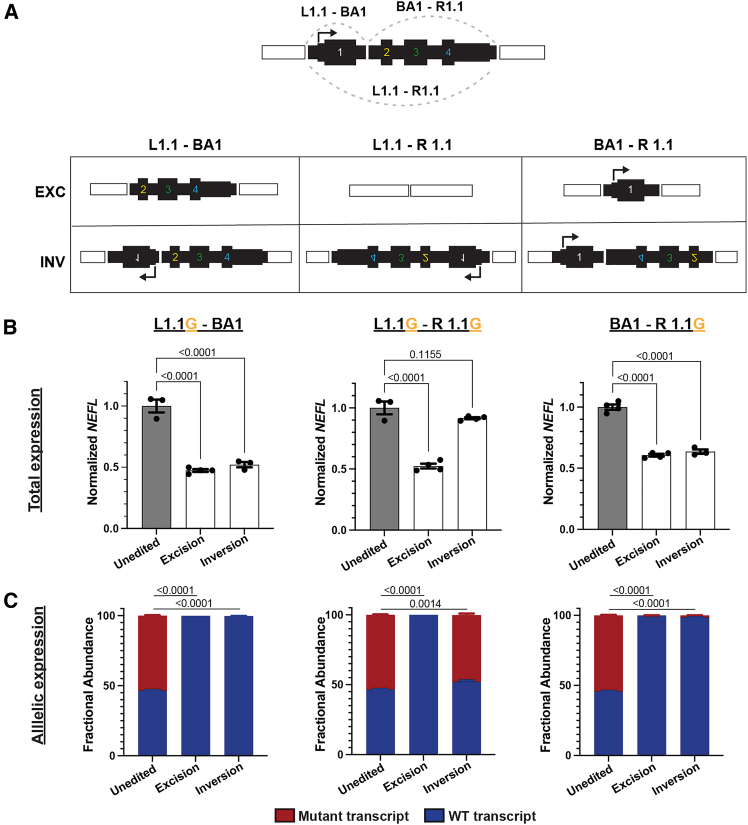 Figure 5
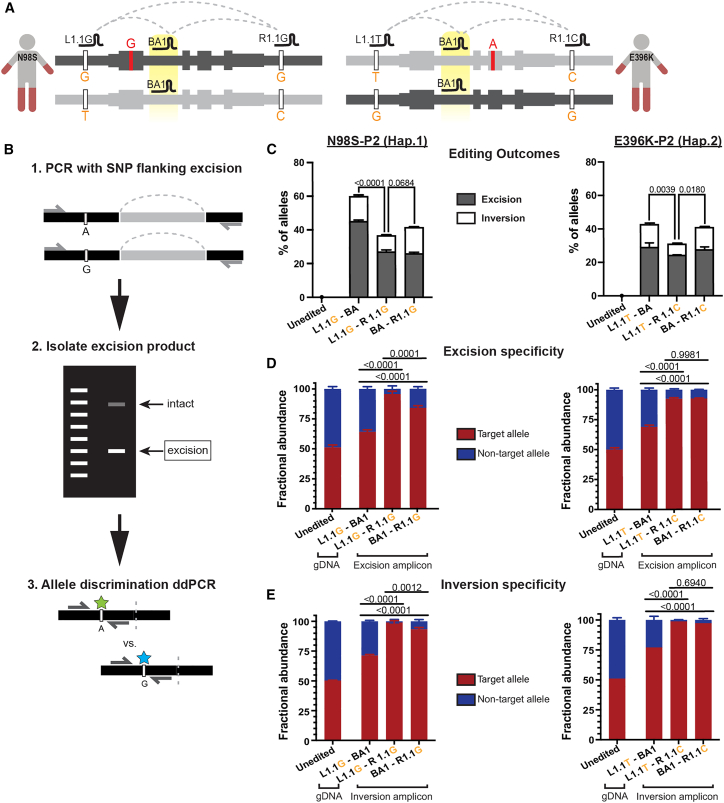 Figure 6
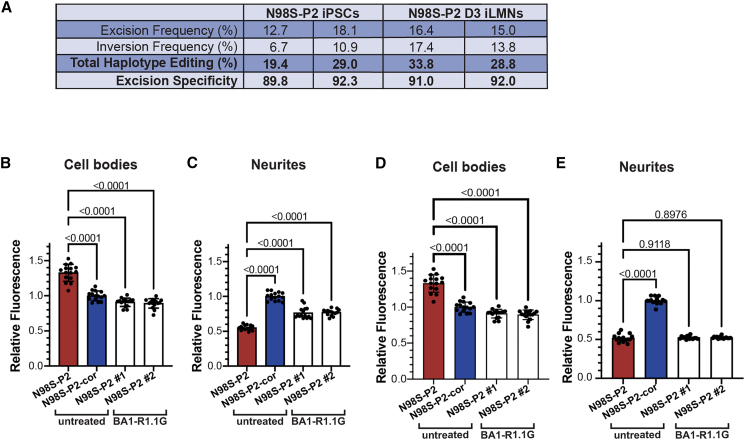 Figure 7
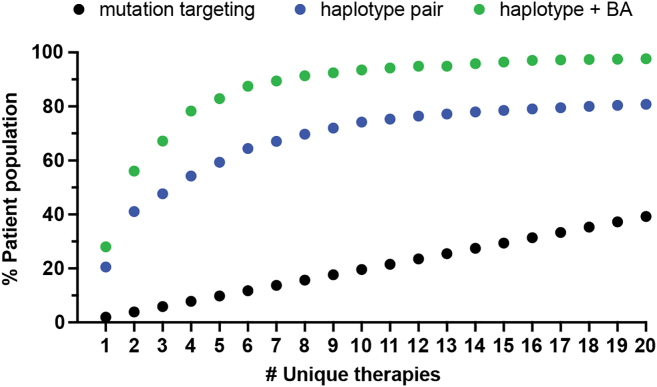 Figure 8
Peer Reviews
No public reviews on file for this paper yet. If you reviewed it on a platform where reviews are public (OpenReview, ICLR, NeurIPS, ICML), you can paste yours below so the community can read it here.
Videos
No videos yet. Explain this paper in a talk, walkthrough, or lecture? Add one.
Taxonomy
TopicsCRISPR and Genetic Engineering · Genetic Neurodegenerative Diseases · Neurogenetic and Muscular Disorders Research