Human immune response to primary cryptosporidiosis parallels murine infection models
Dana Van Fossen, Haroldo J. Rodriguez, Farha Naz, Cadigan Perriello, Carol A. Gilchrist, Justin J. Taylor, William A. Petri, Audrey C. Brown

TL;DR
This study examines the immune response in adults after a first cryptosporidiosis infection, showing short-lived antibodies but lasting Th1-driven immunity similar to mouse models.
Contribution
Provides rare longitudinal data on human immune responses to primary cryptosporidiosis in immunocompetent adults.
Findings
Antibody levels peaked early but declined rapidly, while antibody avidity increased over time.
Memory B cells were skewed toward IgM+, indicating limited germinal center-derived class-switched memory.
Th1-related cytokines dominated the acute immune response, aligning with protective pathways in mouse models.
Abstract
Cryptosporidium is a protozoan parasite that causes cryptosporidiosis, an enteric infection associated with diarrhea, malnutrition, and impaired childhood development in low- and middle-income countries. Both humoral and cell-mediated immune responses have been implicated in protection, but the durability and quality of human immune responses in immunocompetent adults remain poorly defined. We investigated the development of immunity in two healthy U.S. adults following primary cryptosporidiosis acquired during travel to Bangladesh. Longitudinal plasma samples were analyzed for antibody responses to Cryptosporidium antigens Cp17 and Cp23 and for circulating cytokine profiles. Circulating antibody peaked at 3 weeks post-infection but declined rapidly thereafter, approaching baseline within 16 weeks. In contrast, antibody avidity increased steadily over time, consistent with ongoing…
Genes, proteins, chemicals, diseases, species, mutations and cell lines named across the full text — each resolved to its canonical identifier and authoritative record.
Click any figure to enlarge with its caption.
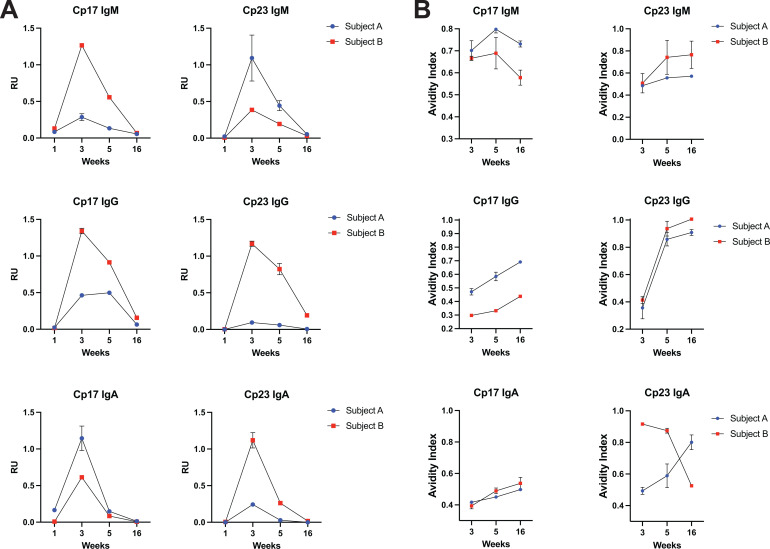 Figure 1
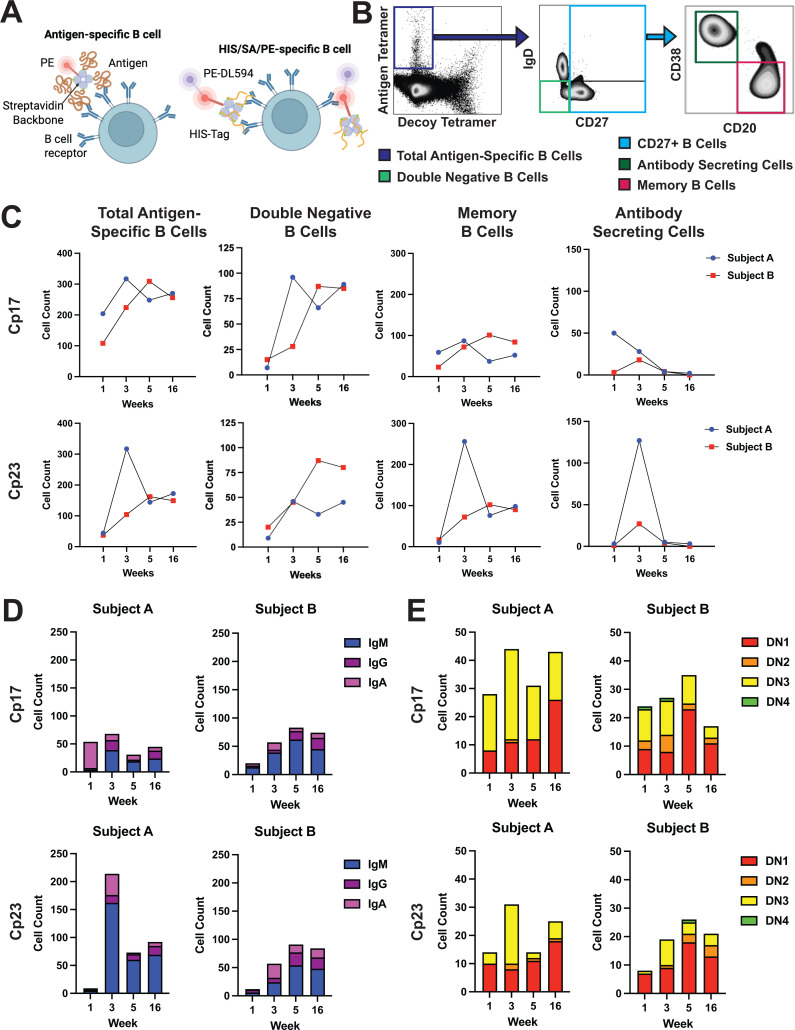 Figure 2
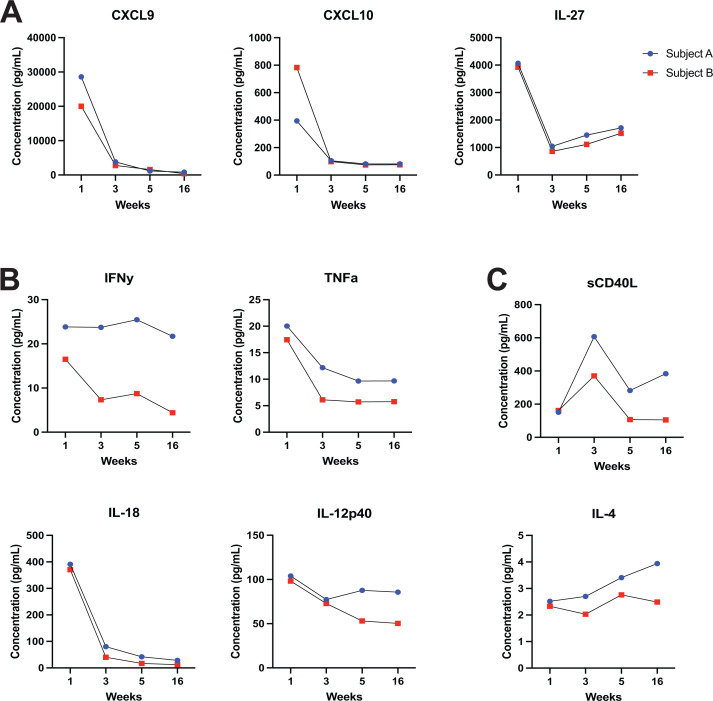 Figure 3
Peer Reviews
No public reviews on file for this paper yet. If you reviewed it on a platform where reviews are public (OpenReview, ICLR, NeurIPS, ICML), you can paste yours below so the community can read it here.
Videos
No videos yet. Explain this paper in a talk, walkthrough, or lecture? Add one.
Taxonomy
TopicsParasitic Infections and Diagnostics · Amoebic Infections and Treatments · Coccidia and coccidiosis research