Identification of collaborative cross mouse strains susceptible to chlamydial induction of hydrosalpinx
Yi Wu, Ahmed Mohamed Abdelsalam, Huizhou Fan, Victoria K. Baxter, Xin Sun, Guangming Zhong

TL;DR
This study identifies mouse strains that differ in their susceptibility to chlamydial infection and development of hydrosalpinx, a condition linked to infertility.
Contribution
The study reveals a lack of correlation between chlamydial genital infection and hydrosalpinx pathology in Collaborative Cross mice.
Findings
CC011 and CC012 were resistant to genital chlamydial infection, while CC037, CC042, and CC080 were susceptible.
CC012 developed the highest hydrosalpinx despite being infection-resistant, while CC042 was resistant to hydrosalpinx despite being infection-susceptible.
Hydrosalpinx was positively correlated with rectal chlamydial shedding, suggesting a role for gastrointestinal chlamydia in genital pathogenicity.
Abstract
Sexually transmitted infection with Chlamydia trachomatis can cause pathology, such as hydrosalpinx, in the upper genital tract, leading to infertility. To investigate how genetic variation affects chlamydial pathogenicity, we screened five strains of Collaborative Cross (CC) mice for susceptibility to intravaginal infection and hydrosalpinx induction by C. muridarum, a mouse-adapted chlamydial species used extensively to reveal chlamydial pathogenic mechanisms. In terms of susceptibility to genital chlamydial infection, the five CC strains fell into two categories: CC011 and CC012 were resistant, while CC037, CC042, and CC080 were susceptible. The resistant strains shed significant levels of live organisms from the genital tract for only ~2 weeks, whereas the susceptible strains shed for ~4 weeks. However, the resistant CC012 mice developed the highest level of hydrosalpinx, while the…
Genes, proteins, chemicals, diseases, species, mutations and cell lines named across the full text — each resolved to its canonical identifier and authoritative record.
Click any figure to enlarge with its caption.
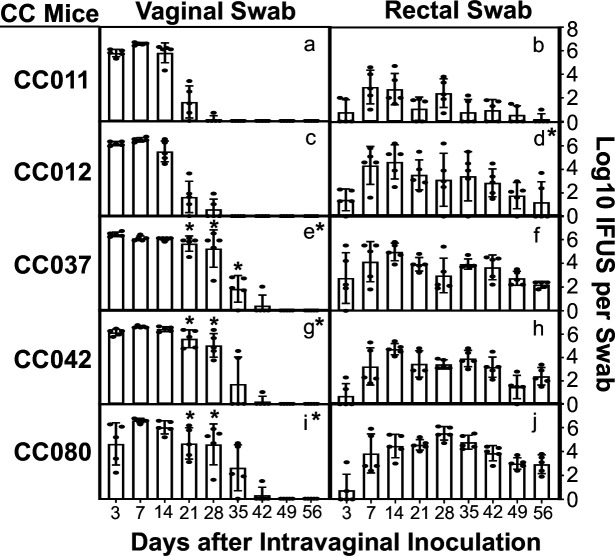 Figure 1
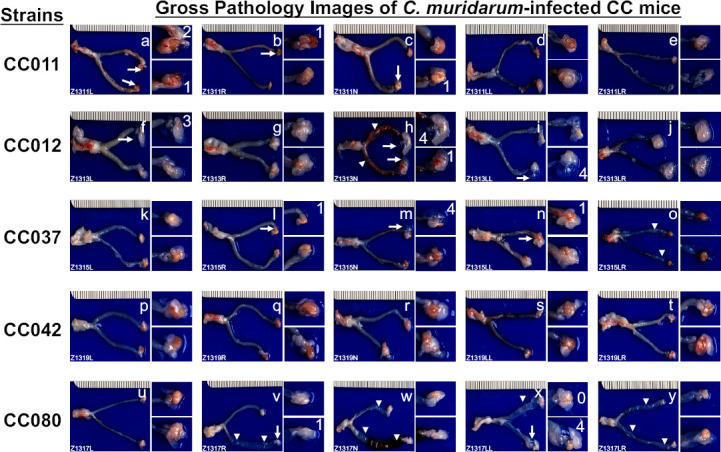 Figure 2
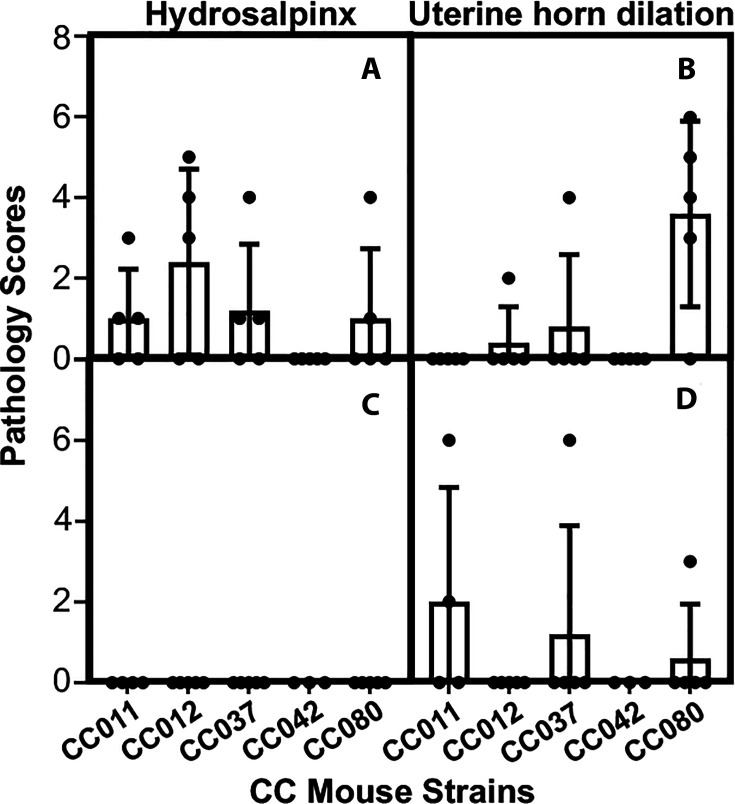 Figure 3
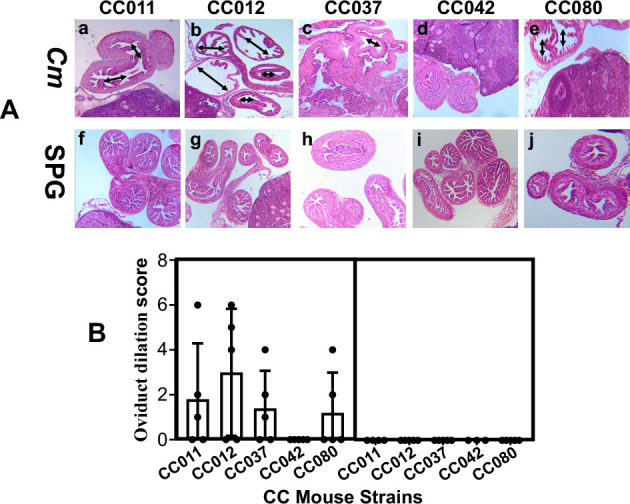 Figure 4
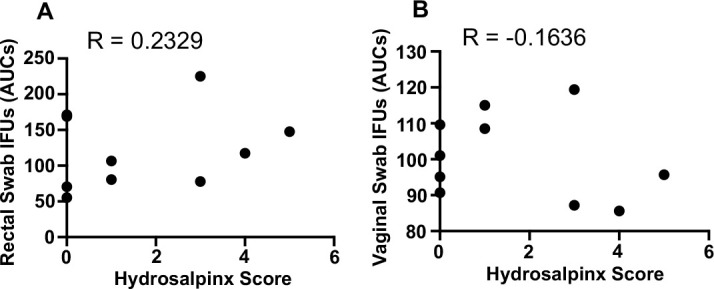 Figure 5
Peer Reviews
No public reviews on file for this paper yet. If you reviewed it on a platform where reviews are public (OpenReview, ICLR, NeurIPS, ICML), you can paste yours below so the community can read it here.
Videos
No videos yet. Explain this paper in a talk, walkthrough, or lecture? Add one.
Taxonomy
TopicsReproductive tract infections research · Syphilis Diagnosis and Treatment · Hypothalamic control of reproductive hormones