Acquisition of toxin-encoding lysogenic bacteriophage elements enhances the virulence of pandemic Streptococcus pyogenes M1UK
Juan Manuel Díaz, Jasmine E. J. Wells, Amanda C. Marple, Blake A. Shannon, Aanchal Rishi, Irene Martin, Allison McGeer, Matthew A. Croxen, Gregory J. Tyrrell, Mark J. Walker, Stephan Brouwer, John K. McCormick

TL;DR
A new strain of Streptococcus pyogenes called M1UK is causing more severe infections due to genetic changes that boost toxin production and immune system activation.
Contribution
The study identifies how M1UK strains acquire prophage elements and mutations that enhance virulence compared to other S. pyogenes strains.
Findings
M1UK strains produce more of the SpeA superantigen than the M1global strain.
Prophage-encoded elements in M1UK strains increase human T cell activation and infection severity in mice.
M1UK strains with covS mutations or additional prophage elements show higher virulence in experimental models.
Abstract
Multiple countries have observed an alarming increase in scarlet fever cases, and invasive infections often associated with a new sublineage of Streptococcus pyogenes known as M1UK. M1UK strains express increased levels of the streptococcal pyrogenic exotoxin A (SpeA) superantigen, and here we compare the virulence characteristics of this sublineage with the circulating M1global strain. We obtained contemporary Canadian M1UK isolates, and genome sequencing revealed that some M1UK strains had acquired additional DNAse- and superantigen-encoding prophage elements, as well as an isolate with a mutation in covS. Five S. pyogenes strains were chosen for functional experiments, including 5448 (M1global strain), M1UK350 (a “typical” M1UK strain), M1UK162 (M1UK strain containing a mutation in the covS gene), M1UK362ΦSP1380.vir (M1UK strain containing a prophage element encoding the spd1, speC,…
Genes, proteins, chemicals, diseases, species, mutations and cell lines named across the full text — each resolved to its canonical identifier and authoritative record.
Click any figure to enlarge with its caption.
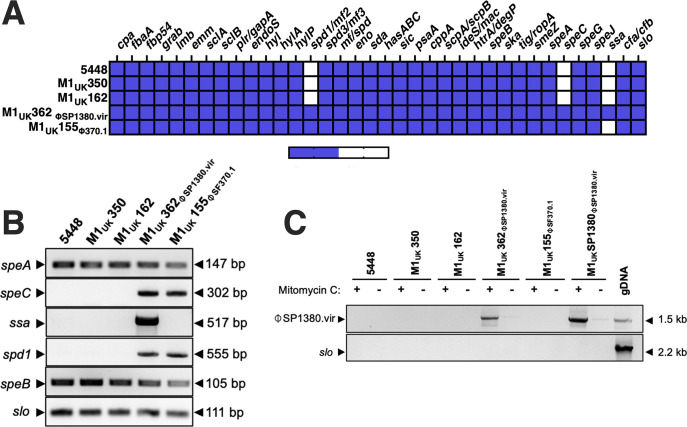 Figure 1
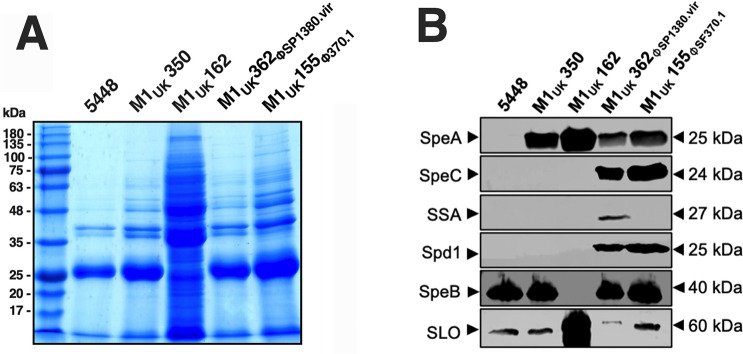 Figure 2
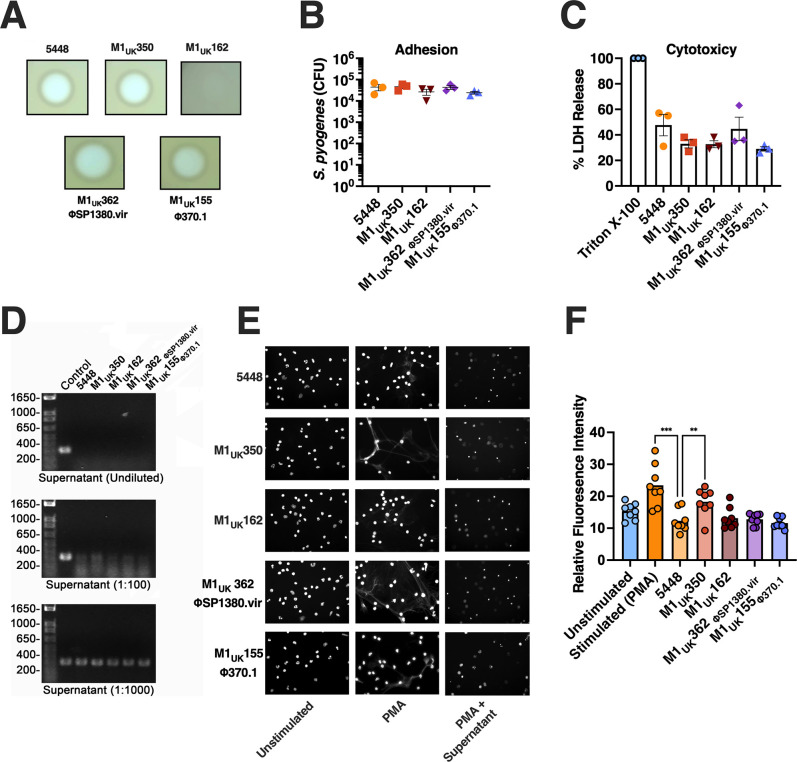 Figure 3
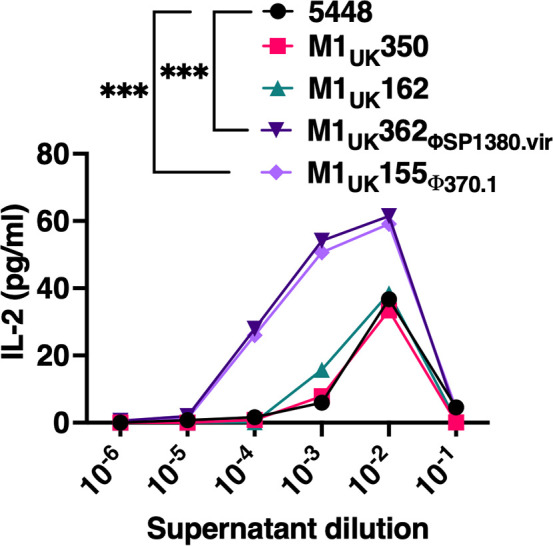 Figure 4
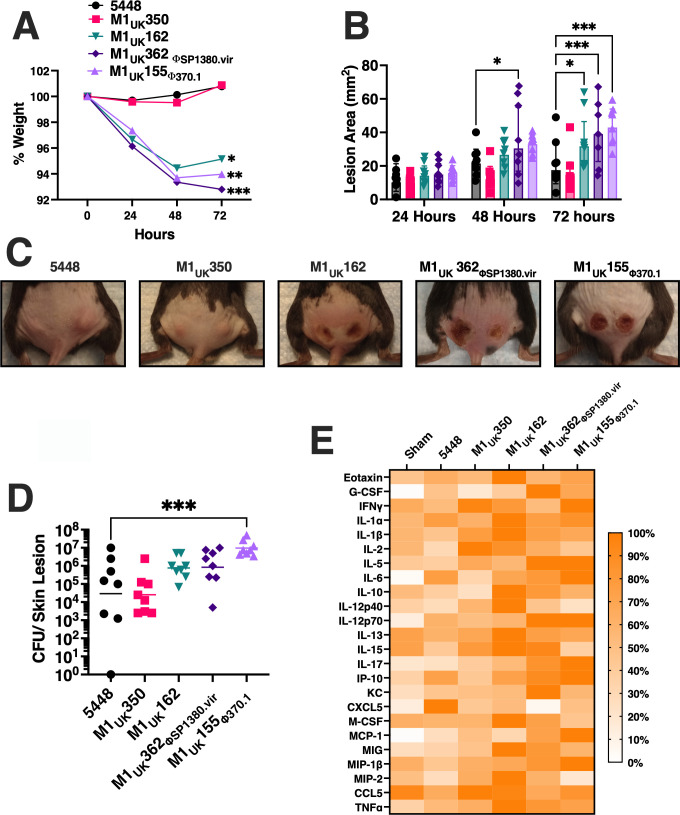 Figure 5
Peer Reviews
No public reviews on file for this paper yet. If you reviewed it on a platform where reviews are public (OpenReview, ICLR, NeurIPS, ICML), you can paste yours below so the community can read it here.
Videos
No videos yet. Explain this paper in a talk, walkthrough, or lecture? Add one.
Taxonomy
TopicsStreptococcal Infections and Treatments · Bacteriophages and microbial interactions · Oral microbiology and periodontitis research