Orientia tsutsugamushi binds to multiple C-type lectin receptors
Véronique Hefter, Sabine Mayer-Lambertz, Zacharias Orfanos, Jonas Mehl, Bernd Lepenies, Christian Keller

TL;DR
This study identifies several C-type lectin receptors that recognize Orientia tsutsugamushi, a bacterium causing scrub typhus, and highlights Mincle's role in modulating immune responses.
Contribution
The study reveals multiple C-type lectin receptors involved in Orientia recognition and defines Mincle's immunomodulatory role during infection.
Findings
Orientia tsutsugamushi binds to mouse CLRs Mincle, Dectin-1, Langerin, and DCL-1, as well as human DC-SIGN.
Mincle binding is Ca²+-dependent and involves carbohydrate-specific recognition.
Mincle modulates cytokine responses during Orientia infection, influencing interleukin-27 and cxcl-10 mRNA expression.
Abstract
Orientia tsutsugamushi, the agent of scrub typhus, is an obligate intracellular bacterium whose atypical cell wall lacks many classical pathogen-associated molecular patterns but is enriched in neutral glycans. Its recognition by phagocytes is driven by a heat-stable ligand that triggers innate cytokine responses, yet the nature of this ligand and the receptors sensing it remain incompletely understood. While activation of innate immunity via toll-like (TLR) and nucleotide-binding and oligomerization domain-like receptors has been described, recognition via C-type lectin receptors (CLRs) has remained largely unexplored. Using a flow cytometry-based screening assay with a library of CLR-Fc fusion proteins, we demonstrate binding of Orientia to four mouse CLRs, including Mincle, Dectin-1, Langerin, and DCL-1, as well as to human DC-SIGN. Binding to Mincle was Ca²+-dependent, indicating…
Genes, proteins, chemicals, diseases, species, mutations and cell lines named across the full text — each resolved to its canonical identifier and authoritative record.
Click any figure to enlarge with its caption.
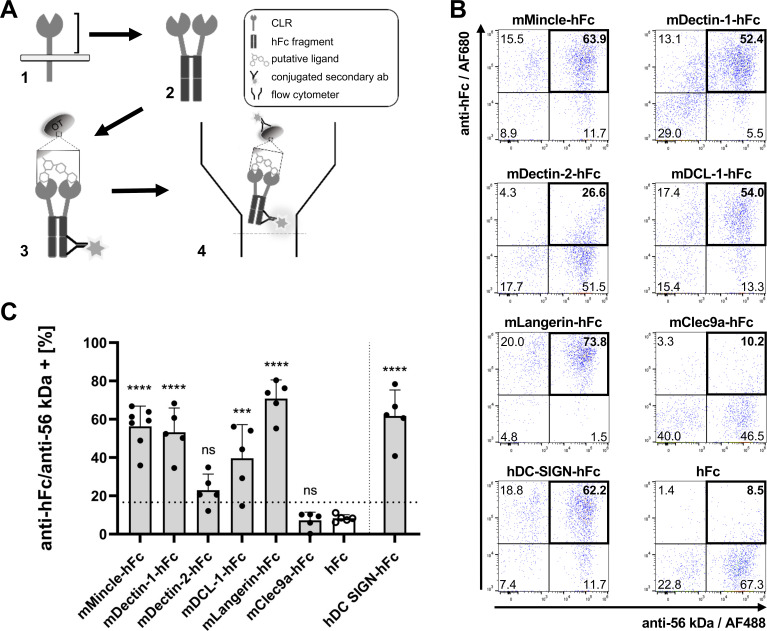 Figure 1
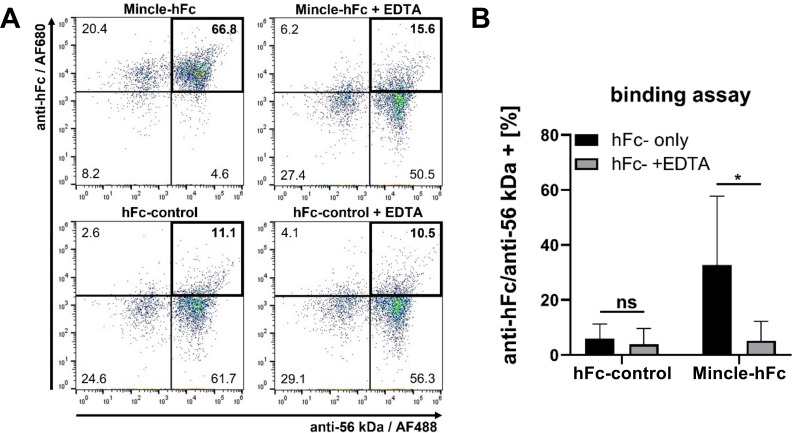 Figure 2
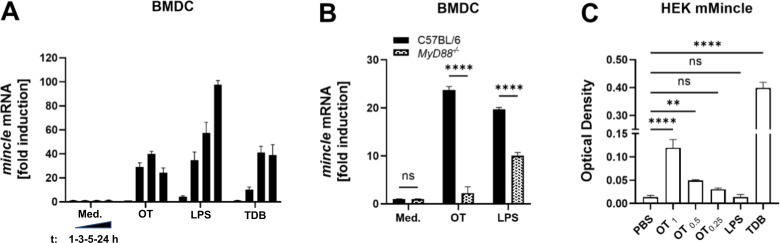 Figure 3
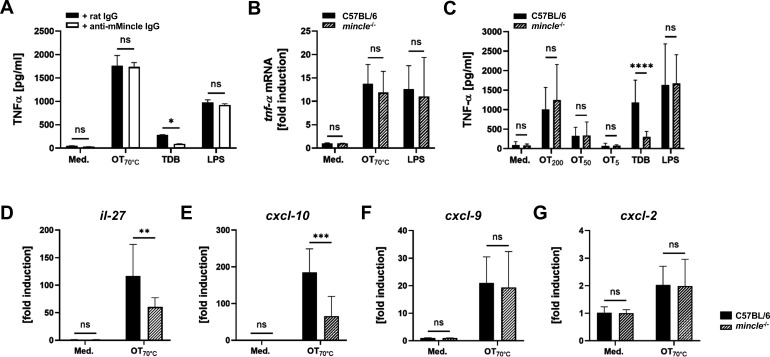 Figure 4
Peer Reviews
No public reviews on file for this paper yet. If you reviewed it on a platform where reviews are public (OpenReview, ICLR, NeurIPS, ICML), you can paste yours below so the community can read it here.
Videos
No videos yet. Explain this paper in a talk, walkthrough, or lecture? Add one.
Taxonomy
TopicsVector-borne infectious diseases · vaccines and immunoinformatics approaches · Complement system in diseases