Strain-specific immune response patterns to Borrelia burgdorferi infection: a comparative transcriptomic analysis in C3H and C57BL/6 mice
Guozhong Zhou, Yan Dong, Huangjuan Zhao, Yu Zhang, Yantong Chen, Meng Liu, Yanshuang Luo, Aihua Liu, Fukai Bao

TL;DR
This study compares immune responses in two mouse strains infected with Borrelia burgdorferi to understand why some develop severe arthritis while others do not.
Contribution
The study identifies strain-specific immune response patterns and their molecular underpinnings in Lyme arthritis development.
Findings
C3H mice showed persistent inflammation with active complement system and inflammasome activity.
C57BL/6 mice maintained immune stability with fewer differentially expressed genes.
Transcriptomic analysis revealed 2,183 and 439 differentially expressed genes in C3H and C57BL/6 mice, respectively.
Abstract
Borrelia burgdorferi (Bb), transmitted through tick vectors, induces Lyme arthritis (LA), with disease progression intimately correlated with host genetic characteristics. Laboratory investigations have demonstrated marked disparities in infection responses among distinct mouse strains: C57BL/6 mice have mild arthritis and rapid tissue repair, whereas C3H mice exhibit severe arthritic manifestations. Comparing these strains has helped identify genetic and immune factors important for arthritis development. In this study, female C57BL/6 and C3H mice were inoculated with Bb via bilateral footpad injection. Disease progression was evaluated through multidimensional parameters, including joint swelling measurements, radiographic examinations, and histopathological analyses at acute (14 days) and chronic (56 days) phases. RNA-seq of joint tissue, combined with single-sample gene set…
Genes, proteins, chemicals, diseases, species, mutations and cell lines named across the full text — each resolved to its canonical identifier and authoritative record.
Click any figure to enlarge with its caption.
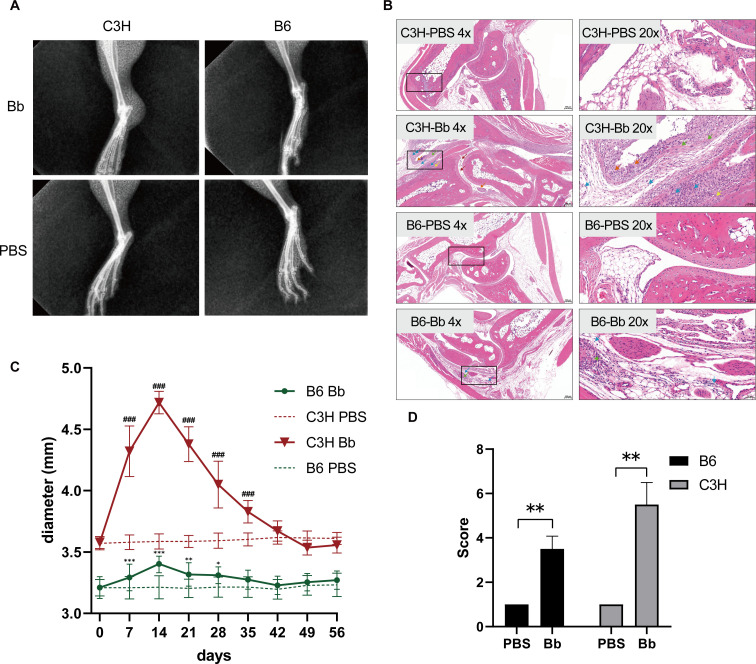 Figure 1
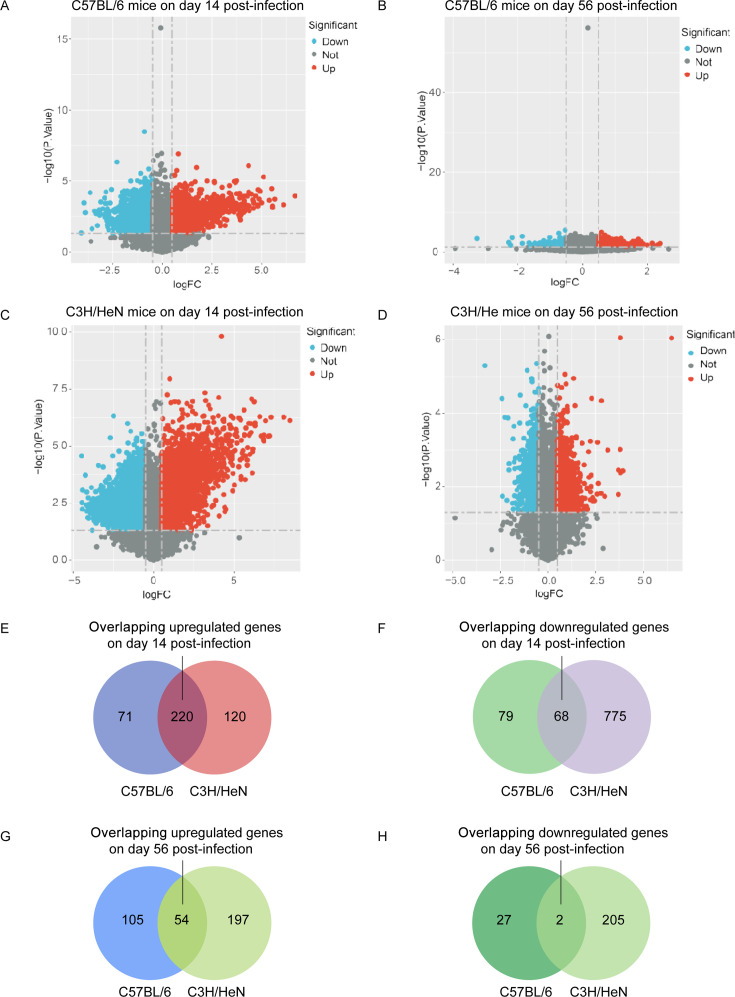 Figure 2
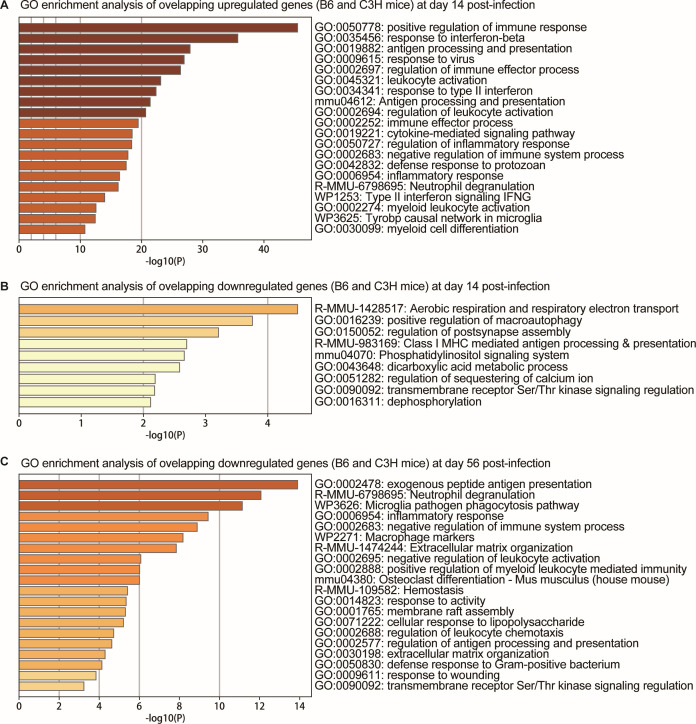 Figure 3
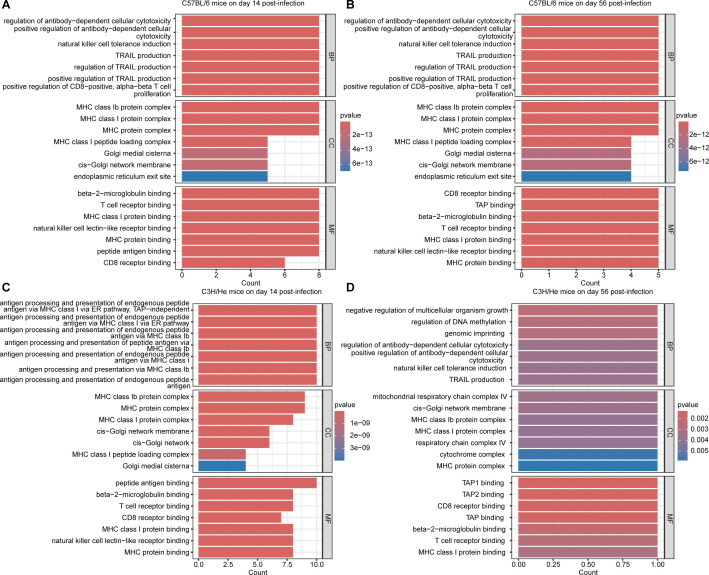 Figure 4
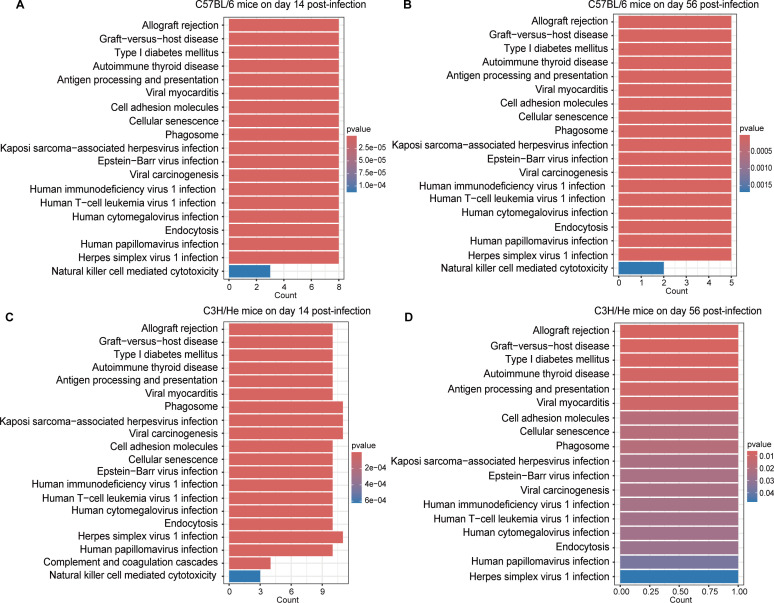 Figure 5
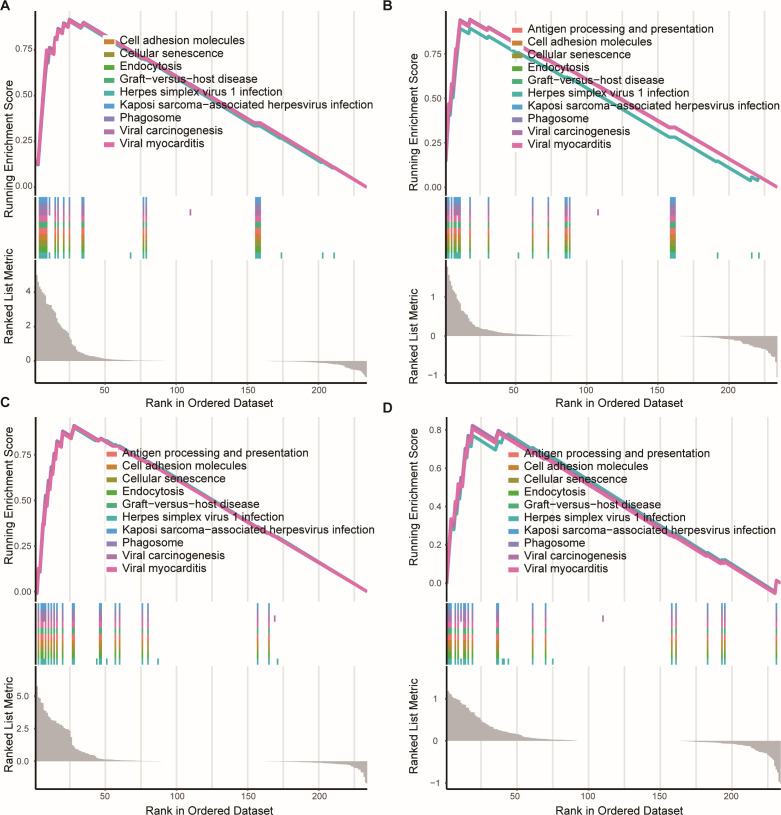 Figure 6
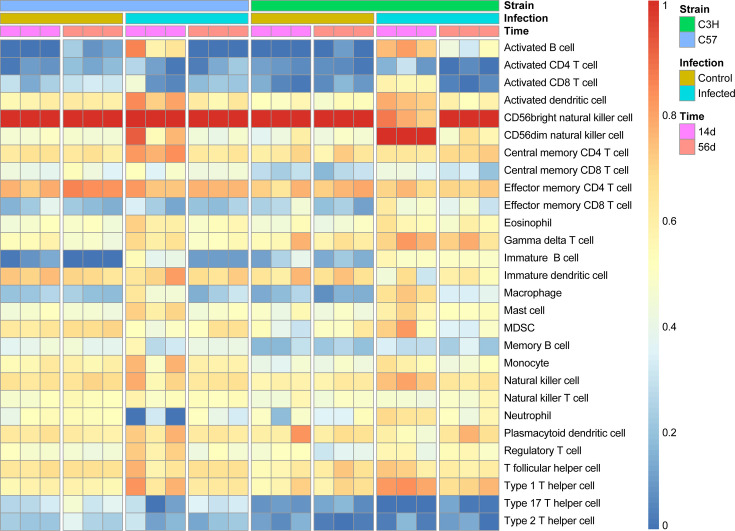 Figure 7
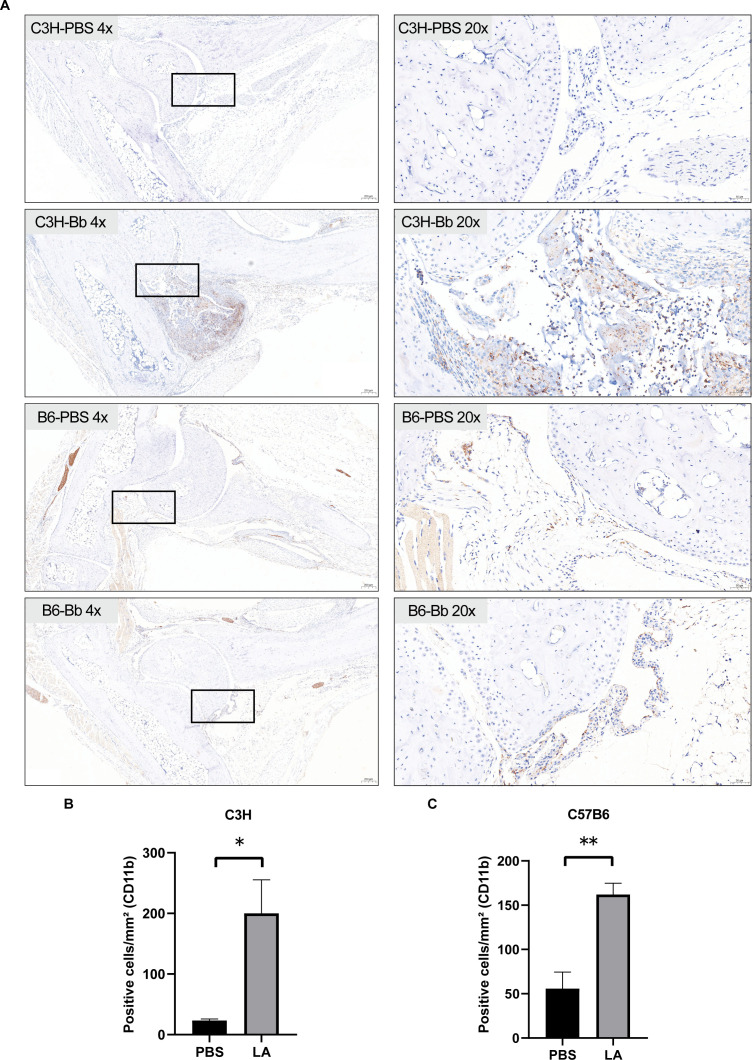 Figure 8
Peer Reviews
No public reviews on file for this paper yet. If you reviewed it on a platform where reviews are public (OpenReview, ICLR, NeurIPS, ICML), you can paste yours below so the community can read it here.
Videos
No videos yet. Explain this paper in a talk, walkthrough, or lecture? Add one.
Taxonomy
TopicsVector-borne infectious diseases · Complement system in diseases · Parasites and Host Interactions