Differential sensitivity of leukocyte populations to Staphylococcus aureus biofilm
Nichole D. Brandquist, Tammy Kielian

TL;DR
This study explores how different types of white blood cells respond to Staphylococcus aureus biofilms, which are linked to joint infections.
Contribution
The study reveals distinct sensitivity patterns of leukocyte populations to S. aureus biofilm-induced cytotoxicity.
Findings
Macrophages are highly sensitive to S. aureus biofilm toxicity within 15 minutes.
G-MDSCs and neutrophils are more resilient to biofilm but less so to planktonic bacteria.
Necrosis, not programmed cell death, is a key mechanism in biofilm-induced cell death for macrophages and G-MDSCs.
Abstract
Staphylococcus aureus is a leading cause of prosthetic joint infection (PJI) typified by biofilm formation. Anti-inflammatory granulocytic myeloid-derived suppressor cells (G-MDSCs) represent the main leukocyte population in a mouse model of S. aureus PJI, followed by neutrophils (PMNs), and macrophages (Mφs), which is also seen during human PJI. Defining how each leukocyte population responds to S. aureus biofilm vs planktonic bacteria could have important implications for how S. aureus evades immune detection to facilitate biofilm persistence. This study compared the kinetics of leukocyte death and relationship to mitochondrial ROS (mtROS) production following exposure to planktonic S. aureus or biofilm. Mφs were exquisitely sensitive to S. aureus biofilm with toxicity observed within 15 min following biofilm co-culture, whereas G-MDSCs and PMNs were more resilient, with appreciable…
Genes, proteins, chemicals, diseases, species, mutations and cell lines named across the full text — each resolved to its canonical identifier and authoritative record.
Click any figure to enlarge with its caption.
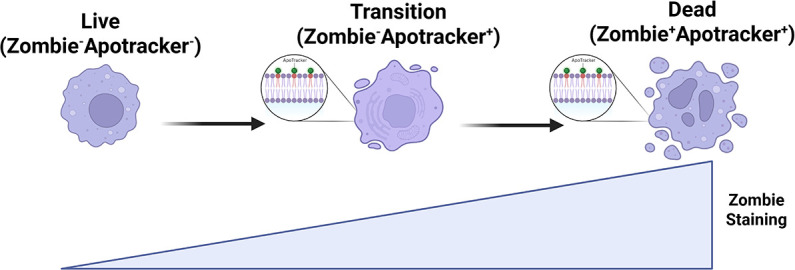 Figure 1
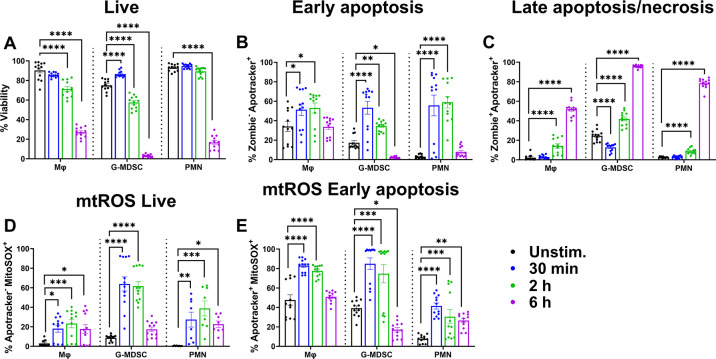 Figure 2
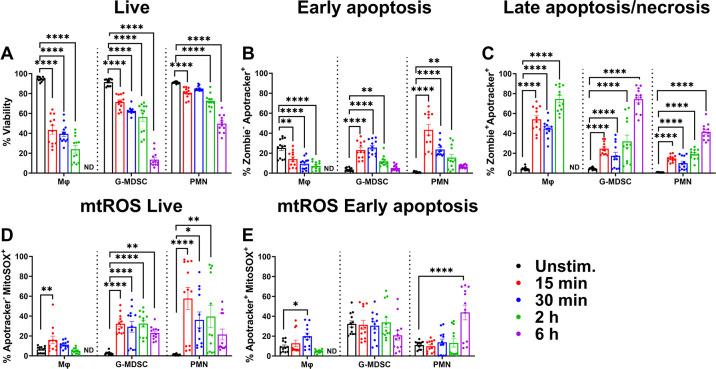 Figure 3
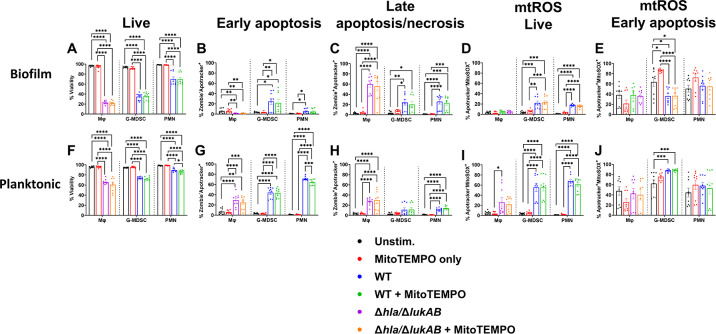 Figure 4
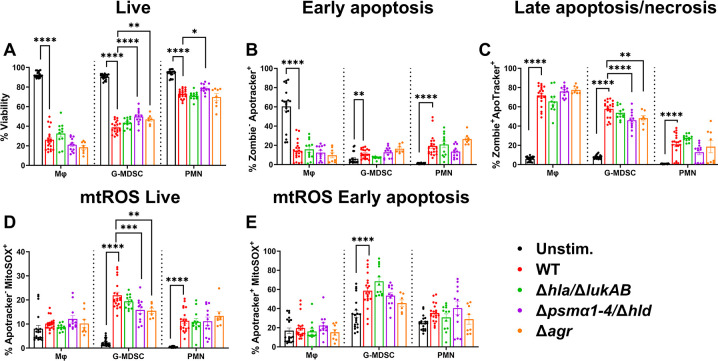 Figure 5
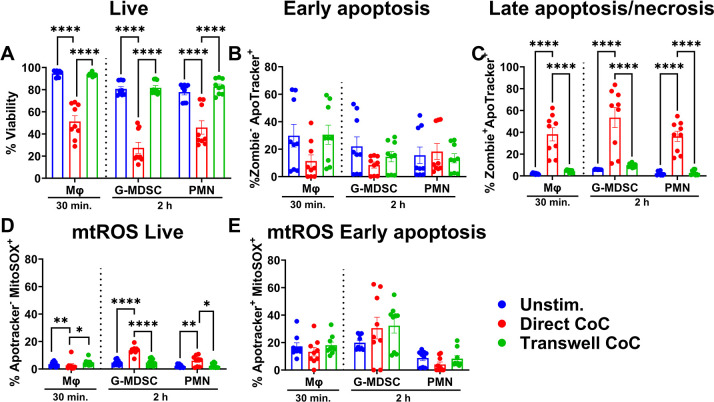 Figure 6
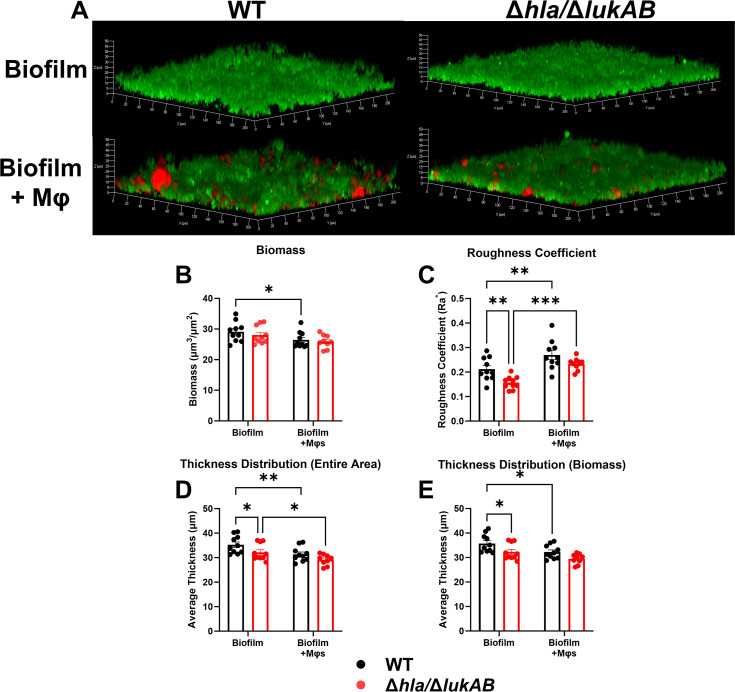 Figure 7
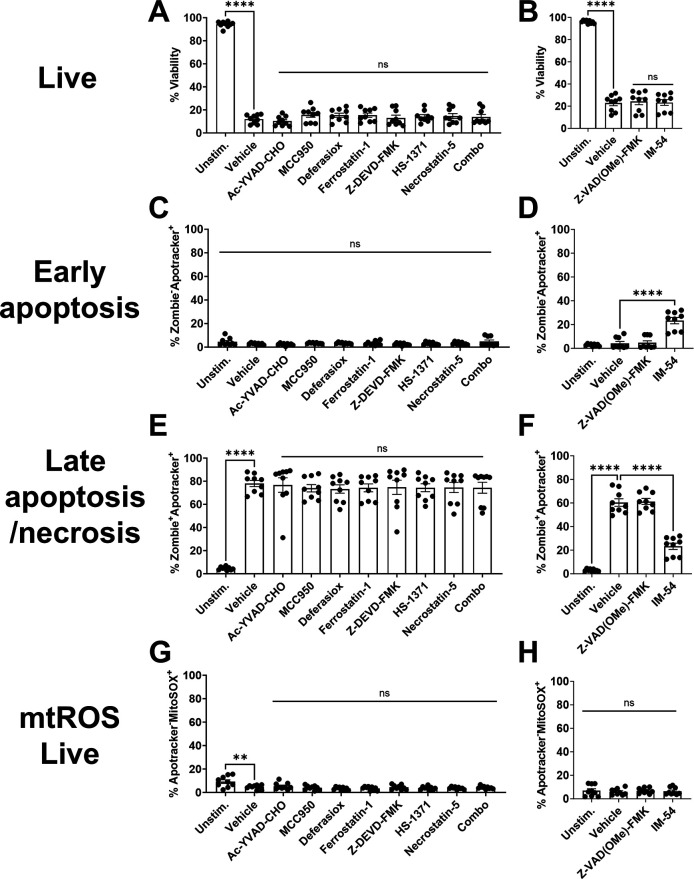 Figure 8
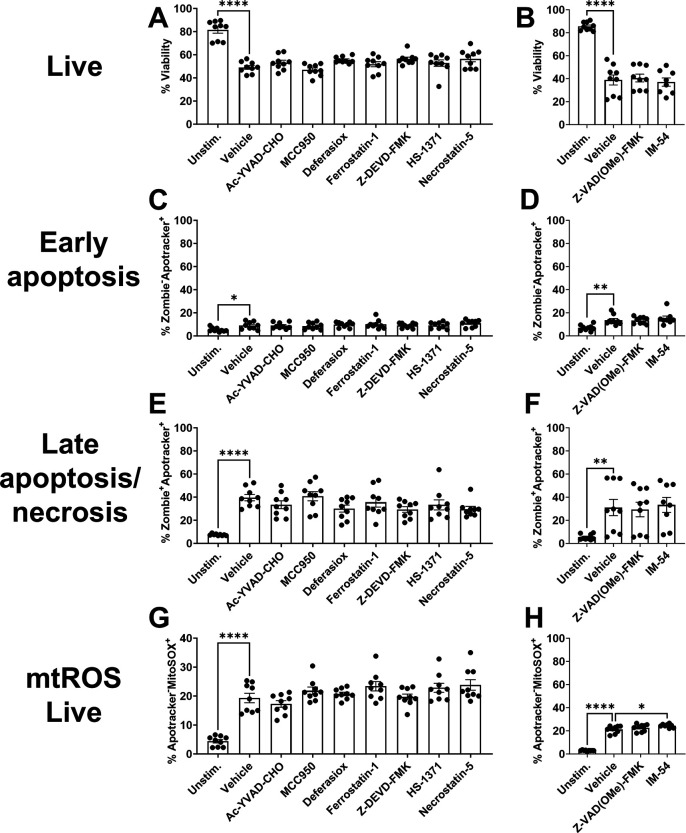 Figure 9
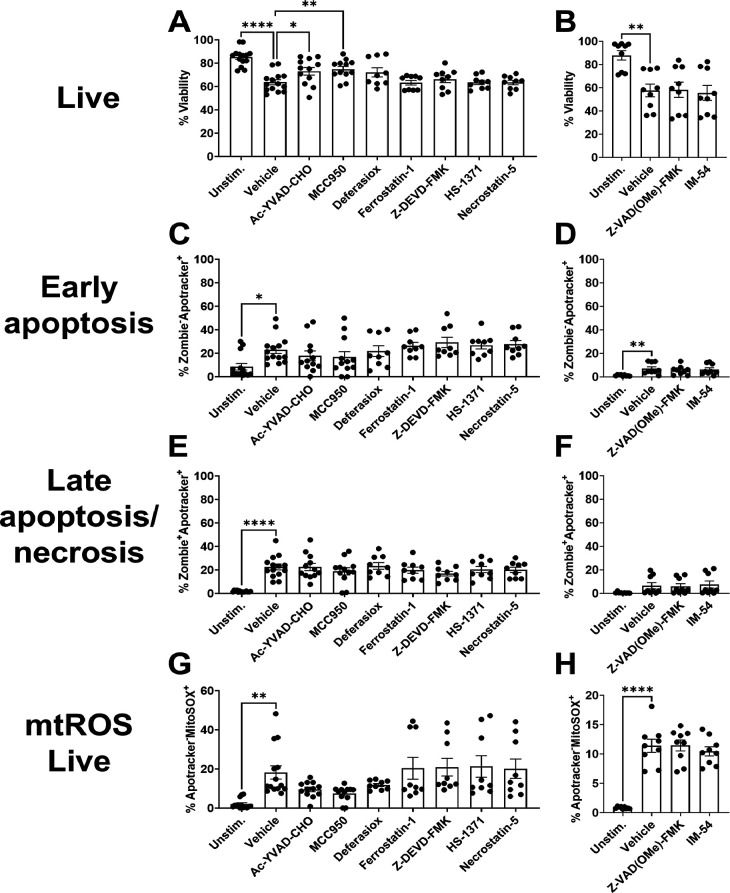 Figure 10
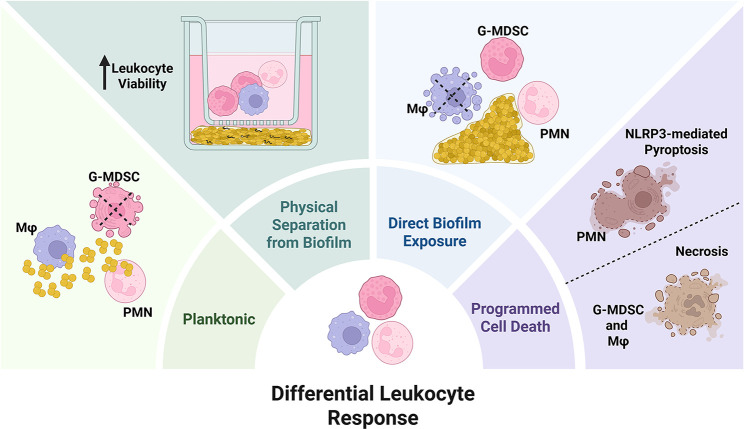 Figure 11
Peer Reviews
No public reviews on file for this paper yet. If you reviewed it on a platform where reviews are public (OpenReview, ICLR, NeurIPS, ICML), you can paste yours below so the community can read it here.
Videos
No videos yet. Explain this paper in a talk, walkthrough, or lecture? Add one.
Taxonomy
TopicsNeutrophil, Myeloperoxidase and Oxidative Mechanisms · Bacterial biofilms and quorum sensing · Orthopedic Infections and Treatments