Elevated vaginal heparan sulfate correlates with impaired neutrophil killing of Candida albicans in women with vulvovaginal candidiasis
Junko Yano, Nicole A. Woznicki, Jack D. Sobel, Mary C. Meyaski-Schluter, Paul L. Fidel

TL;DR
High levels of heparan sulfate in the vagina are linked to reduced immune cell function against a fungus causing recurring yeast infections in women.
Contribution
This study provides the first clinical evidence that elevated vaginal heparan sulfate impairs neutrophil function in vulvovaginal candidiasis.
Findings
Vaginal secretions from symptomatic women showed significantly higher heparan sulfate levels compared to asymptomatic and healthy controls.
Heparan sulfate reduced neutrophil antifungal activity, and this effect was reversed with heparanase treatment.
Elevated heparan sulfate correlates with impaired immune response and persistent fungal colonization in vulvovaginal candidiasis.
Abstract
Recurrent vulvovaginal candidiasis (RVVC), primarily caused by the fungal pathogen Candida albicans, is a common infection affecting a significant number of women worldwide. Despite a robust inflammatory response by polymorphonuclear neutrophils (PMNs) with potent antifungal properties during symptomatic episodes, fungal clearance often fails, leading to persistent overgrowth and PMN-associated immunopathology. Studies in an established animal model demonstrated that elevated vaginal heparan sulfate (HS) interferes with PMN-C. albicans interactions, thereby impairing fungal clearance. This study investigated the presence and inhibitory effects of HS in women diagnosed with RVVC. Vaginal conditioned medium (VCM) was prepared from swab samples obtained from symptomatic VVC patients, women in asymptomatic remission, and healthy controls. Results from ELISA and immunostaining showed…
Genes, proteins, chemicals, diseases, species, mutations and cell lines named across the full text — each resolved to its canonical identifier and authoritative record.
Click any figure to enlarge with its caption.
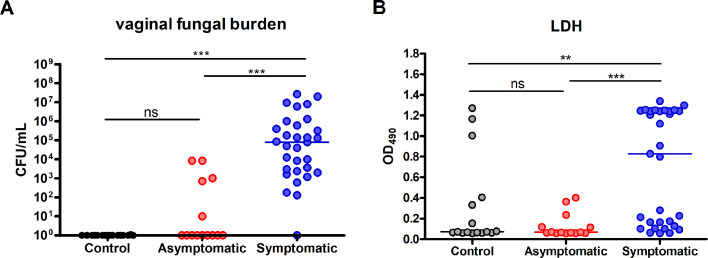 Figure 1
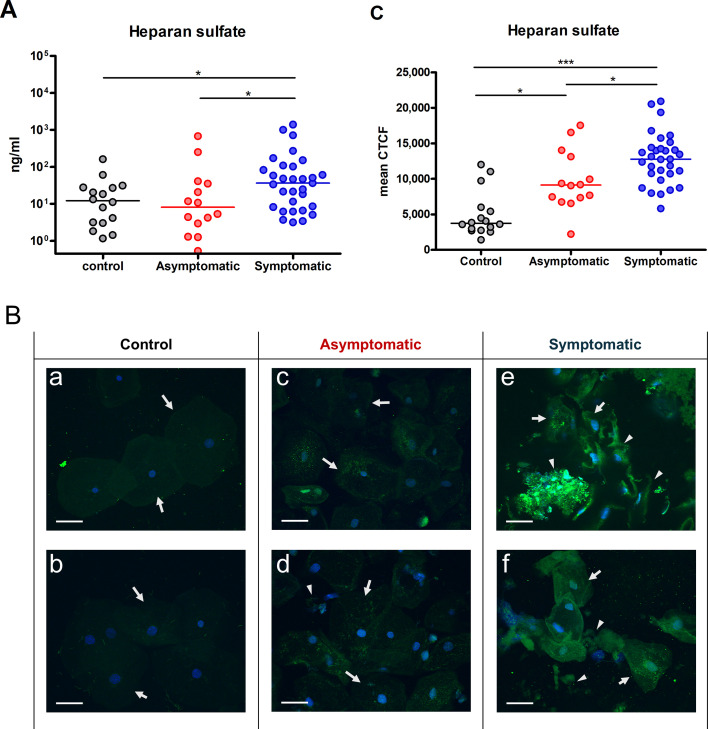 Figure 2
 Figure 3
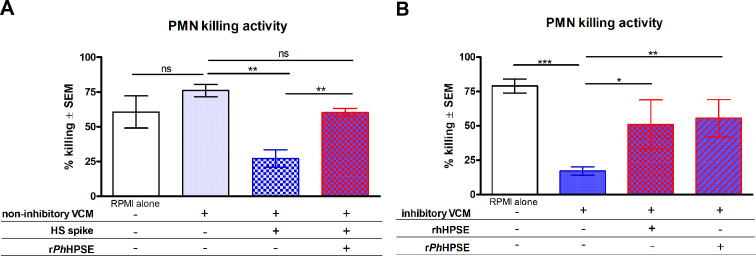 Figure 4
Peer Reviews
No public reviews on file for this paper yet. If you reviewed it on a platform where reviews are public (OpenReview, ICLR, NeurIPS, ICML), you can paste yours below so the community can read it here.
Videos
No videos yet. Explain this paper in a talk, walkthrough, or lecture? Add one.
Taxonomy
TopicsReproductive tract infections research · Proteoglycans and glycosaminoglycans research · Antifungal resistance and susceptibility