The L-lactate dehydrogenase LldD contributes to oxidative stress resistance, survival from neutrophils, and host colonization in Neisseria gonorrhoeae
Jerri M. Lankford, Willis E. Barr, Cole A. Andersen, Amitha A. Karuppiah, Keena S. Thomas, Ian J. Glomski, Wen-Chi Huang, Alison K. Criss, Aimee D. Potter

TL;DR
The LldD enzyme helps Neisseria gonorrhoeae resist oxidative stress and survive in the host, contributing to its ability to cause infection.
Contribution
LldD is identified as a novel key factor for oxidative stress resistance and host colonization in Neisseria gonorrhoeae.
Findings
LldD enhances resistance to reactive oxygen species in Neisseria gonorrhoeae.
LldD is essential for host colonization in a murine model of gonorrhea.
LldD and LutACB have non-redundant roles in fitness during co-colonization with neutrophils.
Abstract
Metabolic adaptation to the host environment is a key determinant of bacterial pathogenesis, enabling both colonization and invasive disease. This is particularly true for Neisseria gonorrhoeae (Gc), the causative agent of gonorrhea, which lacks effector-injecting secretion systems or toxins. Gc infection triggers a rapid influx of neutrophils (polymorphonuclear cells [PMNs) that typically kill bacteria through multiple mechanisms, including a potent oxidative burst. Despite this, Gc exhibits remarkable resistance to reactive oxygen species and readily replicates in the presence of PMNs, which is in part due to the consumption of PMN-derived lactate. Previous studies demonstrated that the lactate permease, LctP, is required for oxidative stress resistance in Gc and host colonization in a murine model of gonorrhea, suggesting that lactate utilization contributes to virulence. Gc encodes…
Genes, proteins, chemicals, diseases, species, mutations and cell lines named across the full text — each resolved to its canonical identifier and authoritative record.
Click any figure to enlarge with its caption.
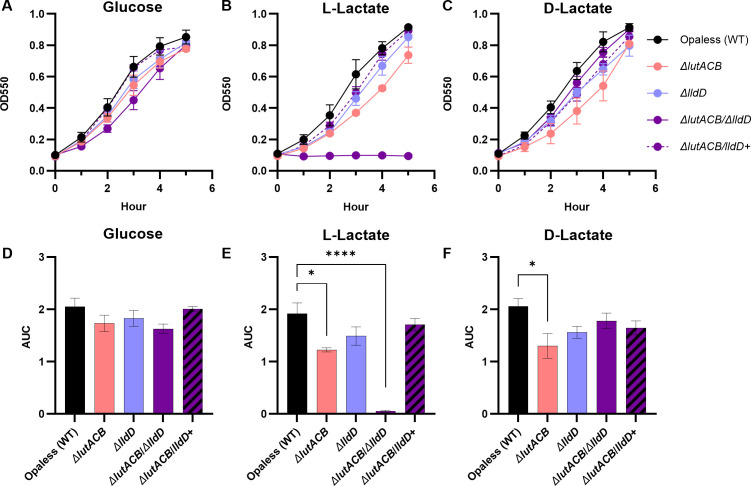 Figure 1
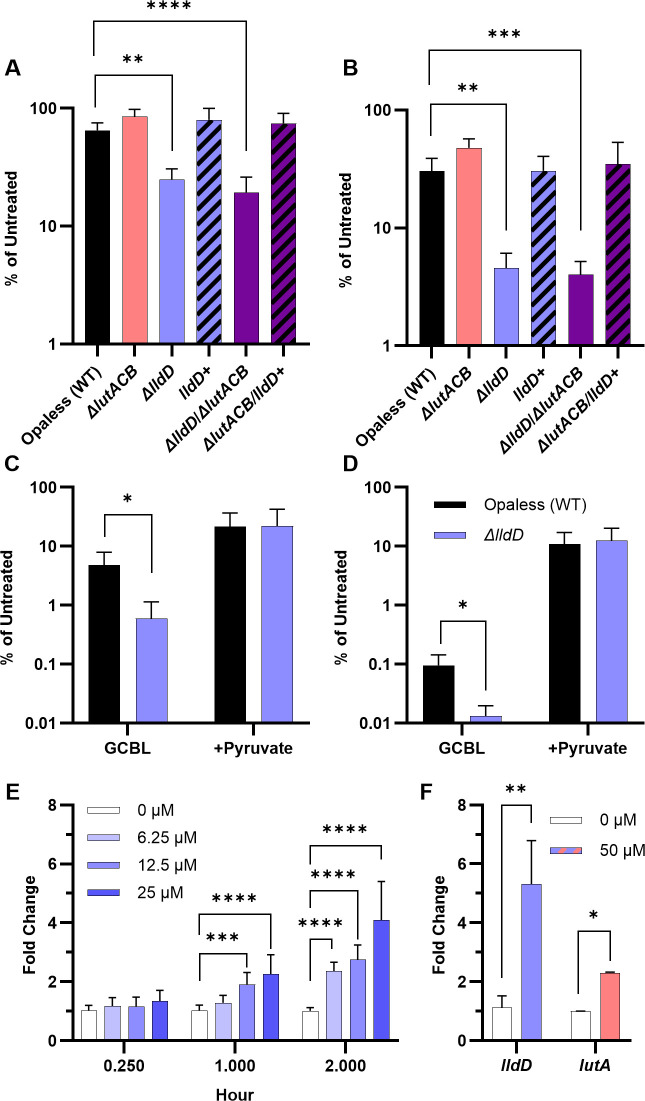 Figure 2
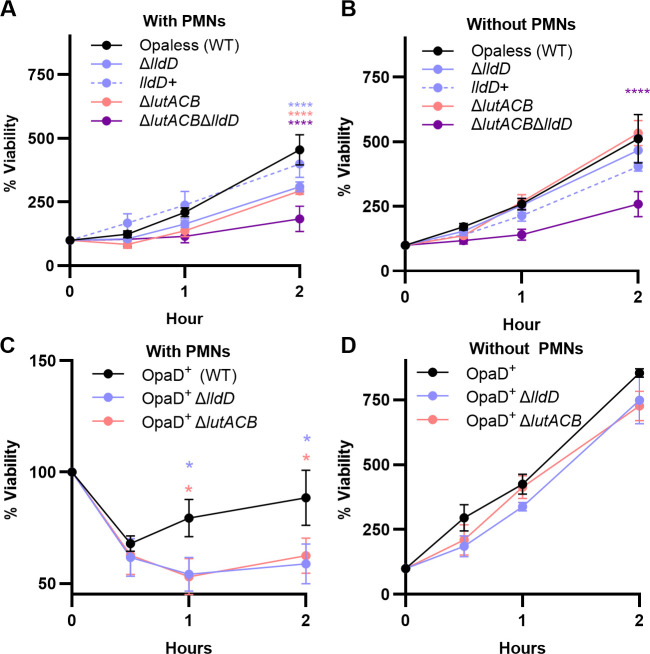 Figure 3
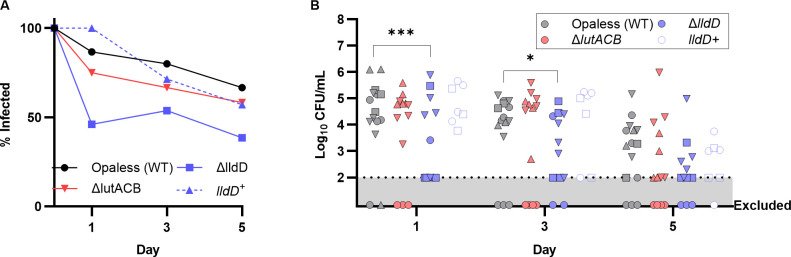 Figure 4
Peer Reviews
No public reviews on file for this paper yet. If you reviewed it on a platform where reviews are public (OpenReview, ICLR, NeurIPS, ICML), you can paste yours below so the community can read it here.
Videos
No videos yet. Explain this paper in a talk, walkthrough, or lecture? Add one.
Taxonomy
TopicsBacterial Infections and Vaccines · Reproductive tract infections research · Neonatal and Maternal Infections