Correlation between brain symmetry index and motor function in Parkinson’s disease: a cross-sectional study
Xianling Xu, Jinfeng Xu, Yuqing Zhao, Jian Song, Haoping Gu, Wei Wei, Haoran Shi, Xiehua Xue

TL;DR
This study finds that brain asymmetry measured by EEG correlates with motor function decline in Parkinson’s disease patients.
Contribution
The study introduces a brain symmetry index (pdBSI) derived from EEG as a potential biomarker for hemispheric asymmetry in Parkinson’s disease.
Findings
PD patients showed higher pdBSI levels in central and posterior brain regions compared to healthy individuals.
β2-pdBSI in central and posterior regions correlated with gait impairment severity in advanced PD patients.
Early PD patients exhibited the highest pdBSI levels, suggesting a stage-dependent shift in brain asymmetry.
Abstract
Parkinson’s disease (PD) present with asymmetric motor impairments in the different stages. The study aims to explore the pair-wise derived brain symmetry index (pdBSI) of electroencephalography (EEG) for the stage in PD. 96 early Stage (ePD), 85 advanced Stage (aPD) and 67 healthy individuals were recruited. EEG and MDS-UPDRS Scale were applied to the study. pdBSI of EEG was calculated and divided into the frontal, the central and the posterior regions. The PD Group exhibited significant differences in pdBSI across the full-frequency band in the whole-brain, especially in the central region. The PD groups showed higher levels of α-pdBSI, β1-pdBSI, and β2-pdBSI in the whole-brain than the healthy group. Furthermore, the ePD group showed higher levels of θ-pdBSI, α-pdBSI, β1-pdBSI and β2-pdBSI in the central region than the healthy group. The same tendency was observed between the aPD…
Genes, proteins, chemicals, diseases, species, mutations and cell lines named across the full text — each resolved to its canonical identifier and authoritative record.
Click any figure to enlarge with its caption.
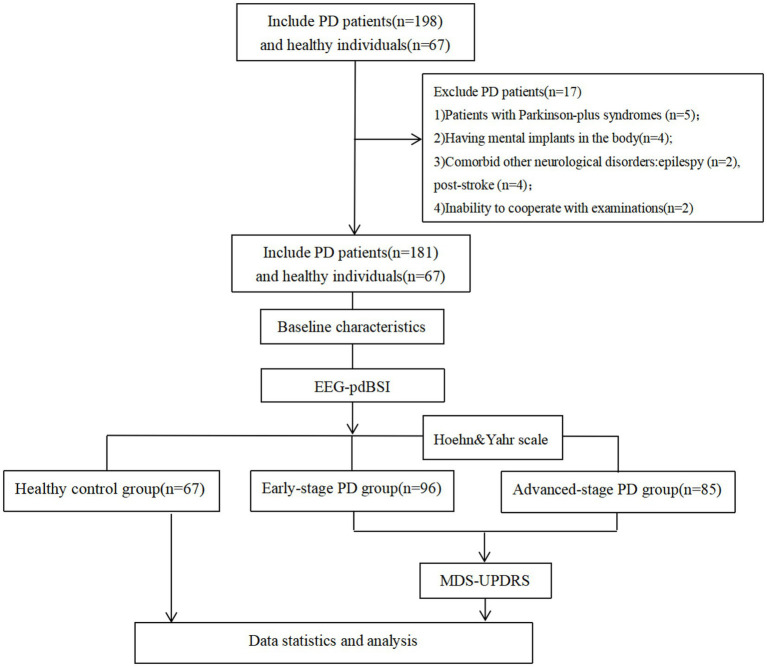 Figure 1
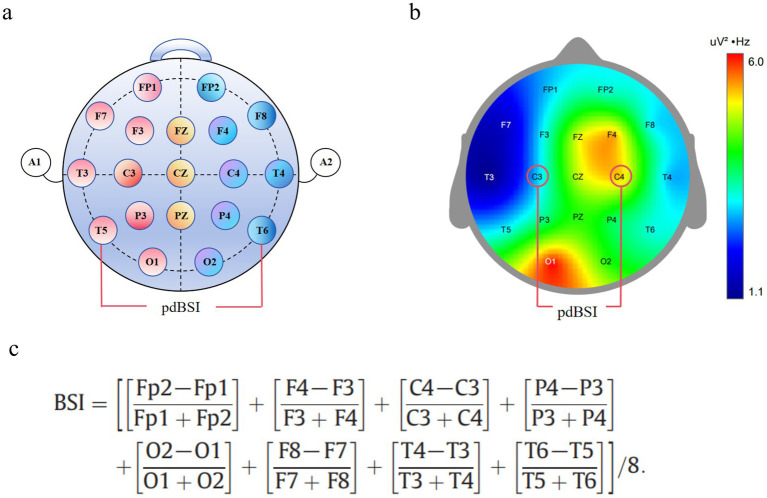 Figure 2
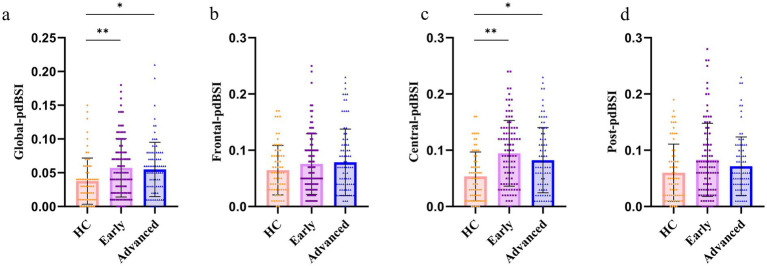 Figure 3
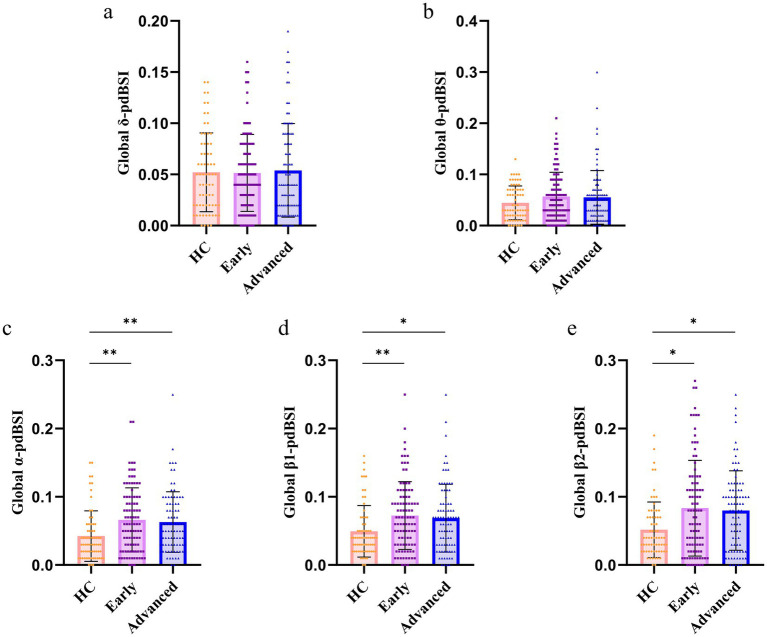 Figure 4
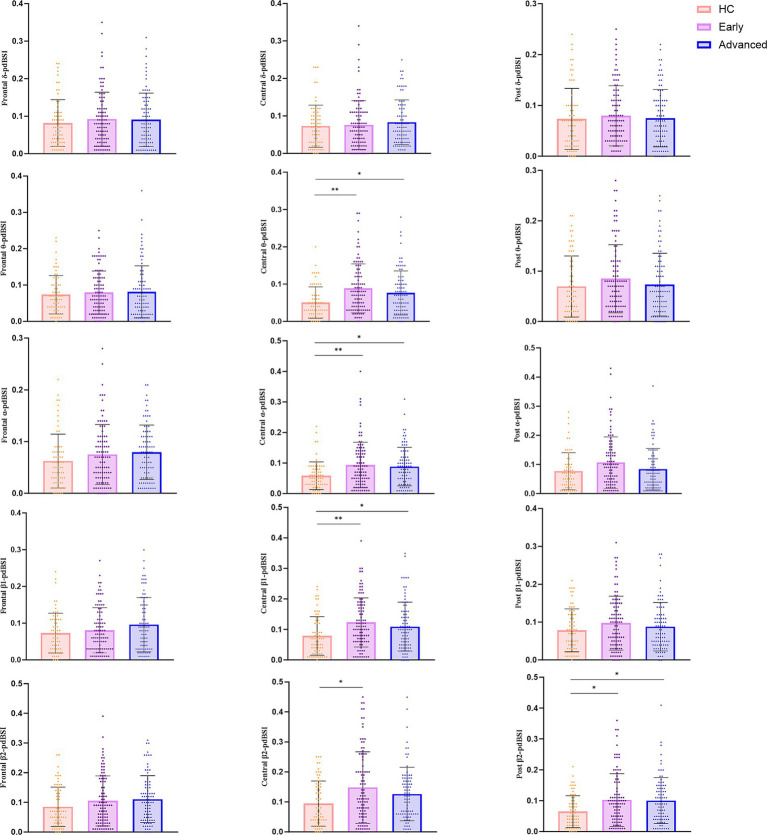 Figure 5
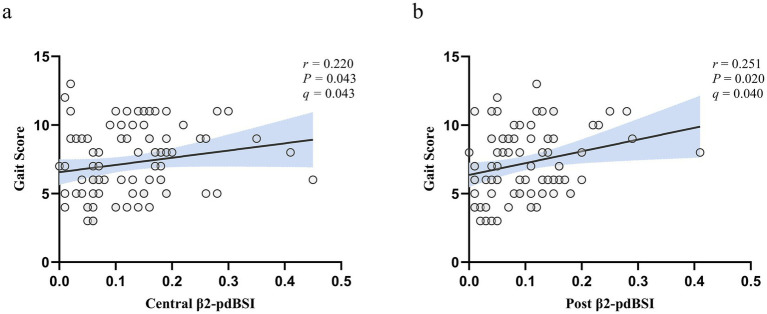 Figure 6
Peer Reviews
No public reviews on file for this paper yet. If you reviewed it on a platform where reviews are public (OpenReview, ICLR, NeurIPS, ICML), you can paste yours below so the community can read it here.
Videos
No videos yet. Explain this paper in a talk, walkthrough, or lecture? Add one.
Taxonomy
TopicsNeurological disorders and treatments · EEG and Brain-Computer Interfaces · Functional Brain Connectivity Studies