Zoonotic Bordetella bronchiseptica infection at the swine-human interface: unveiling the evolutionary path from an animal to a human pathogen
Junqi Liu, Xiaofeng Zheng, Chenghao Jia, Zhiliang Sun, Wangping Zhou, Jie Zhang, Yifeng Chen, Zijing Zhou, Yao Tian, Gang Xiao, Lifei Du, Chengming Fan, Leisheng Sun, Min Yue

TL;DR
A swine Bordetella infection evolved to infect humans by integrating and then discarding a plasmid, enhancing its virulence and adaptability.
Contribution
Discovery of a 'capture-and-discard' plasmid integration mechanism enabling host adaptation and increased pathogenicity in B. bronchiseptica.
Findings
Human-adapted B. bronchiseptica RL57 integrates and discards a plasmid, retaining virulence genes while eliminating replicative burden.
Plasmid loss rewires bacterial metabolism, enhancing biofilm formation, thermotolerance, and hypervirulence in human hosts.
Proposed One Health surveillance triad to monitor plasmid-chromosome dynamics and metabolic shifts for zoonotic risk mitigation.
Abstract
Bordetella bronchiseptica, long regarded as a veterinary pathogen, is now emerging as a zoonotic threat to humans, particularly in immunocompromised individuals. We report a sentinel event involving a synchronized B. bronchiseptica outbreak in swine and their human caretaker, providing a unique opportunity to examine cross-species transmission and adaptation at the genomic level. Comparative genomics revealed that the human-adapted isolate (RL57) and its swine progenitor (XX35) share an identical chromosome, with XX35 harbouring an extra conjugative plasmid. Remarkably, RL57 did not simply lose this plasmid; instead, the entire plasmid was integrated into the chromosome via site-specific recombination. This integration allowed permanent retention of plasmid-encoded virulence and fitness genes, after which the plasmid was discarded to eliminate its replicative burden – a…
Genes, proteins, chemicals, diseases, species, mutations and cell lines named across the full text — each resolved to its canonical identifier and authoritative record.
Click any figure to enlarge with its caption.
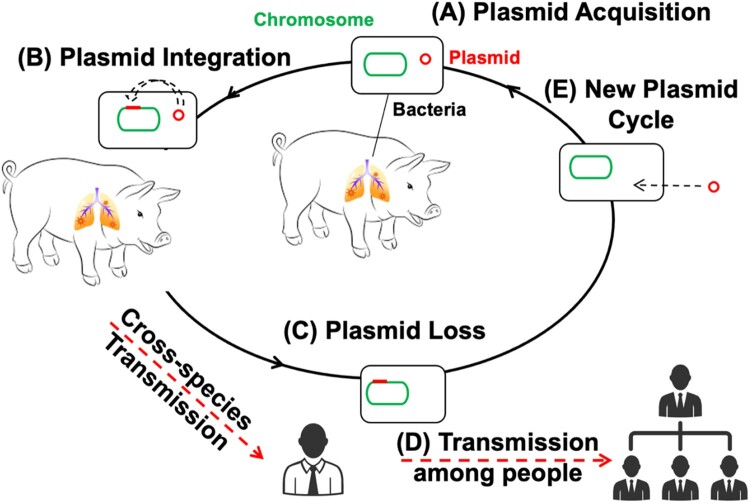 Figure 1
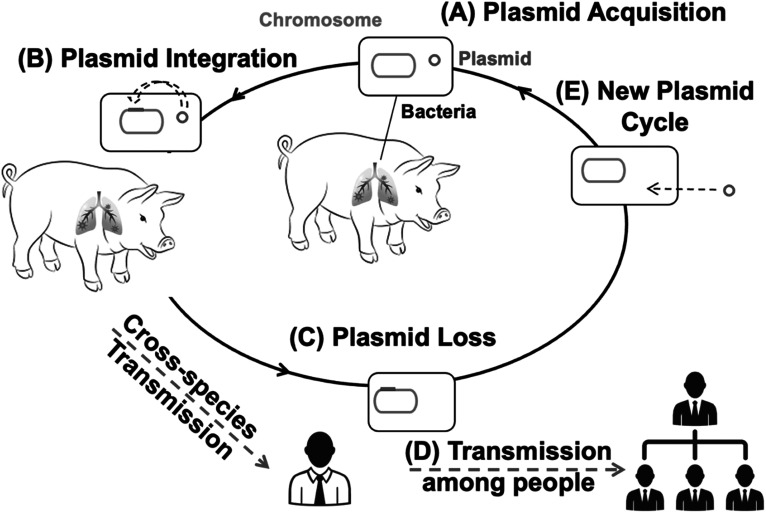 Figure 2
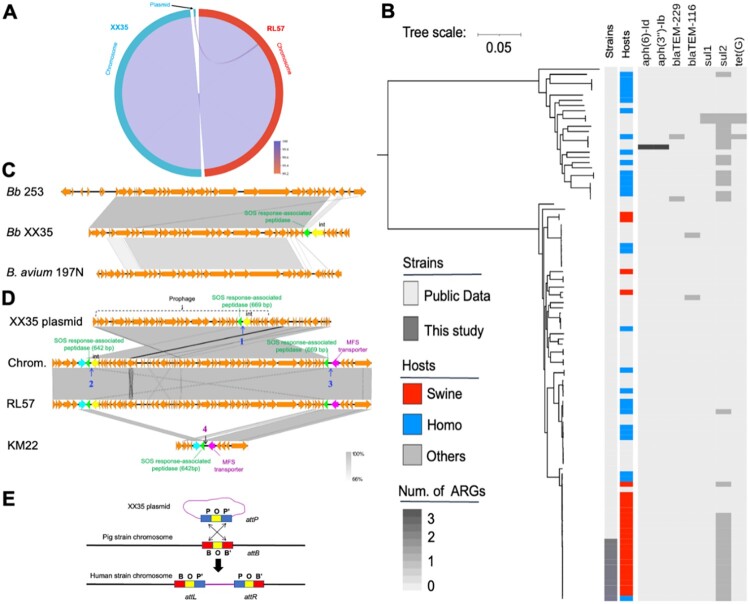 Figure 3
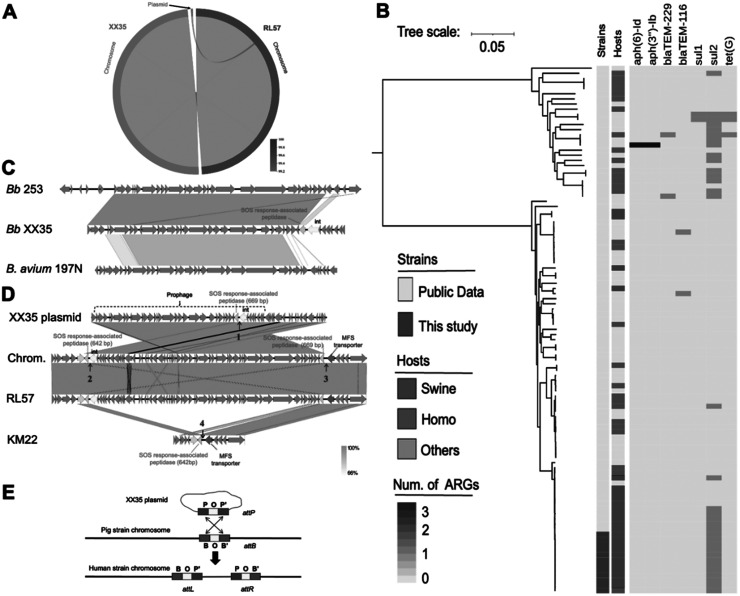 Figure 4
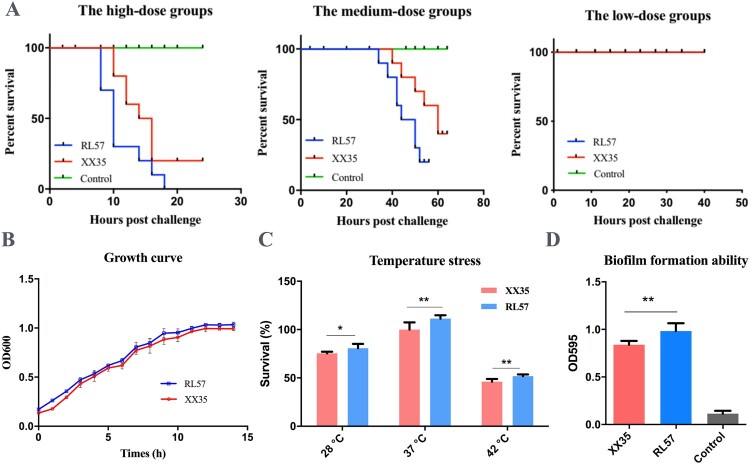 Figure 5
 Figure 6
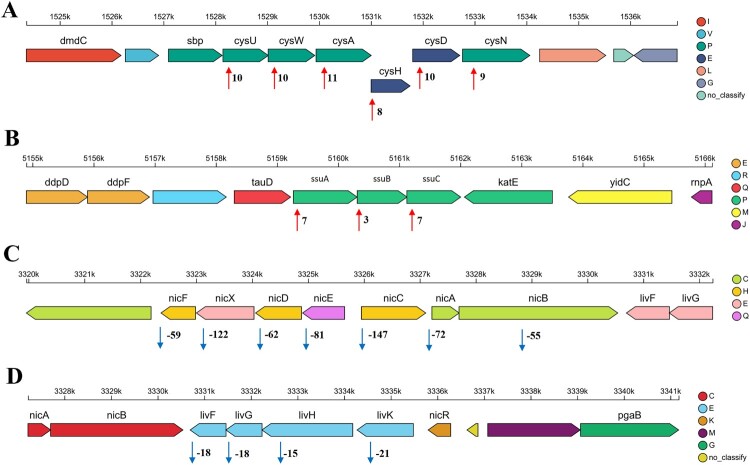 Figure 7
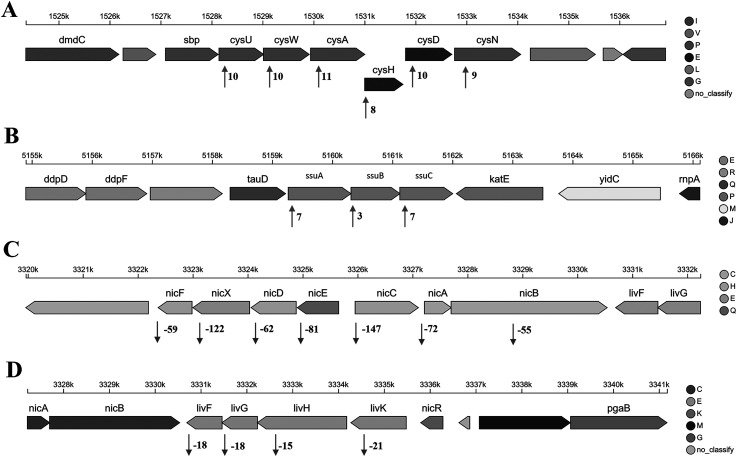 Figure 8
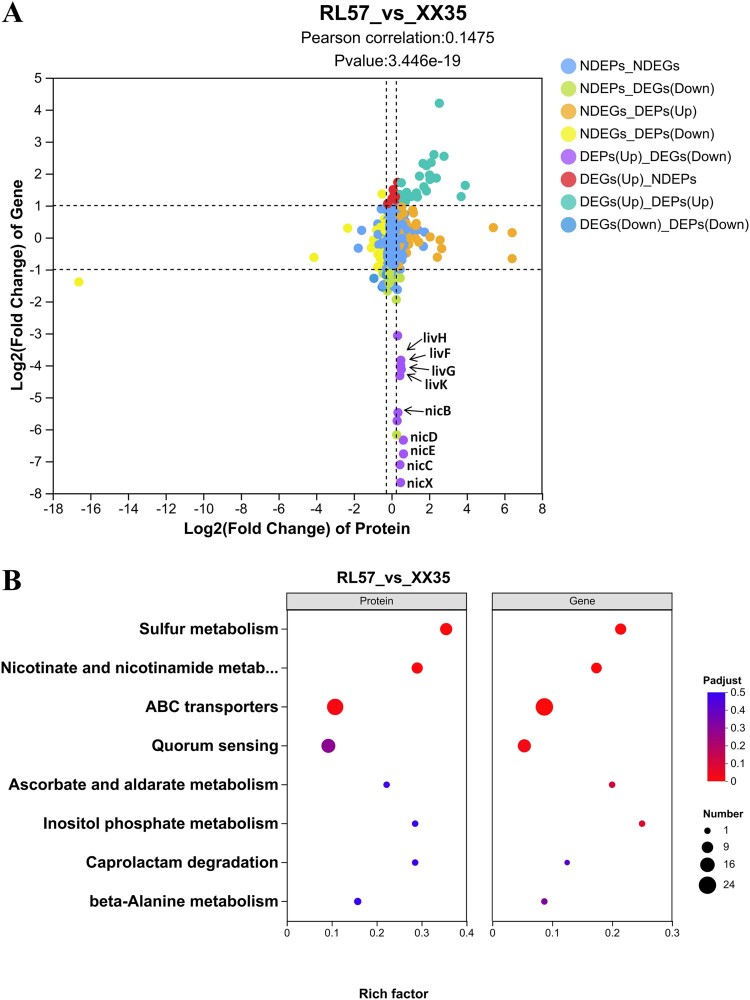 Figure 9
 Figure 10
Peer Reviews
No public reviews on file for this paper yet. If you reviewed it on a platform where reviews are public (OpenReview, ICLR, NeurIPS, ICML), you can paste yours below so the community can read it here.
Videos
No videos yet. Explain this paper in a talk, walkthrough, or lecture? Add one.
Taxonomy
TopicsBacterial Infections and Vaccines · Yersinia bacterium, plague, ectoparasites research · Vector-borne infectious diseases