The development of the EUropean Physical Activity Determinants framework for Adolescents (EU-PAD-A): a mixed-methods concept mapping study within the DE-PASS COST action
Andrea Fusco, Cristina Cortis, Paul Jarle Mork, Daniele Conte, Francesca Di Rocco, Emanuel Festino, Pascal Izzicupo, Stefania Orrù, Anne Lovise Nordstoga, Olga Papale, Marianna De Maio, Valentina Presta, Padraic Rocliffe, Laura Capranica, Ciaran MacDonncha, Giancarlo Condello

TL;DR
Researchers created a framework to identify key factors influencing physical activity in European adolescents, aiming to guide effective interventions and policies.
Contribution
The EU-PAD-A framework is a novel, interdisciplinary tool that prioritizes actionable determinants of adolescent physical activity based on expert and stakeholder consensus.
Findings
110 determinants of physical activity were grouped into nine clusters, with 58 rated high on both importance and modifiability.
Top 10 actionable determinants included access to PA facilities, beliefs about PA, and inclusive school programs.
School, family, and socio-cultural environments were identified as critical settings for intervention.
Abstract
Most European adolescents do not meet recommended levels of physical activity (PA), increasing their risk of long-term health issues and contributing to the burden of non-communicable diseases. To address this public health challenge, there is a need for evidence-based, age-specific frameworks that identify the key determinants influencing PA behaviours during adolescence, a critical developmental stage for habit formation. This study developed the EUropean Physical Activity Determinants framework for Adolescents (EU-PAD-A) and identified the most important and modifiable factors that can inform targeted interventions and public policy. Using Group Concept Mapping analysis, 240 experts contributed to the identification, sorting, and rating of PA determinants for adolescents. A total number of 110 determinants were grouped into nine thematic clusters. Determinants were rated for…
Genes, proteins, chemicals, diseases, species, mutations and cell lines named across the full text — each resolved to its canonical identifier and authoritative record.
Click any figure to enlarge with its caption.
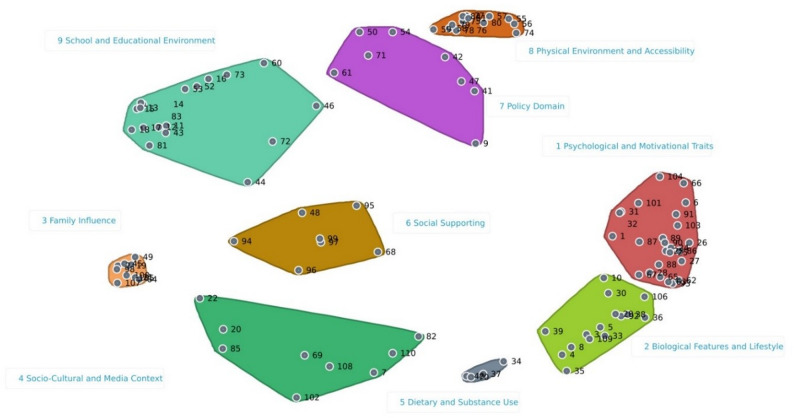 Figure 1
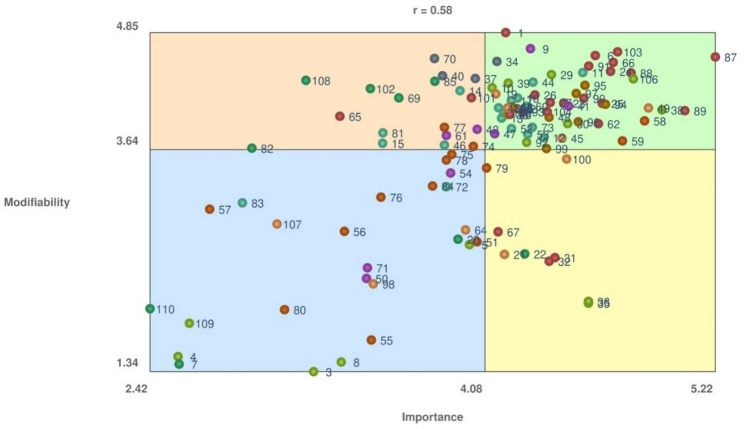 Figure 2
Peer Reviews
No public reviews on file for this paper yet. If you reviewed it on a platform where reviews are public (OpenReview, ICLR, NeurIPS, ICML), you can paste yours below so the community can read it here.
Videos
No videos yet. Explain this paper in a talk, walkthrough, or lecture? Add one.
Taxonomy
TopicsObesity, Physical Activity, Diet · Physical Activity and Health · Children's Physical and Motor Development