Babesia hegotelforum sp. nov., a zoonotic Babesia species previously referred to as Babesia sp. MO1
Pallavi Singh, Karel Estrada, Luis Miguel Gonzalez, Ricardo Grande, Sergio Sánchez-Prieto, Emmanuel Cornillot, Omar Harb, Alejandro Sanchez-Flores, Estrella Montero, Karine G. Le Roch, Stefano Lonardi, Choukri Ben Mamoun

TL;DR
A new species of zoonotic Babesia, named Babesia hegotelforum, is described, infecting humans and rabbits and transmitted by ticks.
Contribution
The formal description and naming of a new Babesia species based on genomic, phylogenetic, and clinical data.
Findings
Babesia hegotelforum is distinct from Babesia divergens based on genome-wide sequence divergence and phylogenetic analysis.
The parasite infects humans and eastern cottontail rabbits, with Ixodes dentatus as the vector.
The species is described with holotype and paratype material meeting zoological nomenclature standards.
Abstract
A zoonotic Babesia species previously referred to as Babesia sp. MO1 is formally described and named here as Babesia hegotelforum sp. nov. This taxon is distinct from Babesia divergens based on genome-wide sequence divergence, phylogenetic placement, host associations, and clinical presentation. The parasite infects erythrocytes of humans, and eastern cottontail rabbits (Sylvilagus floridanus), and is transmitted by Ixodes dentatus. The holotype consists of a Giemsa-stained thin blood smear and cryopreserved infected erythrocytes from the cloned isolate BML-Bh-B12 at ≤10 passages in continuous in vitro culture. Paratype material includes five additional clones (BML-Bh-H1, BML-Bh-F12, BML-Bh-H6, BML-Bh-A3, and BML-Bh-F1) derived from BEI Resources strain NR-50441, along with the original mixed isolate NR-50441. This species description meets the requirements of the International Code of…
Genes, proteins, chemicals, diseases, species, mutations and cell lines named across the full text — each resolved to its canonical identifier and authoritative record.
Click any figure to enlarge with its caption.
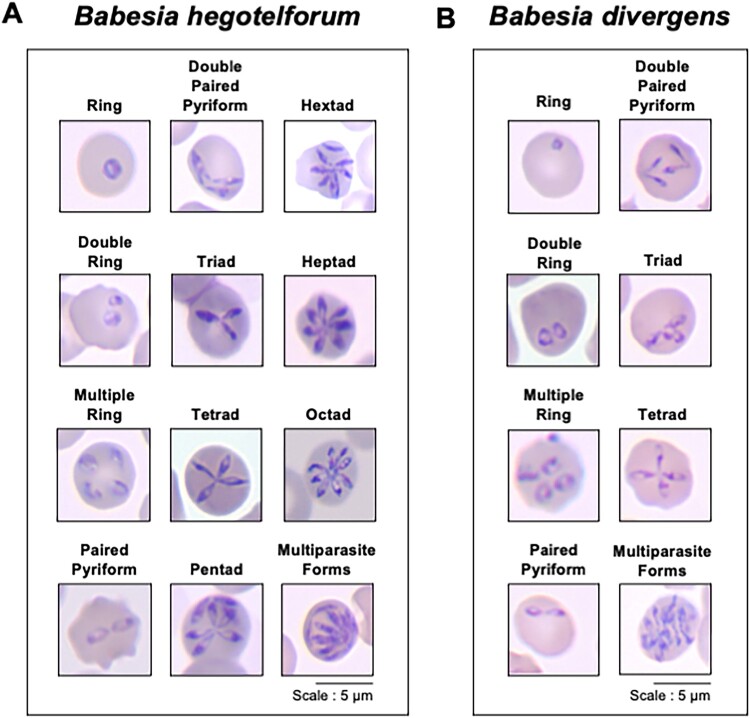 Figure 1
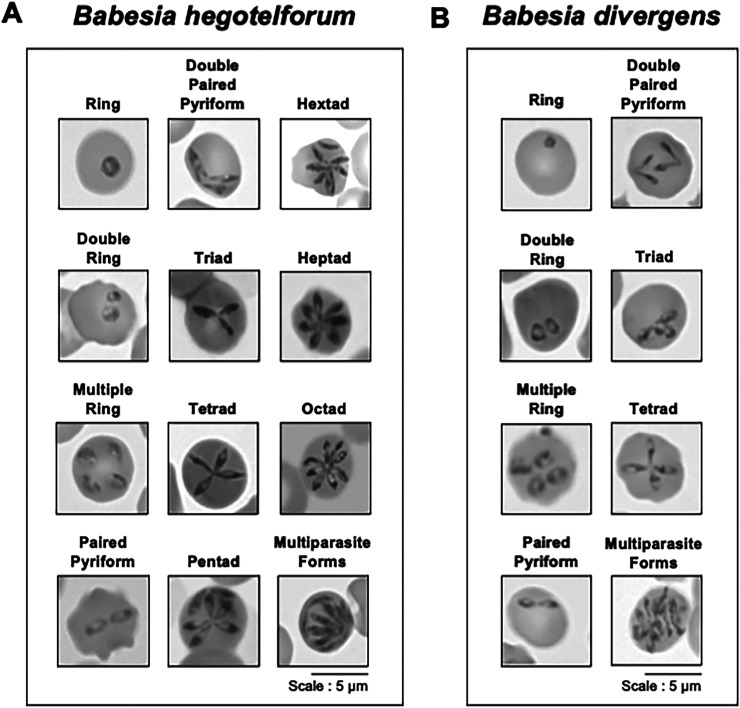 Figure 2
Peer Reviews
No public reviews on file for this paper yet. If you reviewed it on a platform where reviews are public (OpenReview, ICLR, NeurIPS, ICML), you can paste yours below so the community can read it here.
Videos
No videos yet. Explain this paper in a talk, walkthrough, or lecture? Add one.
Taxonomy
TopicsVector-borne infectious diseases · Phytoplasmas and Hemiptera pathogens · Plant Parasitism and Resistance