The P2X7 Receptor Promotes Intestinal Fibrosis by Modulating the Gut Microbiota and the Inflammasome
Beatriz Elias Ribeiro, Isadora Schmukler de Lima, Karen Cristina da Silva e Souza, Siane Lopes Bittencourt Rosas, Patrícia Teixeira Santana, Gilda Amaral, João Carlos Machado, Rodrigo Pereira de Oliveira, Camille Leal, Cristiane Thompson, Fabiano Thompson

TL;DR
The P2X7 receptor contributes to intestinal fibrosis by influencing gut bacteria and triggering inflammation-related signaling pathways.
Contribution
This study identifies the P2X7 receptor as a key driver of intestinal fibrosis through its effects on microbiota and inflammasome activation.
Findings
P2X7 receptor activation increases fibroblast migration and collagen production in human cells.
P2X7+/+ mice show greater intestinal inflammation and fibrosis compared to P2X7-/- mice.
P2X7 signaling alters microbiome composition and activates pro-inflammatory pathways like NF-κB and NLRP3.
Abstract
Considering the role of the P2X7 receptor in intestinal inflammation, we examined its potential involvement in fibrosis development. Colonic biopsies from patients with inflammatory bowel disease (IBD) were analyzed via double immunofluorescence under confocal microscopy. Colon fibroblasts were used to analyze P2X7 receptor modulation and chemotaxis. Experimental chronic colitis was induced with 3 cycles of oral dextran sodium sulfate (DSS) treatment in P2X7+/+ and P2X7-/- mice. The mice were evaluated via follow-up video endoscopy with an endoluminal ultrasound biomicroscopic (eUBM) system, histological scoring, immunohistochemistry, cytokine measurement in colon explants, gene expression analysis of P2X7 signaling targets via quantitative real-time polymerase chain reaction (qRT-PCR), and microbiome composition analysis. Colocalization studies revealed a greater density of…
Genes, proteins, chemicals, diseases, species, mutations and cell lines named across the full text — each resolved to its canonical identifier and authoritative record.
Click any figure to enlarge with its caption.
 Figure 1
 Figure 2
 Figure 3
 Figure 4
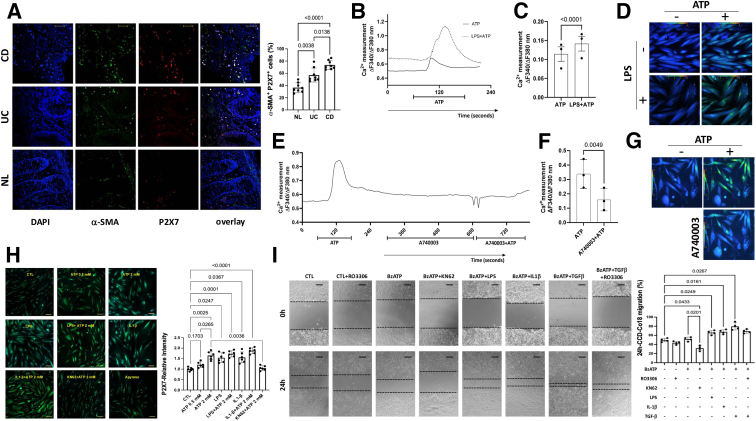 Figure 5
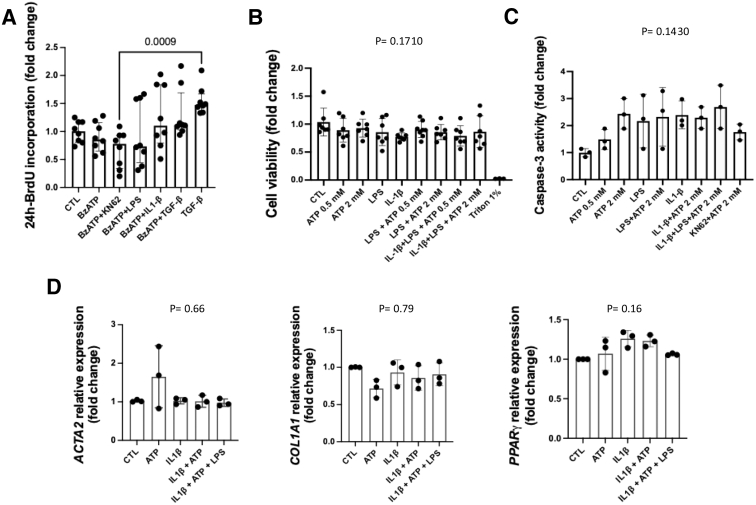 Figure 6
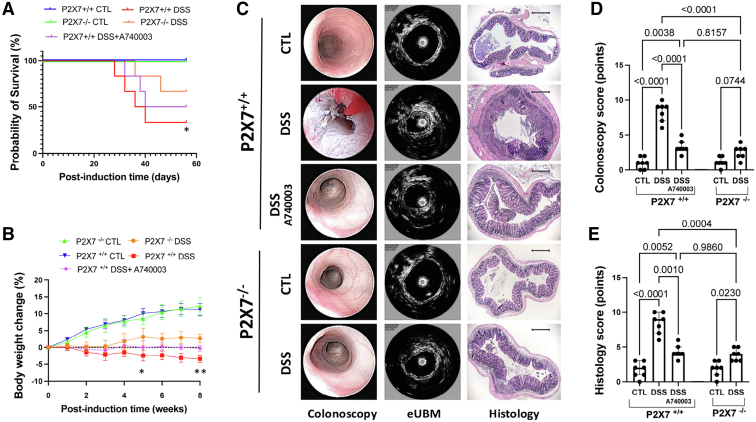 Figure 7
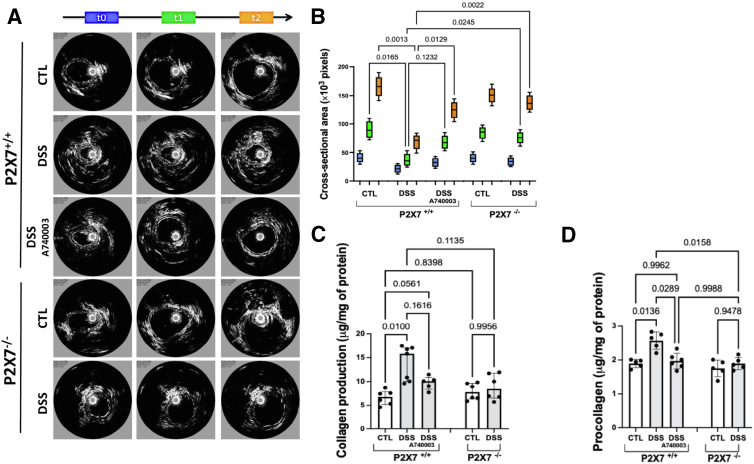 Figure 8
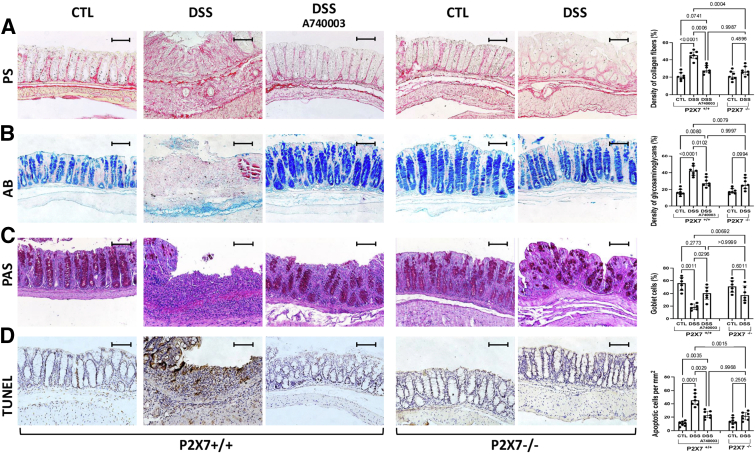 Figure 9
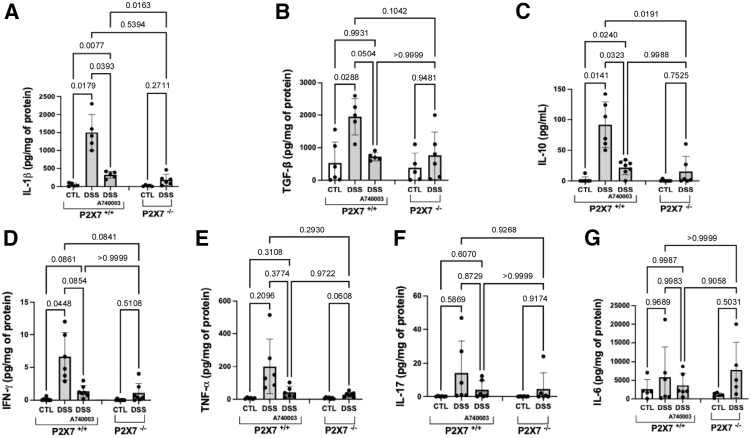 Figure 10
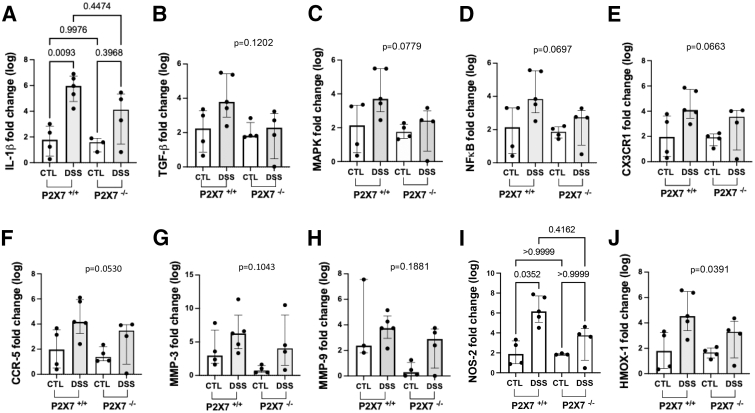 Figure 11
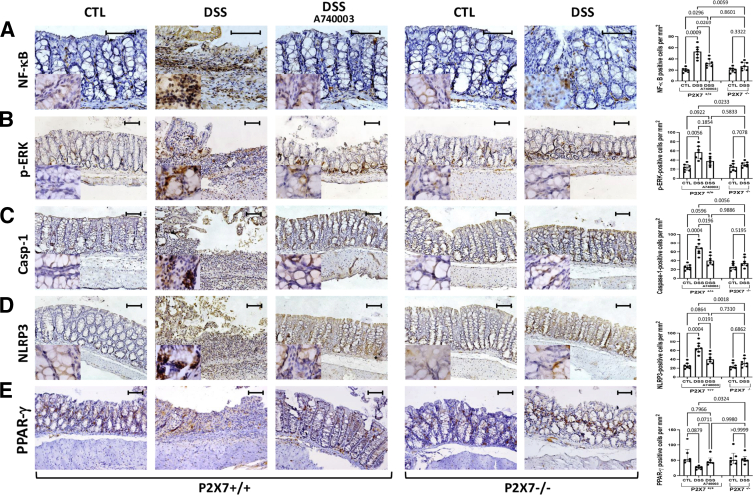 Figure 12
Peer Reviews
No public reviews on file for this paper yet. If you reviewed it on a platform where reviews are public (OpenReview, ICLR, NeurIPS, ICML), you can paste yours below so the community can read it here.
Videos
No videos yet. Explain this paper in a talk, walkthrough, or lecture? Add one.
Taxonomy
TopicsAdenosine and Purinergic Signaling · Gut microbiota and health · Inflammatory Bowel Disease