Early Support after Exposure to Trauma (EASE): protocol for a hybrid effectiveness-implementation trial of an internet-based intervention for PTSD prevention
Espen Rasmussen Lassen, Marianne Skogbrott Birkeland, Karina Egeland, Lise Eilin Stene, Dorte Brodersen, Belinda Ekornås, Nils Petter Reinholdt, Egil Kjerstad, Admassu N. Lamu, Gregory A. Aarons, Erika L. Crable, Maria Bragesjö, Harald Bækkelund

TL;DR
The EASE study tests a digital therapy to prevent PTSD by evaluating its effectiveness and how it can be implemented in crisis support services.
Contribution
The study introduces a scalable, therapist-assisted digital CBT-T intervention for PTSD prevention in real-world crisis teams.
Findings
CIPE is evaluated for effectiveness in reducing PTSD symptoms in trauma survivors.
The study examines cost-effectiveness and factors influencing the implementation of CIPE in crisis teams.
Results will inform policy and clinical practices for PTSD prevention.
Abstract
Post-traumatic stress disorder (PTSD) can have detrimental effects for those afflicted and is associated with increased health care utilization and substantial societal costs. Thus, there is a need for accessible, effective, and cost-efficient preventive interventions for post-traumatic psychological sequelae. Research indicates that trauma-focused cognitive-behavioral therapy (CBT-T) could effectively prevent PTSD when applied as an indicated secondary prevention. CIPE is a scalable, low-threshold, therapist-assisted digital CBT-T, which could be readily implemented in services delivering psychosocial support after traumatic incidents if proven effective and cost-effective. The Early Support after Exposure to Trauma (EASE) study evaluates the effectiveness, cost-effectiveness, and implementation of Condensed Internet-delivered Prolonged Exposure (CIPE), applied as an indicated…
Genes, proteins, chemicals, diseases, species, mutations and cell lines named across the full text — each resolved to its canonical identifier and authoritative record.
Click any figure to enlarge with its caption.
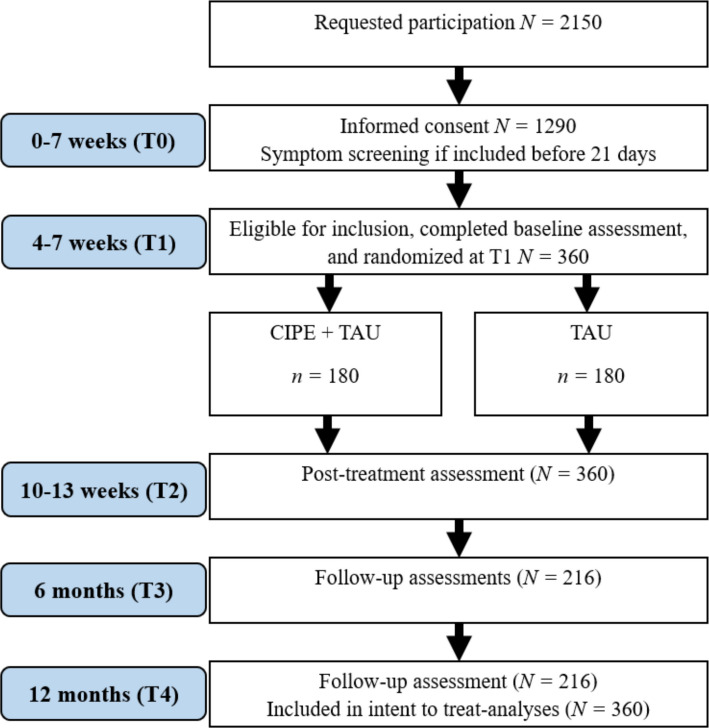 Figure 1
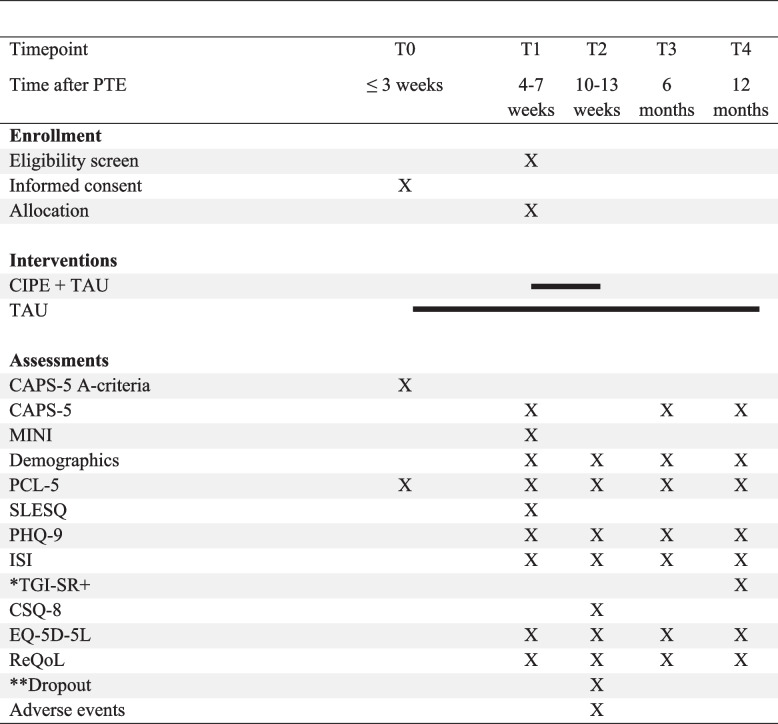 Figure 2
Peer Reviews
No public reviews on file for this paper yet. If you reviewed it on a platform where reviews are public (OpenReview, ICLR, NeurIPS, ICML), you can paste yours below so the community can read it here.
Videos
No videos yet. Explain this paper in a talk, walkthrough, or lecture? Add one.
Taxonomy
TopicsPosttraumatic Stress Disorder Research · Digital Mental Health Interventions · Psychiatric care and mental health services