Post elimination of lymphatic filariasis: a situation analysis of brugian filariasis and vector potentialities within the filarial transmission belt in Sri Lanka
Sachini U. Nimalrathna, Hiruni Harischandra, Nilmini Chandrasena, Michael J. Kimber, Nilanthi de Silva, Chandana H. Mallawarachchi, Thilina S. Nimalrathna, B. G. D. Nissanka K. de Silva

TL;DR
Sri Lanka is seeing a resurgence of brugian filariasis, and this study identifies new mosquito species that can transmit the parasite, highlighting the need for updated surveillance strategies.
Contribution
The study identifies Ma. indiana as a new potential vector for brugian filariasis in Sri Lanka and expands the known vector species beyond the previously recognized Mansonia genus.
Findings
Nine mosquito species across four genera were found to support the development of Brugia spp. to the infective L3 larval stage.
Ma. indiana showed the highest weighted infectivity at the S1 site, indicating its significant role in transmission.
The S1 site was identified as having the highest risk of brugian filariasis transmission.
Abstract
Sri Lanka is experiencing a re-emergence of brugian filariasis 4 decades after its elimination in 1969. A comprehensive understanding of the mosquito species that can facilitate the development of the brugian parasite is essential for implementing targeted surveillance and control measures. This study evaluated the vector potentiality of field-caught mosquitoes for brugian parasites across endemic districts within the filarial transmission belt in Sri Lanka. Mosquito surveillance was conducted at six sites across five districts with the highest reported brugian cases during 2021–2022. Mosquitoes were collected at the site of the most recently reported human brugian case in each district using dog-baited, window and gravid traps to maximize species diversity and abundance in the sample. Mosquitoes were identified morphologically, and randomly selected mosquitoes were molecularly…
Genes, proteins, chemicals, diseases, species, mutations and cell lines named across the full text — each resolved to its canonical identifier and authoritative record.
Click any figure to enlarge with its caption.
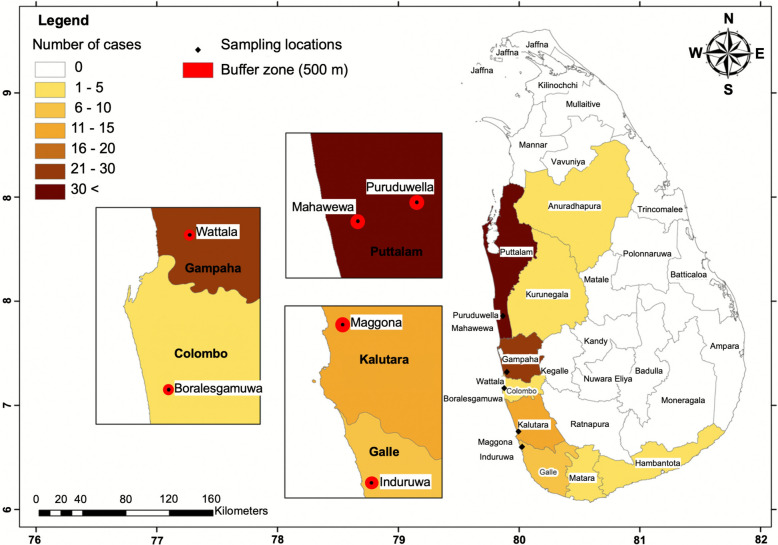 Figure 1
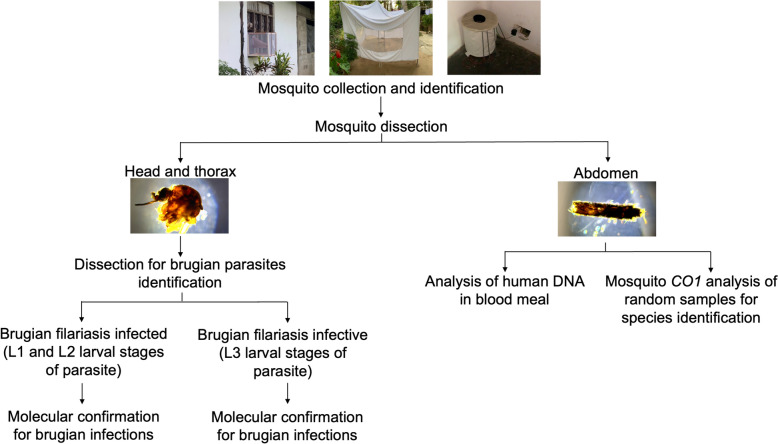 Figure 2
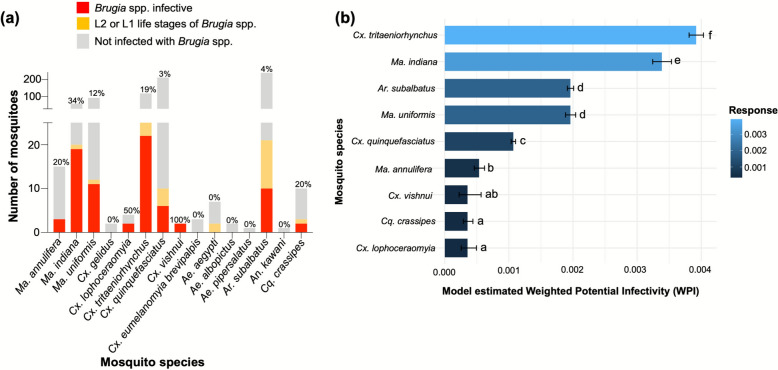 Figure 3
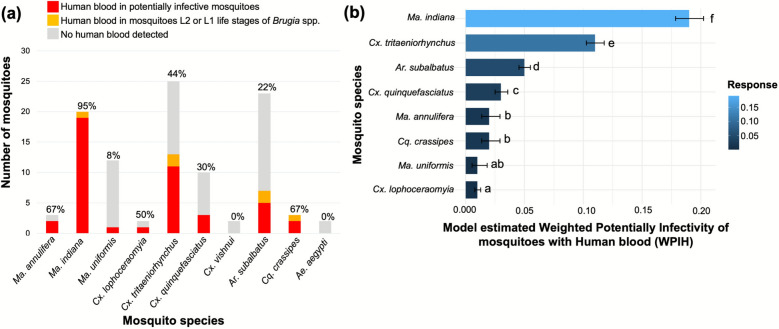 Figure 4
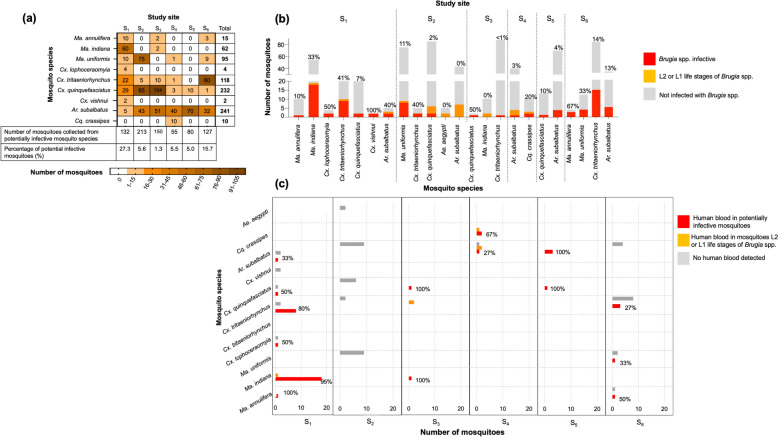 Figure 5
Peer Reviews
No public reviews on file for this paper yet. If you reviewed it on a platform where reviews are public (OpenReview, ICLR, NeurIPS, ICML), you can paste yours below so the community can read it here.
Videos
No videos yet. Explain this paper in a talk, walkthrough, or lecture? Add one.
Taxonomy
TopicsParasitic Diseases Research and Treatment · Paleopathology and ancient diseases · Insects and Parasite Interactions