RNAi-mediated knockdown of the poultry red mite cathepsin D-1 impacts haemoglobin digestion
Wan Chen, Naomi R. Defty, Kathryn Bartley, Francesca Nunn, Antonella Schiavone, Alan S. Bowman, Adam D. Hayward, Stewart T. G. Burgess, Alasdair J. Nisbet, Daniel R. G. Price

TL;DR
Scientists used RNA interference to reduce a specific enzyme in poultry red mites, finding it impacts their ability to digest blood meals.
Contribution
The study demonstrates that RNAi-mediated knockdown of Dg-CatD-1 affects haemoglobin digestion in poultry red mites.
Findings
RNAi knockdown of Dg-CatD-1 reduced gene expression by up to 91% after a single feeding.
Repeated dsRNA feeding reduced the mites' ability to process blood meals compared to controls.
Effective knockdown required specific dsRNA lengths and concentrations.
Abstract
The poultry red mite, Dermanyssus gallinae, is a haematophagous ectoparasite causing significant economic losses in the commercial egg-laying sector. Blood meal digestion by D. gallinae is required for nutrient acquisition, with acidic lysosomal proteinases such as cathepsin L and cathepsin D playing a critical role in haemoglobin digestion. This study investigated the role of a cathepsin D-like aspartyl proteinase, Dg-CatD-1, in the haemoglobin digestion cascade. Haemoglobin processing was investigated by RNA interference (RNAi)-mediated silencing of Dg-CatD-1 and assessing the impact on haemoglobin digestion. RNAi-mediated knockdown of Dg-CatD-1 was achieved by feeding a target-specific double-stranded RNA (dsRNA) to D. gallinae in a blood meal. The minimum length and concentration of Dg-CatD-1 dsRNA for effective knockdown was determined. In addition, the effect of Dg-CatD-1…
Genes, proteins, chemicals, diseases, species, mutations and cell lines named across the full text — each resolved to its canonical identifier and authoritative record.
Click any figure to enlarge with its caption.
 Figure 1
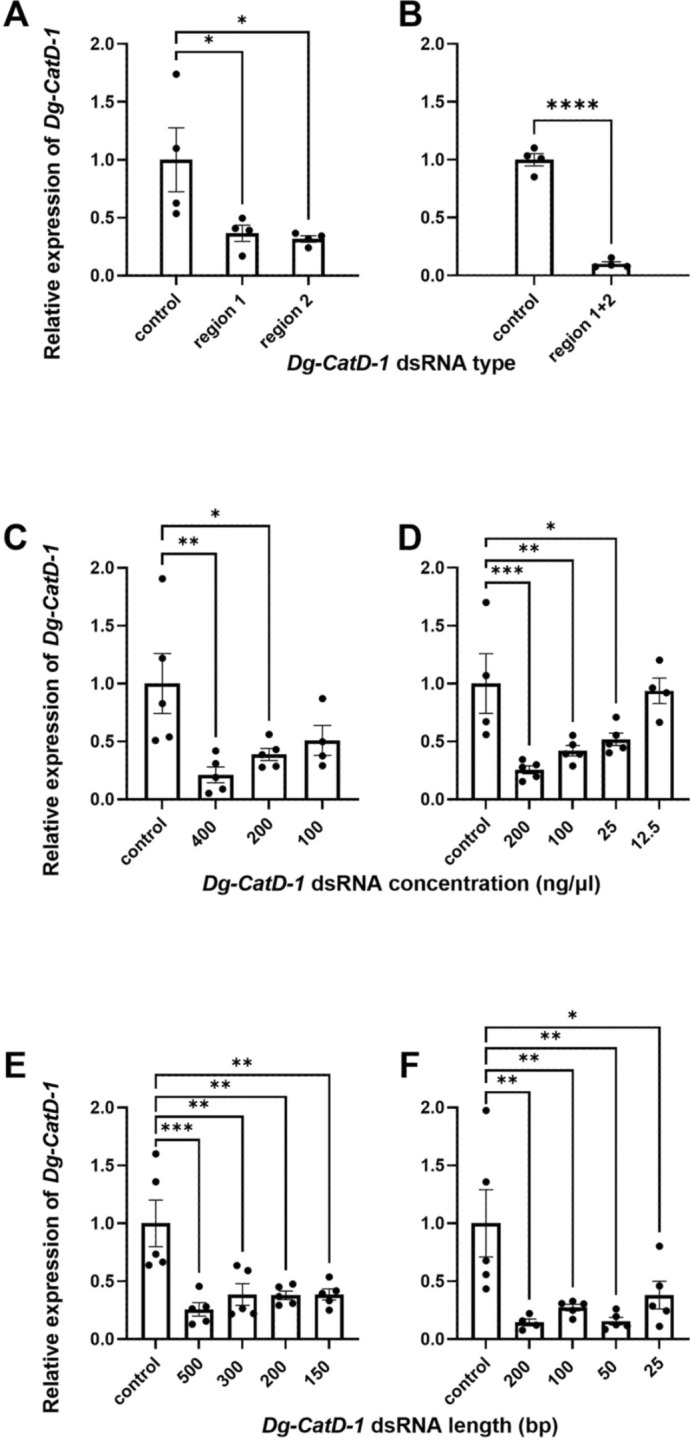 Figure 2
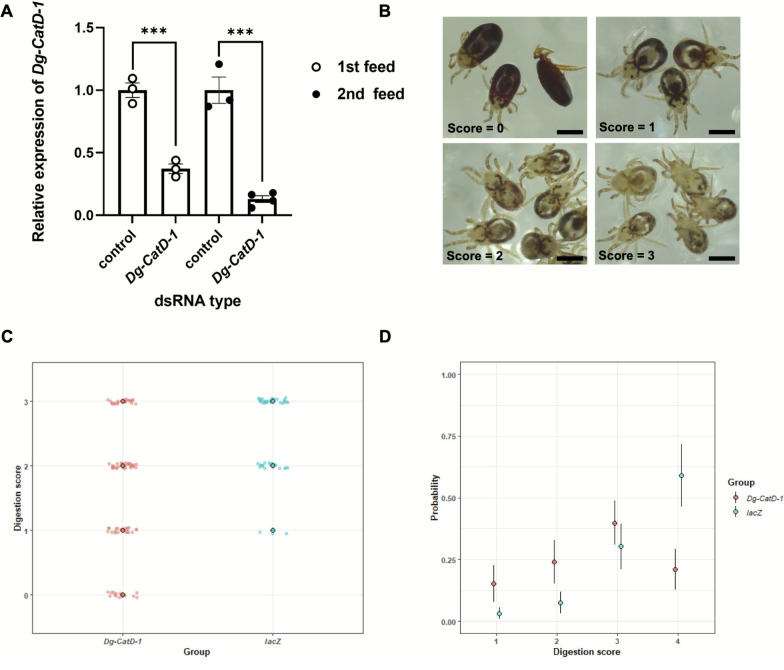 Figure 3
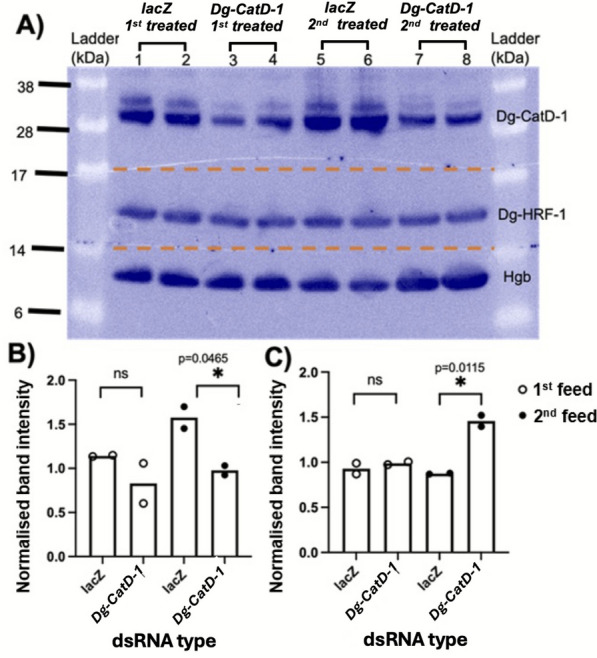 Figure 4
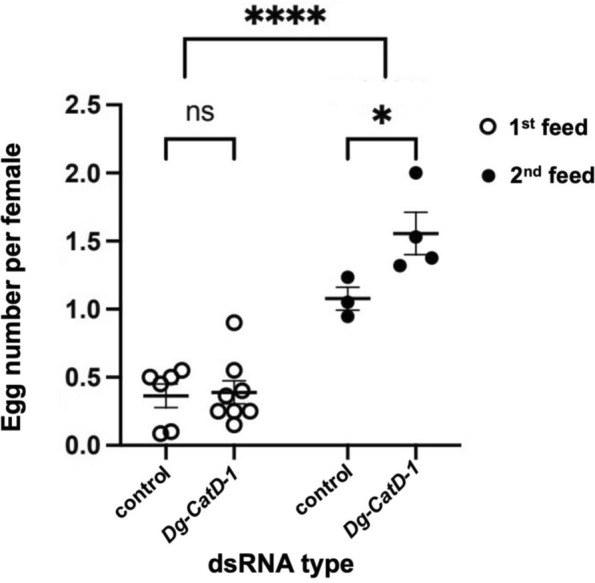 Figure 5
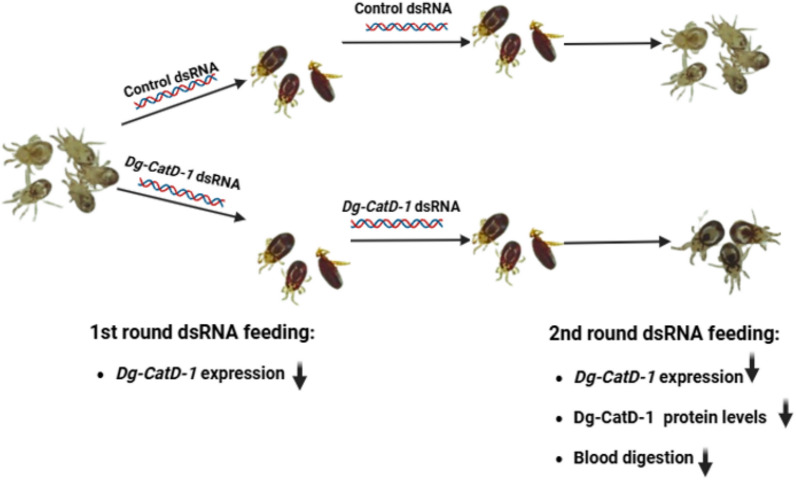 Figure 6
Peer Reviews
No public reviews on file for this paper yet. If you reviewed it on a platform where reviews are public (OpenReview, ICLR, NeurIPS, ICML), you can paste yours below so the community can read it here.
Videos
No videos yet. Explain this paper in a talk, walkthrough, or lecture? Add one.
Taxonomy
TopicsStudy of Mite Species · Bird parasitology and diseases · Iron Metabolism and Disorders